
Lesotho’s trade competitiveness has come into question following China’s recent implementation of zero tariffs for all African countries, with growing concerns over whether the country has what it takes to exploit the arrangement.
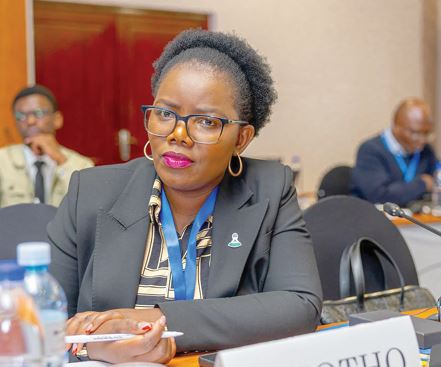
There are increasing calls for Lesotho to urgently strengthen its productive capacity and export competitiveness if it hopes to meaningfully tap into the Chinese market. This concern was recently raised by the Ministry of Trade, Industry and Business Development’s Director of Trade, ‘Malineo Seboholi.
Speaking during a reception hosted by the Chinese Embassy in Maseru, Seboholi said that while Lesotho has previously benefited from preferential market access as a Least Developed Country (LDC), the real challenge now lies in effectively utilising the expanding opportunities.
China first announced the tariff elimination initiative during follow-up engagements under the Forum on China-Africa Cooperation (FOCAC) in 2025, with the arrangement officially taking effect on May 1, 2026.
Under the new framework, 53 African countries with diplomatic ties to China now enjoy expanded duty-free access to the world’s second-largest economy.
The arrangement broadens an earlier concession granted to least developed countries, including Lesotho, which had already been enjoying duty-free treatment on 100 percent of tariff lines since December 2024. China says the initiative is aimed at deepening trade relations and supporting Africa’s industrialisation efforts.
Reflecting on the implications for Lesotho, Seboholi warned that tariff removal alone would not automatically translate into economic gains. She said the greater challenge was whether the country could produce enough competitive goods for export into the Chinese market.
She noted that Lesotho continues to run a trade deficit with China, with the Asian giant ranking among the country’s biggest import partners while exports from Lesotho remain negligible.
According to the latest Foreign Trade Statistics report for the third quarter of 2025, China was not among the top 10 destinations for Lesotho’s exports. However, it was the country’s second-largest source of imports, accounting for 13 percent of total imports.
The ministry further warned that unless Lesotho improves its productive capacity, industrial output and value addition, the zero-tariff arrangement could end up benefiting Chinese exporters more than Basotho producers.
Those concerns mirror broader debates emerging across Africa as China deepens commercial ties with the continent. While African countries have welcomed greater access to China’s vast consumer market, economists caution that many African economies still mainly export raw commodities while importing higher-value manufactured products from China.
According to official Chinese customs data, trade between China and Africa reached a record US$348 billion in 2025, underlining the growing significance of the relationship. African exports to China stood at about US$123 billion during the year.
In the first five months of 2025 alone, China-Africa trade had already reached 963.21 billion yuan, equivalent to roughly US$134 billion.
Despite this growth, Africa’s trade imbalance with China remains significant, largely because many African countries continue exporting raw materials while importing machinery, electronics, vehicles, textiles and processed goods.
Seboholi cited Lesotho’s wool and mohair industry as an example of the country’s structural weaknesses. She said Lesotho still exports most of its wool and mohair in raw form, leaving the sector vulnerable to external shocks and price fluctuations.
The recent outbreak of Foot and Mouth Disease, which disrupted exports, further exposed the risks associated with relying heavily on unprocessed commodity exports.
The ministry argued that greater domestic processing and value addition would help Lesotho retain more value locally, create jobs and improve economic resilience.
For years, Lesotho’s wool and mohair industry has been regarded as one of the country’s strongest agricultural export sectors, yet local beneficiation has remained limited. Much of the raw fibre is exported before being processed into finished textile products abroad.
The ministry believes the Chinese zero-tariff initiative presents an opportunity for Lesotho to reposition itself beyond raw commodity exports and expand into agro-processing and manufacturing.
Among the priority areas identified for cooperation with China are technical support for exporters, investment in agro-processing industries, improved logistics systems, technology transfer and skills development.
China’s move comes at a time when African countries are searching for alternative markets amid global economic uncertainty and shifting trade patterns. Beijing has increasingly positioned itself as Africa’s largest trading partner and a major investor in infrastructure development across the continent.
Chinese authorities say the new tariff arrangement will remain in place until April 2028 for non-least developed African countries, while negotiations on broader economic partnership agreements continue.
The ministry, however, insists that Lesotho remains committed to creating an enabling environment for trade and investment while strengthening support for the private sector. It also called for practical cooperation to ensure the zero-tariff initiative contributes meaningfully to poverty reduction, job creation and sustainable economic development.BM
China’s tariff removal piles pressure on Lesotho
Bereng Mpaki
Lesotho’s trade competitiveness has come into question following China’s recent implementation of zero tariffs for all African countries, with growing concerns over whether the country has what it takes to exploit the arrangement.
There are increasing calls for Lesotho to urgently strengthen its productive capacity and export competitiveness if it hopes to meaningfully tap into the Chinese market. This concern was recently raised by the Ministry of Trade, Industry and Business Development’s Director of Trade, ‘Malineo Seboholi.
Speaking during a reception hosted by the Chinese Embassy in Maseru, Seboholi said that while Lesotho has previously benefited from preferential market access as a Least Developed Country (LDC), the real challenge now lies in effectively utilising the expanding opportunities.
China first announced the tariff elimination initiative during follow-up engagements under the Forum on China-Africa Cooperation (FOCAC) in 2025, with the arrangement officially taking effect on May 1, 2026.
Under the new framework, 53 African countries with diplomatic ties to China now enjoy expanded duty-free access to the world’s second-largest economy.
The arrangement broadens an earlier concession granted to least developed countries, including Lesotho, which had already been enjoying duty-free treatment on 100 percent of tariff lines since December 2024. China says the initiative is aimed at deepening trade relations and supporting Africa’s industrialisation efforts.
Reflecting on the implications for Lesotho, Seboholi warned that tariff removal alone would not automatically translate into economic gains. She said the greater challenge was whether the country could produce enough competitive goods for export into the Chinese market.
She noted that Lesotho continues to run a trade deficit with China, with the Asian giant ranking among the country’s biggest import partners while exports from Lesotho remain negligible.
According to the latest Foreign Trade Statistics report for the third quarter of 2025, China was not among the top 10 destinations for Lesotho’s exports. However, it was the country’s second-largest source of imports, accounting for 13 percent of total imports.
The ministry further warned that unless Lesotho improves its productive capacity, industrial output and value addition, the zero-tariff arrangement could end up benefiting Chinese exporters more than Basotho producers.
Those concerns mirror broader debates emerging across Africa as China deepens commercial ties with the continent. While African countries have welcomed greater access to China’s vast consumer market, economists caution that many African economies still mainly export raw commodities while importing higher-value manufactured products from China.
According to official Chinese customs data, trade between China and Africa reached a record US$348 billion in 2025, underlining the growing significance of the relationship. African exports to China stood at about US$123 billion during the year.
In the first five months of 2025 alone, China-Africa trade had already reached 963.21 billion yuan, equivalent to roughly US$134 billion.
Despite this growth, Africa’s trade imbalance with China remains significant, largely because many African countries continue exporting raw materials while importing machinery, electronics, vehicles, textiles and processed goods.
Seboholi cited Lesotho’s wool and mohair industry as an example of the country’s structural weaknesses. She said Lesotho still exports most of its wool and mohair in raw form, leaving the sector vulnerable to external shocks and price fluctuations.
The recent outbreak of Foot and Mouth Disease, which disrupted exports, further exposed the risks associated with relying heavily on unprocessed commodity exports.
The ministry argued that greater domestic processing and value addition would help Lesotho retain more value locally, create jobs and improve economic resilience.
For years, Lesotho’s wool and mohair industry has been regarded as one of the country’s strongest agricultural export sectors, yet local beneficiation has remained limited. Much of the raw fibre is exported before being processed into finished textile products abroad.
The ministry believes the Chinese zero-tariff initiative presents an opportunity for Lesotho to reposition itself beyond raw commodity exports and expand into agro-processing and manufacturing.
Among the priority areas identified for cooperation with China are technical support for exporters, investment in agro-processing industries, improved logistics systems, technology transfer and skills development.
China’s move comes at a time when African countries are searching for alternative markets amid global economic uncertainty and shifting trade patterns. Beijing has increasingly positioned itself as Africa’s largest trading partner and a major investor in infrastructure development across the continent.
Chinese authorities say the new tariff arrangement will remain in place until April 2028 for non-least developed African countries, while negotiations on broader economic partnership agreements continue.
The ministry, however, insists that Lesotho remains committed to creating an enabling environment for trade and investment while strengthening support for the private sector. It also called for practical cooperation to ensure the zero-tariff initiative contributes meaningfully to poverty reduction, job creation and sustainable economic development.
Summary
- Speaking during a reception hosted by the Chinese Embassy in Maseru, Seboholi said that while Lesotho has previously benefited from preferential market access as a Least Developed Country (LDC), the real challenge now lies in effectively utilising the expanding opportunities.
- China first announced the tariff elimination initiative during follow-up engagements under the Forum on China-Africa Cooperation (FOCAC) in 2025, with the arrangement officially taking effect on May 1, 2026.
- According to official Chinese customs data, trade between China and Africa reached a record US$348 billion in 2025, underlining the growing significance of the relationship.