
Prime Minister Samuel Ntsokoane Matekane has issued a series of binding directives to senior government officials aimed at accelerating Lesotho’s stalled investment and business reform agenda, warning that there will be “no hiding in bureaucratic process” as government tightens implementation accountability.
Delivering keynote remarks at the fourth High-Level Public-Private Dialogue (PPD) Forum in Maseru on Wednesday, Matekane ordered the Ministry of Trade, Industry and Business Development to urgently submit the long-awaited Investment Policy to Cabinet within two weeks.
“I have been briefed that two drafts have been consolidated. I expect a Cabinet submission within two weeks. The Investment Law must follow on a defined timetable,” Matekane said.
The Prime Minister further directed Trade Minister Motlatsi Maqelepo to personally supervise implementation of all Investment Climate Action Plan (ICAP) reform actions falling under his ministry and submit quarterly written progress reports.
The remarks signal mounting pressure within government to speed up reforms under the ICAP framework, which is central to Lesotho’s efforts to attract foreign direct investment, improve the ease of doing business and stimulate private sector-led growth.
Tough directives across government
Matekane also instructed the Ministry of Justice and the Office of Parliamentary Counsel to prioritise several delayed legislative reforms, including the Investment Law, MSME Policy, Tourism Enterprise Bill, One-Stop Border Post (OSBP) Law and amendments to Business Licensing Regulations.
“These are not optional. They are the legislative infrastructure of economic transformation,” he said.
In a sharp warning to the civil service, the Prime Minister tasked the Government Secretary with overseeing and coordinating ICAP implementation across all ministries and agencies through a quarterly review mechanism.
“The Government Secretary’s Office is the nerve centre of this implementation architecture,” Matekane said.
Principal Secretaries were similarly warned that they would be held directly accountable for implementation failures.
“You are the implementers. Not advisors. Not observers. Implementers,” he declared.
Under the new accountability framework, Cabinet will receive a consolidated ICAP Progress Report every quarter beginning in the first quarter of the 2026/27 financial year.
“That means three months from today, Cabinet will discuss on the record what has been done, what has not been done, and who is accountable,” Matekane warned.
Financial sector reforms progressing
The Prime Minister acknowledged progress in financial sector reforms being driven by the Ministry of Finance and Development Planning together with the Central Bank of Lesotho.
He confirmed that the National Payment Systems Act is currently before Parliament and nearing enactment, while the National Payment Switch is close to full operationalisation.
“The partial credit guarantee consolidation is underway. These are real achievements in a challenging fiscal environment,” he said.
According to Matekane, the Financial Sector Development Strategy II, launched in November 2025, has strengthened efforts to modernise Lesotho’s financial infrastructure and improve access to finance.
Slow reform pace worries government
Reviewing the ICAP implementation scorecard presented during the forum, Matekane acknowledged progress in some areas but expressed frustration over the broader pace of reform implementation.
He said only two reform areas — the National Payment Systems Act and National Payment Switch — were officially classified as “On Track”.
Seven other reform areas remain “In Progress”, including LNDC investment promotion capacity building, Public-Private Partnership pipeline development, credit guarantee consolidation, the ASYCUDA trade facilitation system, the Ministry of Trade’s 15-point textile revitalisation plan, tourism foreign direct investment opening and the Tourism Enterprise Bill.
However, nine reform areas remain either “Not Yet Initiated” or “Awaiting Cabinet Action”. These include the Investment Policy, Investment Law, amendments to Business Licensing and Registration Regulations, work and residency permit streamlining, a one-stop-shop for construction permits, and horticulture foreign direct investment opening and land parcel identification.
“We need to fast track them,” Matekane stressed.
AGOA strategy and textile reforms
Maqelepo reaffirmed government’s commitment to accelerating private investment, employment creation and economic transformation.
He highlighted collaboration between government and the private sector through fully operational thematic working groups in the textile and apparel, agriculture and tourism sectors.
The minister also revealed that Lesotho had successfully secured a one-year extension of the African Growth and Opportunity Act (AGOA) through coordinated lobbying and diplomatic engagement with the United States.
Government, he said, is now pursuing a longer-term AGOA renewal strategy while simultaneously diversifying export markets and strengthening regional trade integration.
New initiatives aimed at repositioning Lesotho’s textile industry include expanding regional market access, strengthening partnerships with South African firms, improving factory competitiveness, enhancing workforce skills and securing WRAP certification to meet global compliance standards.
Maqelepo also acknowledged support from development partners, including the World Bank Group and the International Finance Corporation, in supporting reforms and investment readiness programmes.
“The time for talk alone has passed. Lesotho now needs binding, specific and time-bound commitments on investment, jobs and exports,” Maqelepo said.
Closing his address, Matekane pledged direct political oversight of the reform agenda.
“I will personally track implementation. I will personally intervene where there are roadblocks. And I will personally and loudly celebrate when we begin to see the investment, the jobs, and the exports that this reform agenda is designed to produce,” the Prime Minister said.
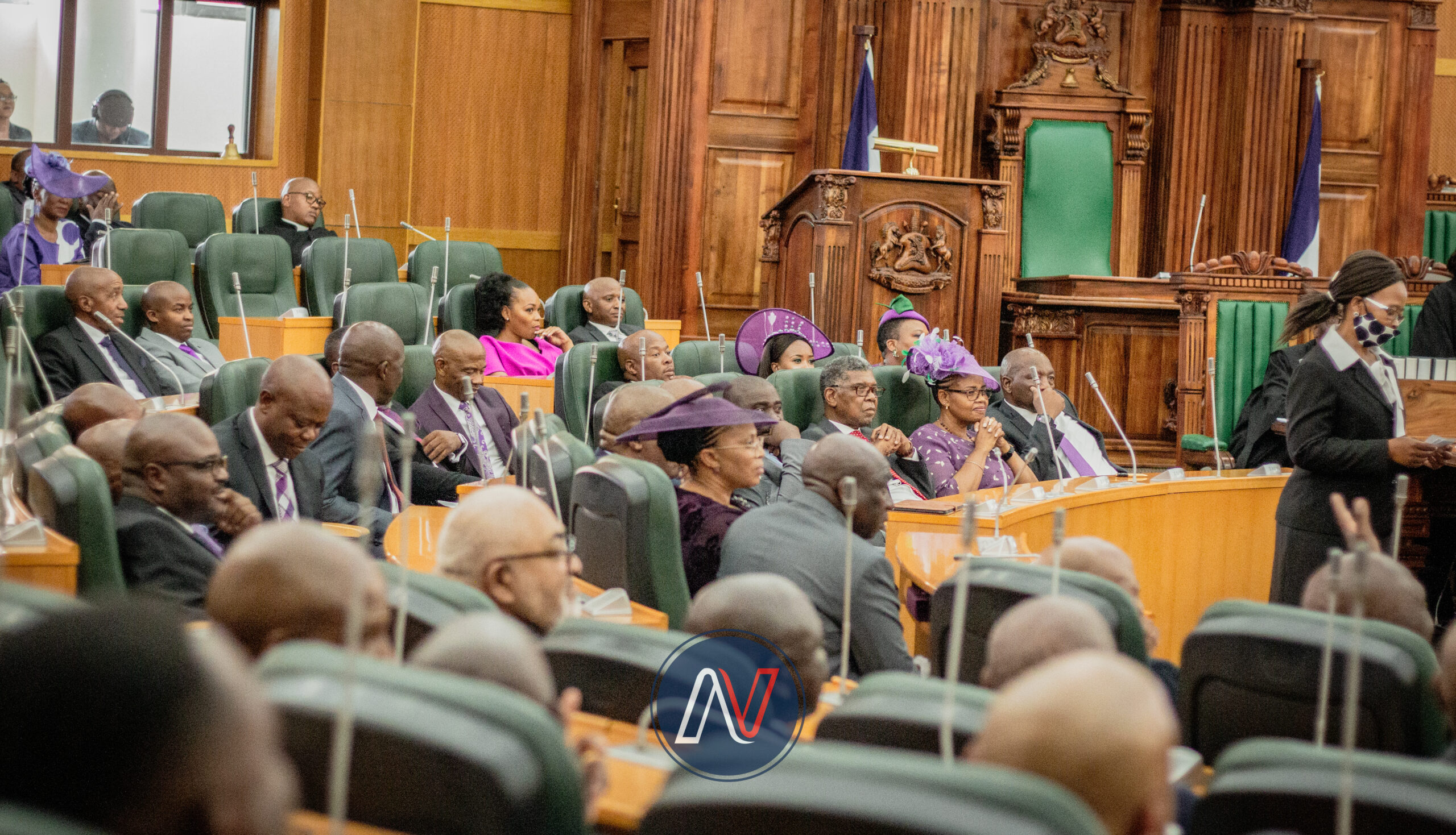
The PPD Forum brought together government officials, private sector leaders, development partners and industry stakeholders to assess implementation progress under the ICAP framework and identify reforms needed to improve Lesotho’s investment climate and economic competitiveness.
Summary
- Prime Minister Samuel Ntsokoane Matekane has issued a series of binding directives to senior government officials aimed at accelerating Lesotho’s stalled investment and business reform agenda, warning that there will be “no hiding in bureaucratic process” as government tightens implementation accountability.
- Delivering keynote remarks at the fourth High-Level Public-Private Dialogue (PPD) Forum in Maseru on Wednesday, Matekane ordered the Ministry of Trade, Industry and Business Development to urgently submit the long-awaited Investment Policy to Cabinet within two weeks.
- In a sharp warning to the civil service, the Prime Minister tasked the Government Secretary with overseeing and coordinating ICAP implementation across all ministries and agencies through a quarterly review mechanism.

Senior journalist and communications professional with extensive experience in general news reporting, specializing in business and sports journalism. Skilled in public speaking, media relations, and strategic communication, with a proven ability to deliver accurate, engaging, and impactful stories.
A strong team player who thrives in collaborative environments and adapts effectively to diverse working conditions. Passionate about continuous learning, professional growth, and enhancing communication practices to meet evolving industry demands.