Welcome to Newsday Media – Your Trusted Source for News and Insights in Lesotho!
At Newsday Media, we are passionate about delivering accurate, timely, and engaging news and multimedia content to our diverse audience. Founded with the vision of revolutionizing the media landscape in Lesotho, we have grown into a leading hybrid media company that blends traditional journalism with innovative digital platforms.
Our mission is simple: to inform, inspire, and empower our readers by providing comprehensive coverage of local and global events, current affairs, and cultural happenings. Whether you’re looking for breaking news, in-depth analysis, or captivating storytelling, Newsday Media is your go-to destination for all things news-related.
With a dedicated team of journalists, editors, and multimedia experts, we are committed to upholding the highest standards of journalistic integrity and professionalism. We pride ourselves on delivering content that not only informs but also sparks conversation, fosters understanding, and drives positive change in our society.
From our flagship newspaper to our dynamic digital platforms, we offer a wide range of multimedia content to cater to the diverse interests and preferences of our audience. Whether you prefer to stay informed through print, online articles, videos, or podcasts, Newsday Media has something for everyone.
We believe in the power of storytelling to connect people, bridge divides, and inspire action. That’s why we’re dedicated to providing a platform for voices from all walks of life, championing diversity, inclusion, and authenticity in everything we do.
Thank you for visiting Newsday Media. We invite you to explore our website, engage with our content, and join us on our journey to inform, inspire, and empower our community. Together, let’s shape the future of media in Lesotho.
Theko Tlebere
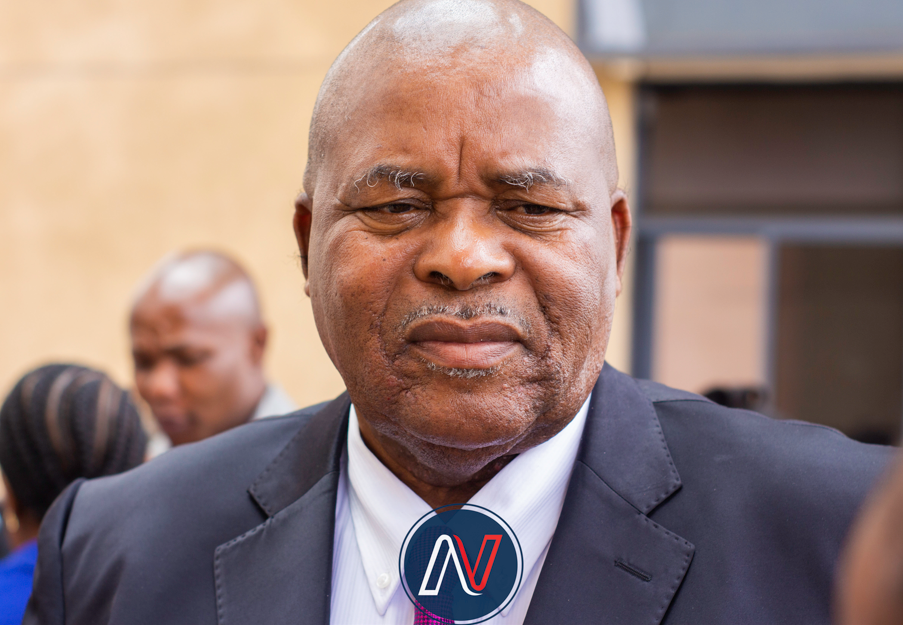
A few of my friends have been calling and sending me messages requesting my take on the so-called “dismissal” of Minister Lebona Lephema. A very interesting topic for Lesotho’s politics and probably very important for Lesotho’s political history. At first I was very reluctant but my Uncle’s call from Ha Khohlopo actually made me realise that maybe I need to say something about this issue. What actually changed my mind was when my uncle actually asked me “to use my political science intellect” to analyse this situation. But he said I should do it in a way that he will be able to narrate to Ntate Mochoanfo (his neighbour) about my explanation. Therefore, in pursued of my uncle’s request and that of friends and followers of this column I will theorise this situation in a way I hope “e tla re qi!” even to that Mosotho youth in that very rural village.
And this is it how it goes; on the 18th of May 2026, His Majesty King Letsie III formally accepted the recommendation of Prime Minister Sam Matekane to terminate the ministerial appointment of Hon Lebona Lephema, signifying a significant alteration within the Government of the Kingdom of Lesotho. This action was part of a comprehensive cabinet reshuffle involving the reallocation of responsibilities across various ministries that even saw a new minister from the Mafeteng district being sworn in as the minister of Public Service.
For many Basotho, particularly in areas such as Ha Khohlopo, these events have been perceived as the expulsion of a minister, I am saying that because that’s exactly how my uncle put it, “why has Matekane expelled Lebona from cabinet?” However, in political and legal terms, what is the true nature of this occurrence? Should constituents, whose immediate concerns pertain to service delivery, infrastructure, education, and employment, be preoccupied with what may initially appear to be a conflict among political elites? The succinct response that first come to my mind is that, from a theoretical and constitutional perspective: yes, but not in the manner some commentators suggest.
Let us remember that Lesotho’s political framework operates as aparliamentary constitutional monarchy, wherein executive authority is vested in the Prime Minister and Cabinet, while the monarch primarily assumes a ceremonial role. Under this framework, the Prime Minister is empowered to appoint ministers from among the members of parliament and to advise the King regarding appointments and terminations. Consequently, ministerial tenure is contingent upon the political discretion of the Prime Minister, constrained not by the King but by constitutional conventions and party political dynamics. In this context, Lephema’s dismissal is not an anomaly but rather a lawful exercise of executive authority.
From arational choice institutional perspective, political leaders strive to maintain cohesion and discipline within their governing coalitions. Ministers function primarily as political agents who must represent their constituencies while advancing the overarching agenda of the executive. When a minister openly refuses to comply with directives, particularly those possessing constitutional legitimacy, the executive risks fragmentation and potential governmental paralysis. Thus, the Prime Minister’s decision to reassign Lephema to a different ministry (and ultimately to terminate his appointment upon refusal to comply) exemplifiesprincipalagent theory in practice: the Prime Minister (principal) cannot accommodate agents (ministers) who cease to act in accordance with collective directives. The removal thus reinforces executive authority and upholds collective accountability, which is essential for the stability of coalition governance.
Another pertinent theoretical perspective emerges frominstitutionalism, particularly the notion that political order is contingent upon adherence to rules rather than individual personalities. Leaders who disregard constitutional protocols or defy lawful directives risk not only political embarrassment but also institutional erosion. By restructuring Lephema’s role and subsequently dismissing him for noncompliance with the Prime Minister’s directive, after initially transferring him to the Ministry of Trade, Industry, and Business Development, Matekane conveyed thatno official is above constitutional norms or the directives of His Majesty. There is no evidence that the King acted unilaterally; his acceptance of the Prime Minister’s counsel was procedural and anticipated within Lesotho’s constitutional framework.
What this means is that this narratives are grounded in personalised power politics and reinforces the principle that political authority is mediated through constitutional office rather than solely through traditional authority. For rural Basotho in Ha Khohlopo and beyond, this distinction is significant: institutional predictability fosters a more stable environment for development than unpredictable political patronage.
The government of Lesotho, under the leadership of Prime Minister Matekane’s Revolution for Prosperity (RFP), operates within a coalition framework that necessitates negotiation and balance. It is expected that ministers will originate from diverse factions and interests. For enduring governance, the Prime Minister must ensure that cabinet members act cohesively and in alignment with established policy directions, even when this necessitates the disciplining of ministers.
Political theories ofcoalition governancesuggest that leaders must balance inclusivity with enforceability: excessive leniency may result in ministerial fiefdoms where ministers pursue narrow agendas to the detriment of agreed national priorities. In Lesotho’s context, such discipline is particularly crucial given ongoing challenges in public service delivery and economic management.
Despite the fervor of political discourse in urban settings and on social media platforms, the average village in Ha Senyokotho possesses a far moreconcrete set of expectationsfrom government: improved infrastructure, reliable water supply, enhanced healthcare services, operational educational institutions, and increased household incomes. What my little knowledge of Political science consistently indicates is that elite reshuffles and ministerial turnover seldom translate directly into enhancements in material conditions unless accompanied by systemic reforms in governance and service provision.
The events of May 2026 are unlikely to effectuate immediate or substantive changes in the daily lives of Basotho in general. Shifts in ministerial personnel do not automatically yield new clinics or agricultural resources. Indeed, what is most consequential for rural households is not the identity of the minister, but the efficacy of policy implementation. Consequently, while this episode is politically significant and indicative of Matekane’s commitment to constitutional adherence and executive discipline, it does little to resolve the chronic under investment in rural service infrastructure that adversely affects ordinary Basotho.
My take, therefore is that, the dismissal of Minister Lebona Lephema should not be interpreted as an isolated incident but as an exercise of executive authority consistent with Lesotho’s constitutional order. Prime Minister Sam Matekane has demonstrated steel balls to uphold internal discipline and constitutional protocols, even at the expense of political discord within his own ranks. Nevertheless, Basothoshould moderate their expectations: this political event will not, in isolation, translate into the material improvements they seek. Genuine change will arise from effective policy implementation by those in power that prioritizes developmental outcomes, transcending ministerial rhetoric. The future is NOW!
Summary
In pursued of my uncle’s request and that of friends and followers of this column I will theorise this situation in a way I hope “e tla re qi.
On the 18th of May 2026, His Majesty King Letsie III formally accepted the recommendation of Prime Minister Sam Matekane to terminate the ministerial appointment of Hon Lebona Lephema, signifying a significant alteration within the Government of the Kingdom of Lesotho.
This action was part of a comprehensive cabinet reshuffle involving the reallocation of responsibilities across various ministries that even saw a new minister from the Mafeteng district being sworn in as the minister of Public Service.
Welcome to Newsday Media – Your Trusted Source for News and Insights in Lesotho!
At Newsday Media, we are passionate about delivering accurate, timely, and engaging news and multimedia content to our diverse audience. Founded with the vision of revolutionizing the media landscape in Lesotho, we have grown into a leading hybrid media company that blends traditional journalism with innovative digital platforms.
Our mission is simple: to inform, inspire, and empower our readers by providing comprehensive coverage of local and global events, current affairs, and cultural happenings. Whether you’re looking for breaking news, in-depth analysis, or captivating storytelling, Newsday Media is your go-to destination for all things news-related.
With a dedicated team of journalists, editors, and multimedia experts, we are committed to upholding the highest standards of journalistic integrity and professionalism. We pride ourselves on delivering content that not only informs but also sparks conversation, fosters understanding, and drives positive change in our society.
From our flagship newspaper to our dynamic digital platforms, we offer a wide range of multimedia content to cater to the diverse interests and preferences of our audience. Whether you prefer to stay informed through print, online articles, videos, or podcasts, Newsday Media has something for everyone.
We believe in the power of storytelling to connect people, bridge divides, and inspire action. That’s why we’re dedicated to providing a platform for voices from all walks of life, championing diversity, inclusion, and authenticity in everything we do.
Thank you for visiting Newsday Media. We invite you to explore our website, engage with our content, and join us on our journey to inform, inspire, and empower our community. Together, let’s shape the future of media in Lesotho.
To ensure optimal experiences, we utilize technologies such as cookies to store and/or access information from your device. Granting consent to these technologies enables us to process data, including browsing habits or unique identifiers on this website. Conversely, not consenting or revoking consent may negatively impact specific features and functionalities.
Functional
Always active
The technical storage or access is strictly necessary for the legitimate purpose of enabling the use of a specific service explicitly requested by the subscriber or user, or for the sole purpose of carrying out the transmission of a communication over an electronic communications network.
Preferences
The technical storage or access is necessary for the legitimate purpose of storing preferences that are not requested by the subscriber or user.
Statistics
The technical storage or access that is used exclusively for statistical purposes.The technical storage or access that is used exclusively for anonymous statistical purposes. Without a subpoena, voluntary compliance on the part of your Internet Service Provider, or additional records from a third party, information stored or retrieved for this purpose alone cannot usually be used to identify you.
Marketing
The technical storage or access is required to create user profiles to send advertising, or to track the user on a website or across several websites for similar marketing purposes.