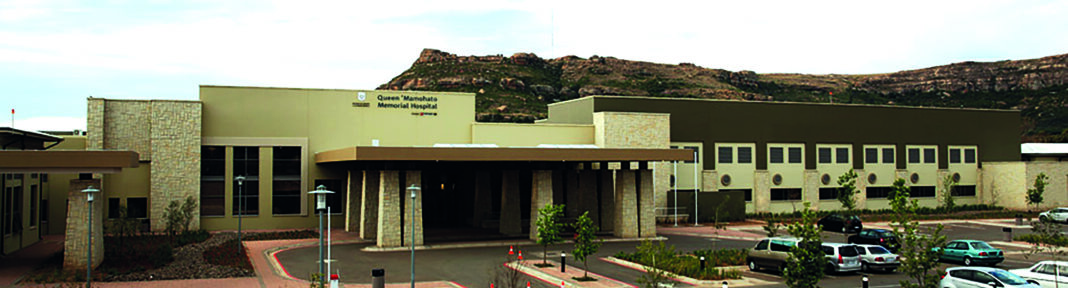
Five years ago, the government took over Queen ‘Mamohato Memorial Hospital (QMMH) from private operator Tšepong Consortium, promising Basotho better healthcare and stronger public control.
Today, the hospital itself appears to be on life support.
Parliament’s Public Accounts Committee (PAC) has peeled back the bandages to expose a system in distress, M79 million in debt, a salary structure that defies explanation, and an organisational framework that officials themselves cannot clearly define.
Doctors continue treating patients, but the institution is haemorrhaging money, and Parliament is demanding to know who is in charge, how it got here, and whether the government was ever prepared to run the country’s flagship referral hospital.
The revelations emerged this week as the PAC intensified its inquiry into the operations and financial management of QMMH, exposing what lawmakers described as years of poor governance, weak financial controls and an incomplete transition from private to public management.
The findings have revived a question that has lingered since the government terminated its controversial partnership with Tšepong Consortium in 2021: Was the state ready to run Lesotho’s most important hospital?
QMMH opened in October 2011, replacing the dilapidated, century-old Queen Elizabeth II Hospital as Lesotho’s main referral hospital. The 425-bed facility was built through a Public-Private Partnership (PPP) signed in 2008 between the government and the Tšepong Consortium, led by South African healthcare giant Netcare, which held a 40 percent stake, alongside local and South African partners.
The PPP was touted by the World Bank’s International Finance Corporation, which advised on the deal, as a flagship model for Africa. The hospital brought clear improvements, overall mortality fell by 41 percent, and it became one of the few public hospitals in sub-Saharan Africa to achieve international accreditation.
It introduced state-of-the-art medical equipment, specialist services and management systems that were largely unavailable in Lesotho’s public health sector at the time.
But the partnership soon became one of the country’s most controversial government contracts.
Successive governments complained that the hospital was consuming an unsustainably large share of the national health budget.
Government payments to Tšepong ballooned as patient numbers exceeded contractual caps. By 2018/19, the hospital took up nearly 30 percent of the health budget, about M699 million.
Independent studies and parliamentary scrutiny repeatedly questioned whether the PPP offered value for money, while disputes over payments and contract obligations strained relations between the government and Tšepong.
Oxfam called it a “dangerous diversion of scarce public funds” from rural primary care.
In February 2021, nurses went on strike demanding pay parity with other government hospitals, they earned about M9,000 vs M13,000 elsewhere. Tšepong responded by firing over 300 nurses. The government, furious it had not been consulted, terminated the 18-year contract in March 2021, about five years early.
Tšepong vacated on July 16, 2021, ahead of the 31 July deadline, citing the government’s failure to pay outstanding fees . The government formally took over in August 2021, appointing a new management team.
Officials argued that bringing QMMH under public management would reduce costs, improve accountability and place one of the country’s most critical public institutions firmly under government control.
Five years later, parliament is questioning whether those promises have been fulfilled.
PAC Chairperson ‘Machabana Lemphane-Letsie opened the inquiry by questioning the hospital’s organisational identity.
The committee had previously requested QMMH’s organisational structure and salary framework to determine how the institution operates as a government hospital. Those documents, however, were not produced.
“QMMH is not a private hospital, but if it is a government hospital, its structure should reflect that. Right now, it does not,” Lemphane-Letsie said.
Committee members said they could not determine how positions were created, who approved them or how salaries were determined.
“We do not see where the structure emanates from or who authorised it,” Lemphane-Letsie said.
One of the committee’s biggest concerns was the apparent absence of a coherent salary structure.
MPs heard that employees performing different functions are paid under varying arrangements, with some support staff reportedly earning salaries significantly higher than clinical personnel.
Members questioned whether remuneration was based on qualifications, responsibilities or other considerations.
Acting Principal Secretary in the Ministry of Health, ‘Matšoanelo Monyobi, admitted that although QMMH is now a government hospital, its organisational and salary structures remain largely unchanged from the Tšepong era.
“QMMH is now a government hospital, but its structure has not changed since the takeover from Tšepong. Salaries remain higher than those at other government hospitals,” Monyobi said.
She said the Ministry had developed a concept note on restructuring the hospital and submitted it to government’s Social Cluster. The Ministry has also sought technical assistance from the World Health Organisation (WHO).
The explanation did little to satisfy lawmakers.
PAC member Tšeliso Moroke argued that officials responsible for the transition had failed to integrate QMMH into the public service.
“In government, there is a clear structure, but QMMH already had its own, which was never changed,” Moroke said.
Hloahloeng Member of Parliament Katleho Mabeleng questioned whether QMMH could genuinely be classified as either a government or private institution.
“It is a different monster. What can we call it? According to my analysis, it is neither private nor government,” Mabeleng said.
He also questioned why the Ministry required WHO’s assistance to undertake a restructuring that government itself should have been capable of implementing.
Monyobi responded that WHO routinely provides technical support to governments.
The committee also uncovered significant financial pressures facing the hospital.
Finance Manager Tšele Sehlabo told MPs that QMMH entered the 2025/26 financial year carrying accumulated debt of M79 million, leaving much of its budget immediately committed to settling existing obligations.
“We had budgeted for salaries, but we started the year without the employer’s provident fund contributions,” Sehlabo said.
He said the hospital was unable to pay its employer contributions to the staff provident fund for February and March because of cash-flow constraints, although employee deductions were remitted.
According to Sehlabo, the hospital has since remained up to date with its provident fund obligations, except for the outstanding employer contributions for those two months.
QMMH received an initial budget allocation of M550 million for the current financial year, but a later reduction by the Ministry of Finance cut that figure by M22 million, leaving the hospital with M528 million.
Sehlabo said previous annual allocations had averaged between M506 million and M507 million, despite QMMH also carrying responsibility for referring patients to hospitals outside Lesotho without receiving dedicated funding.
This year, he said, M72 million was specifically allocated for overseas referrals, accounting for the larger budget.
Lemphane-Letsie warned that Parliament would not continue approving funding for the hospital unless meaningful reforms were implemented.
“We are not going to go to the next budget with QMMH as it is. If the situation does not change, I will stand before it and oppose it,” she said.
She instructed the Ministry to prioritise restructuring QMMH before the mid-term budget review, warning that failure to do so could affect future funding.
The committee also expressed concern over accountability after QMMH Managing Director Dr ‘Makhoase Ranyali failed to appear before the inquiry.
Monyobi told MPs that Dr Ranyali had been advised by her lawyer not to attend.
Lemphane-Letsie criticised the recurring failure of some public officials to honour parliamentary summonses, saying such conduct undermines accountability.
She further questioned reports that some officials had left senior positions within the Ministry of Health to take management positions at QMMH, where salaries are reportedly higher and financial controls less stringent.
Summary
- Parliament’s Public Accounts Committee (PAC) has peeled back the bandages to expose a system in distress, M79 million in debt, a salary structure that defies explanation, and an organisational framework that officials themselves cannot clearly define.
- Doctors continue treating patients, but the institution is haemorrhaging money, and Parliament is demanding to know who is in charge, how it got here, and whether the government was ever prepared to run the country’s flagship referral hospital.
- The revelations emerged this week as the PAC intensified its inquiry into the operations and financial management of QMMH, exposing what lawmakers described as years of poor governance, weak financial controls and an incomplete transition from private to public management.
Ntsoaki Motaung is an award-winning health journalist from Lesotho, specializing in community health stories with a focus on sexual and reproductive health and rights, as well as HIV. She has contributed to platforms like “Be in the KNOW,” highlighting issues such as the exclusion of people with disabilities from HIV prevention efforts in Lesotho.
In addition to her journalism, Ntsoaki serves as the Country Coordinator for the Regional Media Action Plan Support Network (REMAPSEN). She is also a 2023 CPHIA Journalism Fellow.