
- Questions over govt’s commitment in Boloetse case
An opposition legislator has moved to force the government’s hand over the abduction and torture of journalist and human rights activist Kananelo Boloetse, asking Parliament to set up an independent commission of inquiry.
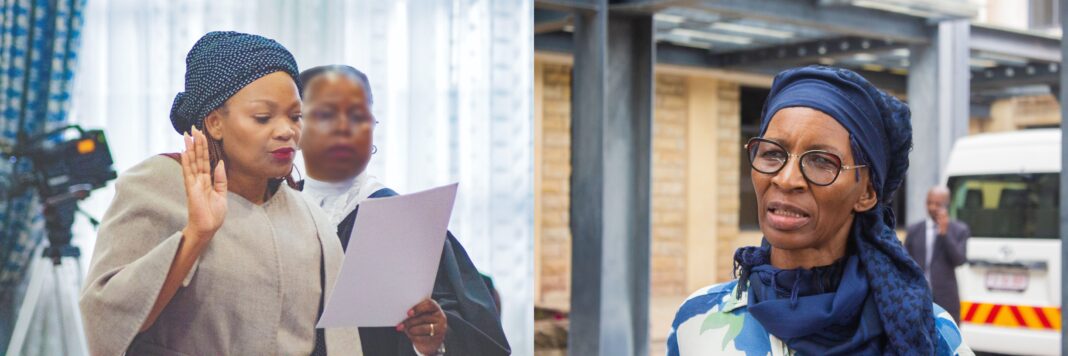
Dr Mahali Phamotse, the Matlakeng constituency legislator and leader of the United Africans Transformation (UAT), has filed a notice of motion in the National Assembly. The notice is dated 24 September 2026.
It seeks to compel the House to move the case beyond the current police investigation and set up a full commission of inquiry. Dr Phamotse argues that the police are implicated in the ordeal and cannot properly investigate themselves.
The motion is seconded by fellow legislator and Popular Front for Democracy (PFD) leader Advocate Lekhetho Rakuoane. It also calls for a probe into the government’s involvement in the attack on Boloetse, and for a full report to be tabled before the House.
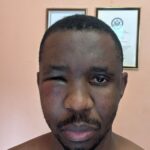
Boloetse is an editor at the Newsday newspaper and a human rights defender with Advocates for the Supremacy of the Constitution (Section 2). He was abducted by three unidentified men at his home in Katlehong, Maseru, on the evening of 5 September 2026.
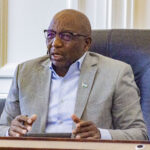
The motion follows a statement to Parliament on Monday by Home Affairs and Police Minister Voeswa Tsheka. She hinted that government may set up a commission of inquiry, but was quick to say it would cost money. She said she would ask the Ministry of Finance for a budget.
A belated statement
Monday’s address was the first time the minister spoke to Parliament on the attack, more than two weeks after it happened. Until then, only Communications Minister Nthati Moorosi had publicly condemned it and called for swift action. The rest of government stayed silent.
This silence continued even as the attack sent shockwaves through the country and abroad. Several international bodies issued statements condemning it and urged the Lesotho authorities to launch an independent investigation.
It took pressure from Parliament to break it. Last week, Dr Phamotse pressed the National Assembly Speaker to say when government would finally address the matter. Minister Tsheka’s statement came only after that.
Police under suspicion
On Tuesday, Dr Phamotse pressed the minister again, this time asking why she did not think it necessary to set up an independent commission. She explained that the police are suspected of involvement in the attack on Boloetse, and that “therefore the police could not properly investigate themselves,” she said.
She then turned to the minister directly: “You and your police counterparts are actually the suspects in this matter. The nation cannot trust in handling this issue properly, hence you should establish the commission.”
These are serious allegations against the police, and they remain allegations. But the loud applause from MPs in the House showed how many share Dr Phamotse’s sentiments. She and other opposition MPs then took turns firing questions at the minister.
Money before action?
Replying to Dr Phamotse, the minister said: “We found out with the police (that there was a need to establish the commission), but the proposed initiative has financial implications, therefore there is a need for us to approach the Ministry of Finance to request a Budget for this. It is dependent on the availability of funds from the Ministry of Finance. Allow me to make a request (to the Ministry of Finance), and I will come back to report to this House about progress.”
Examined closely, the Minister’s answer offers little. The request to Finance has not yet been made. No amount has been named and no date has been set. The commission, in the minister’s own telling, depends on whether funds are available. In other words, government has said an inquiry is possible, but has stopped short of saying it will not happen.
This raises fair questions. If government truly wants those behind the attack brought to book, why did it take more than two weeks to address the nation’s representatives? And why is the first thing the public hears about the proposed commission a warning about its cost? When a journalist is abducted, assaulted and dumped at Thaba-Bosiu, the price of finding the truth should not be the government’s opening line.
What the minister told Parliament
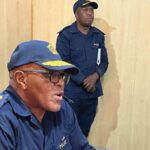
In her address, Minister Tsheka said police investigations were continuing. She relied on a police report which says Boloetse was taken from his home by three men with covered faces. They assaulted him while his hands were fastened, threw him into their car and drove off. The minister gave the date as 6 September, a day later than the 5 September date recorded elsewhere.
The report says the men dumped him at Thaba-Bosiu. Boloetse found his way to the main road, where a passing motorist in an unidentified car found him and rushed him to a military base in Metolong. A military officer took him to hospital for treatment, and later to the Maseru Charge Office, where he reported the matter to the police.
According to the minister, he was released after making his report. When police later asked him to return to clarify some issues, she said, Boloetse refused, saying he would consult his colleagues. Police have since spoken to him by phone, she said, although he was never found at his home.
That account leaves gaps. Boloetse is a victim of a brutal attack, and an MP is telling the House that the police are suspects. Against that background, his wish to speak to colleagues before going back to a police station is not hard to understand.
The minister also defended the police, who she said spoke to reporters some days after the incident. She said: “The police’ silence regarding progress made on their investigation, does not mean they have halted the investigation. Sometimes, successful investigations require investigators to be allowed ample time to do the job without disruptions.”
She added: “Justice is never discriminatory, it is never selective in terms of any status of any person, whether the person is victim or suspect, or whether s/he is infamous or not. We are all equal before the law. Justice has to be done for all.”
Fine words. But justice also needs action and, as the applause for Dr Phamotse suggests, many MPs doubt that the police can deliver it in this case. Time alone, as the minister suggests, will not settle that doubt. An independent inquiry might.
The minister also gave crime figures. From January to September 2026, she said, police received 562 sexual offence reports and 215 reports of aggravated assault nationwide. She called the numbers very high and worrisome, promised to work harder for every victim and condemned all crime meant to harm human life.
Those numbers matter. But they say nothing about who took Boloetse, or when the public will know. Listing other crimes is not an answer to a question about this one.
Finally, the minister directed unhappy victims to the Police Complaints Authority: “Where victims are not satisfied with police services, the Police Complaints Authority is there to listen to their concerns and intervene. Doors to the Minister’s office are also open for intervention.”
What happens next
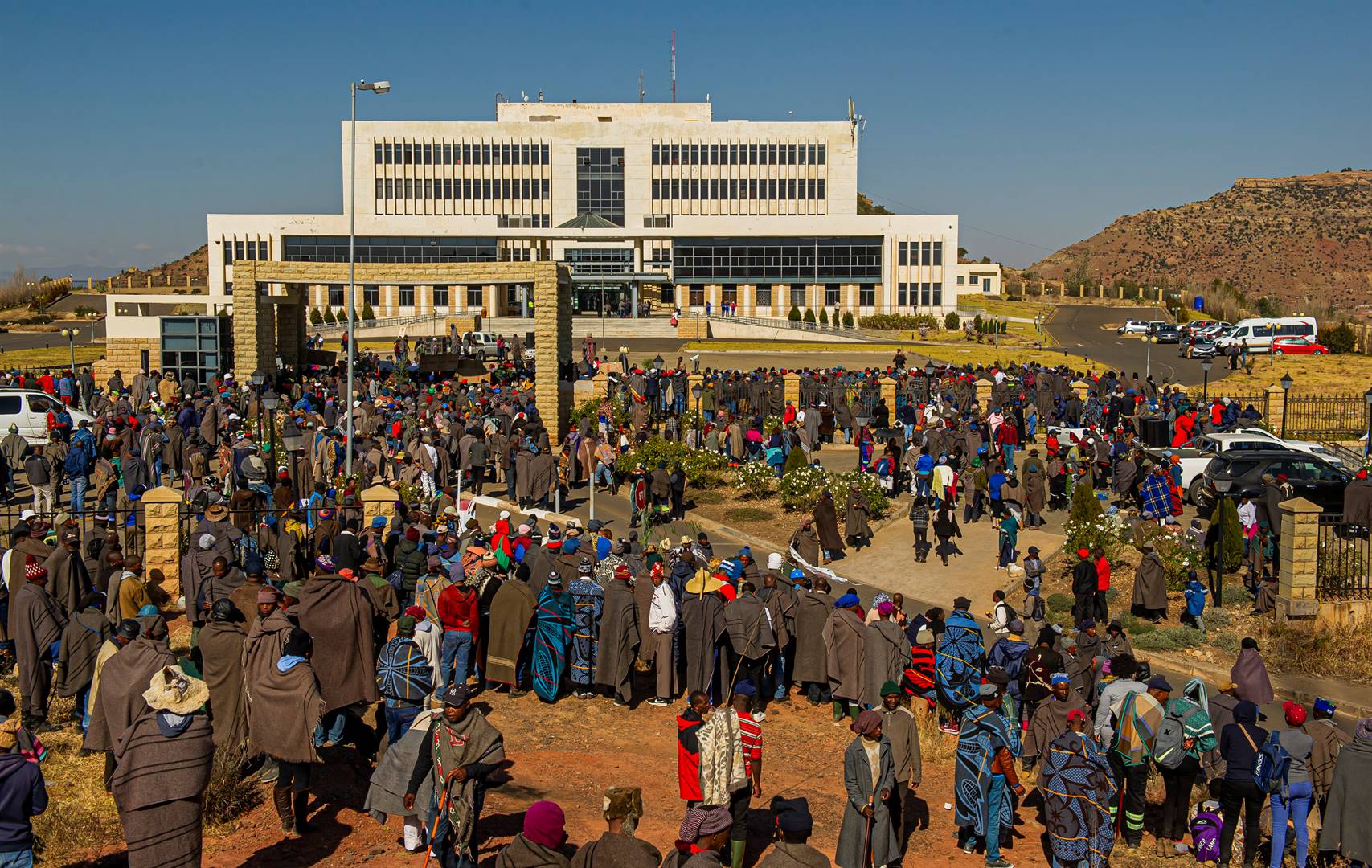
The motion is expected to come before the National Assembly, where members will decide whether to back a commission of inquiry. The minister has promised to report to the House on her request to Finance. Both will be watched closely.
Boloetse’s attackers have not been publicly identified. The government has, so far, offered little beyond a police report, a warning about cost and a promise to return. Basotho, the press and the international bodies that have called for an independent probe will want more than that.
An independent commission would offer what a police investigation, however diligent, cannot: public confidence that those investigating are not investigating themselves. The question for government is simple. Does it want the truth about what happened to Boloetse, and is it ready to pay for it?
Summary
- An opposition legislator has moved to force the government’s hand over the abduction and torture of journalist and human rights activist Kananelo Boloetse, asking Parliament to set up an independent commission of inquiry.
- It also calls for a probe into the government’s involvement in the attack on Boloetse, and for a full report to be tabled before the House.
- “We found out with the police (that there was a need to establish the commission), but the proposed initiative has financial implications, therefore there is a need for us to approach the Ministry of Finance to request a Budget for this.
I am a journalist based in Maseru, Lesotho, renowned for investigative reporting. Over the years, my work has been published both locally and internationally, including in South Africa through the Amabhungane Centre for Investigative Journalism and the Daily Maverick, among other publications.
In Lesotho, I have served as a senior reporter for several leading weekly newspapers, including the Lesotho Times, Public Eye, and Sunday Express. My reporting has focused on uncovering issues of public interest, promoting accountability, and giving voice to underreported stories.
In 2016, I co-founded the MNN Centre for Investigative Journalism in Maseru, an initiative dedicated to strengthening investigative journalism and fostering a culture of transparency and public-interest reporting in Lesotho.