…Lesotho’s M923 million energy gamble
Energy security has become one of Lesotho’s most ambitious development goals, but behind the country’s push to expand renewable energy lies a growing financial obligation that will ultimately be carried by taxpayers.
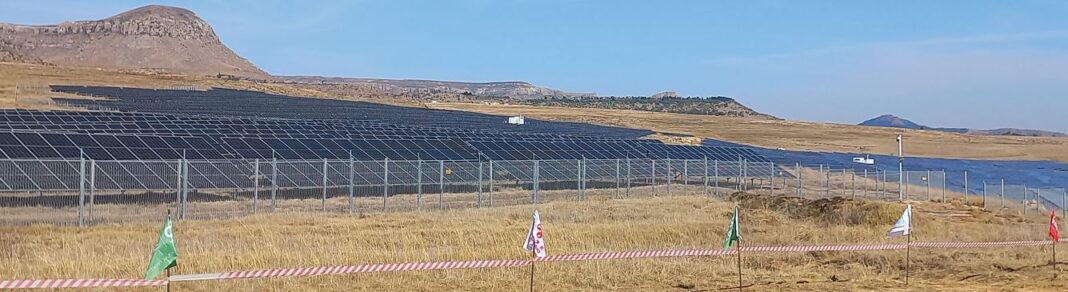
The Government of Lesotho has secured a M923 million loan to finance the second phase of the Ramarothole Solar Plant in Mafeteng, a project expected to generate 50 megawatts (MW) of electricity and include battery storage capacity.
While the project promises to reduce Lesotho’s dependence on imported electricity, the loan agreement means the country will remain financially committed for two decades, with repayments extending until 2046.
The financing was obtained from the Export-Import Bank of China (Exim Bank) and is classified by the Ministry of Finance and Development Planning as a soft loan, because of its favourable lending conditions.
According to loan information from the ministry, the first disbursement was made on June 29, 2026, with the first interest payment scheduled for September 21, 2026.
However, the repayment of the principal amount will only begin after a five-year grace period, with the first principal payment due on September 22, 2031.
The loan will mature in 2046, meaning future governments will continue servicing the debt for approximately 20 years after the project begins operating.
The interest rate attached to the loan is 2 percent, while the agreement includes a once-off management fee of 0.25 percent.
Although the terms are considered concessional compared to commercial borrowing, the full financial impact will only become clear over the lifetime of the loan, when interest and associated costs are added to the principal amount.
The money will be repaid through government revenues, meaning taxpayers will ultimately carry the obligation.
This is not the first Chinese-backed loan for the Ramarothole Solar Plant. Phase I of the project, which was completed in 2023, was also financed through Chinese funding, with the government borrowing M667 million for the 30MW facility.
Closing Lesotho’s energy gap
The investment comes at a time when Lesotho continues to face significant energy insecurity.
At peak demand, the country requires approximately 220MW of electricity. However, domestic generation remains far below this requirement.
The ‘Muela Hydropower Station produces about 72MW, while Phase I of the Ramarothole Solar Plant contributes 30MW.
Together, the two facilities produce slightly more than 100MW, leaving Lesotho dependent on electricity imports, mainly from South Africa’s Eskom.
Energy Minister Lejone Mpotjoane said the country spent approximately M1.2 billion buying electricity this year alone.
The second phase of Ramarothole is expected to increase domestic generation capacity and reduce the amount of electricity the country needs to purchase from outside.
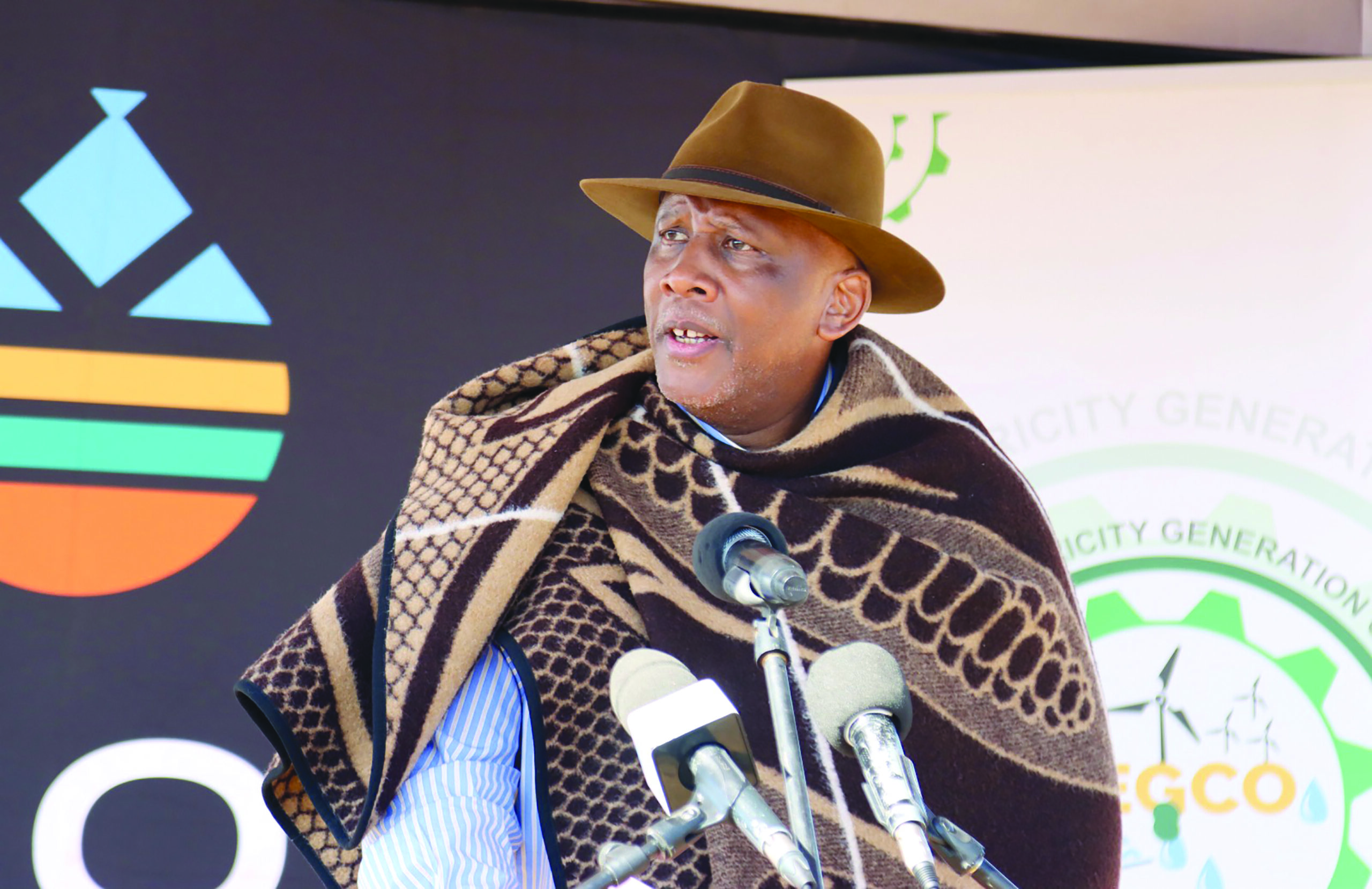
Speaking during the sod-turning ceremony for Phase II earlier this month, Prime Minister Ntsokoane Matekane said the project represented a major step towards addressing the country’s energy challenges.
“It is over M923 million,” Matekane said, adding that the project was expected to take 12 months, with completion targeted for August 2027.
The government, however, has previously indicated that construction could take longer, with project timelines also referring to a period of up to three years.
Matekane said the investment was a response to persistent energy insecurity.
A renewable energy future financed by debt
The push towards solar energy comes amid a global transition away from fossil fuels.
At COP28 in 2023, countries agreed to accelerate climate action, including increasing investment in renewable energy sources such as solar and wind.
The International Energy Agency’s Global Energy Review has highlighted the rapid growth of solar photovoltaic technology, with solar becoming one of the largest sources of new electricity generation globally.
For Lesotho, renewable energy is viewed as a way to improve energy independence while reducing reliance on imported power.
Phase I of Ramarothole was officially handed over to government in June 2023.
The 30MW facility has a projected operational lifespan of 25 years and is expected to produce approximately 1.3 billion kilowatt-hours (kWh) during its lifetime, averaging about 52.71 million kWh annually.
The agreement for Phase I was signed on September 2, 2018, between the Ministry of Energy and Meteorology and the SMO-TBEA Consortium during the Forum on China-Africa Cooperation (FOCAC) in Beijing.
A framework agreement between the Ministry of Finance and China’s Exim Bank followed on January 7, 2020.
Jobs promised, communities left behind
At the Phase II launch, Finance Minister Dr Retšelisitsoe Matlanyane said the project would create more than 400 jobs.
She also announced plans for another 40MW solar project with battery storage capacity.
But while government celebrates increased electricity generation, communities surrounding the Ramarothole solar park continue to raise concerns about whether local residents are benefiting from the investment.
Eight villages surround the project area: Ha Liemere, Ha Lempetje, Ha Ramarothole, Makeneng, Ha Sebusi, Ha Mahali, Ha Rankapu and Ha Qobete.
Despite hosting one of the country’s largest renewable energy projects, some residents still do not have access to electricity.
Four villages, Ha Liemere, Ha Sebusi, Ha Mahali and Ha Rankapu, remain without electricity.
The remaining villages have electricity connections, but residents say these were not provided because of the solar plant.
The most severe challenge has been water scarcity.
In Ha Ramarothole, where the solar project is located, villagers reportedly face difficulties accessing water, with residents relying on limited communal supplies.
At the same time, a borehole inside the fenced solar facility is used to clean solar panels.
The situation has raised questions about whether communities hosting major national infrastructure projects are receiving adequate social benefits.
More projects, more borrowing
The government’s renewable energy plans extend beyond Ramarothole.
Lesotho is also planning the construction of the Oxbow Hydropower Project, expected to generate 80MW.
In the same Ramarothole area, another solar project is planned despite concerns raised in Parliament in 2025 that the country risks repeating problems associated with the Fraser Solar project.
The proposed project, involving China-based Beijing Jinyuntong Technology Co. Ltd (JYT), is expected to follow a Build-Operate-Transfer (BOT) model.
Under the arrangement, JYT would finance, construct and operate a 40MW solar plant with a 20MW energy storage system, before transferring ownership to government after a 15-year operating period.
Meanwhile, in June, Energy Minister Mpotjoane signed a Memorandum of Agreement with Convalt Energy Inc founder and CEO Hari Achuthan for a feasibility study into a renewable energy project at Kobong in Leribe.
The proposed project could eventually generate up to 1,200MW of electricity.
The agreement includes projected investment of approximately US$6 billion (about M110 billion) and a proposed US$20 billion (about M366 billion) investment for a 900MW data centre.
World Bank joins electrification push
Lesotho’s energy expansion is also receiving support from multilateral lenders.
The World Bank Group recently approved a US$50 million (approximately M900 million) concessional credit facility through the International Development Association (IDA).
The funding will support the Accelerating Sustainable and Clean Energy Access Transformation in Lesotho (ASCENT-Lesotho) project.
The programme aims to expand electricity access to nearly 147,000 people and businesses, particularly in rural areas where grid connection remains limited.
The World Bank said the initiative was intended to “bring reliable, affordable electricity to nearly 147,000 residents and businesses, reduce energy poverty, and create the conditions for stronger household incomes and private sector growth.”
The balancing act
For Lesotho, Ramarothole Phase II represents both an opportunity and a financial commitment.
The project could strengthen domestic electricity generation, reduce expensive imports and improve energy security.
But the M923 million loan also means future generations will inherit a long-term repayment obligation.
The central question is whether the economic benefits generated by the solar investment will outweigh the cost of borrowing, and whether communities living alongside these projects will see meaningful improvements in their daily lives.
For taxpayers, the price of energy independence will not only be measured in megawatts produced, but also in the millions of maloti committed to repaying the debt.
Summary
- The Government of Lesotho has secured a M923 million loan to finance the second phase of the Ramarothole Solar Plant in Mafeteng, a project expected to generate 50 megawatts (MW) of electricity and include battery storage capacity.
- The financing was obtained from the Export-Import Bank of China (Exim Bank) and is classified by the Ministry of Finance and Development Planning as a soft loan, because of its favourable lending conditions.
- Although the terms are considered concessional compared to commercial borrowing, the full financial impact will only become clear over the lifetime of the loan, when interest and associated costs are added to the principal amount.
Thoboloko Ntšonyane is a dedicated journalist who has contributed to various publications. He reports on accountability, human rights, exposes corruption and wrong doing by those in power. He reports have exposed corruption, abuse of power, fraud, misconduct and negligence. He subscribes to evidence-based reporting. He reports on governance, parliament, courts, climate change, human rights, sexual and reproductive health rights (SRHR), health, business and agriculture. He gives a voice to the marginalised while also demanding accountability. His work inspires change, triggers dialogue and also promote transparency in a society.