

Teenage pregnancy is considered one of the major public health challenges facing the country. It can sometimes lead to school dropout and early marriage.
Studies show that teenage pregnancy, school dropout and child marriage are rife in underserved communities, and Thaba-Tseka is one of the districts that often make headlines because of them.
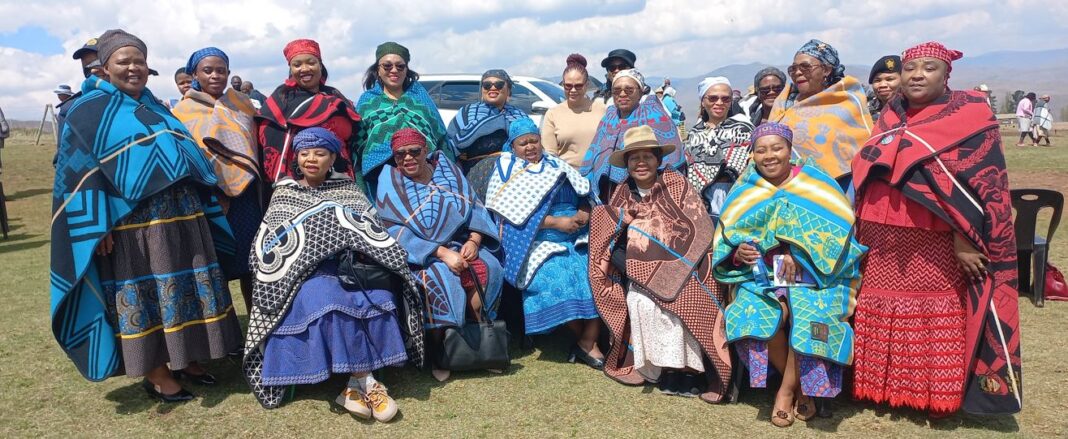
This week, Parliament’s Women’s Caucus, made up of members of both the Senate and the National Assembly, visited the district to engage parents, teachers, students and officials on these problems, which have rocked the district.
Various organisations and government initiatives are working to address teenage pregnancy and child marriage in Lesotho, but the challenges remain acute in Thaba-Tseka.
According to the Lesotho Demographic and Health Survey, the district has the country’s highest rate of teenage childbearing, at 32%, compared with just 12% in Leribe. It also records the highest rate of forced child marriage, at 22%, often following teenage pregnancies.
Caucus Chairperson ‘Mamamello Holomo expressed concern over gender-based violence (GBV) incidents and child marriage in the Panteng and Ha-Ramoliehi communities in the Thaba-Tseka and Mashai constituencies.
She said the caucus wants to see students finish their studies, secure a better future and become good citizens who will one day run the country and change its prospects.
“We are concerned about teenage pregnancies. Adolescents are not mature enough to raise a family. We have a nation whereby children are growing up without proper care and parental supervision, which could lead to a poorer and weaker nation,” she said.
Supported by the Southern African Development Community Parliamentary Forum (SADC-PF), the outreach saw participation of legal experts, health professionals and police officers, who in one accord urged parents and guardians to take a more active role in guiding and disciplining their children.
Speakers said discipline should be firm, caring and aimed at helping children make responsible decisions. Parents were cautioned, however, against assaulting children, as physical abuse is a punishable offence.
Families and communities were encouraged to work together to keep children in school, protect them from early marriage and give them the support and guidance they need to build safer and more hopeful futures.
Holomo said some laws need to be amended and new ones enacted that would sufficiently address the societal challenges facing the nation. She noted that some adolescents leave their children alone and go to South Africa in search of economic opportunities.
The Chairperson of the Women’s Caucus added: “It is not too late to change the status quo. As long as God gives us the opportunity, we will join forces. We should not accept that challenges within families should lead to GBV.”
The World Health Organisation (WHO) says adolescent girls are more vulnerable than boys to unplanned pregnancy, and some drop out of school and enter early marriage. Although education policy provides for the reintegration of girls who leave school to give birth and care for their children, not all are reported to return.
Child Gender Protection Unit (CGPU) officer at Thaba-Tseka police station, Lance Sergeant Lintle Mankoe, said unexpected teenage pregnancy should not result in child marriage. She warned parents that they could face the consequences if found to have facilitated it.
“If your girl child is pregnant, approach relevant institutions for guidance,” she said.
Mankoe reminded parents that concealing or facilitating child marriage is an offence. Parents or guardians who cover up or consent to such arrangements could be charged under the Children’s Protection and Welfare Act of 2011, which sets the legal age of marriage at 18.
She also warned chiefs against allowing sheep to be slaughtered for an adolescent in a purported marriage. Senator ‘Makholu Muoalle Moshoeshoe echoed this, cautioning chiefs against signing letters that facilitate the marriage of underage children. Moshoeshoe also challenged men to become role models for boys and to mentor those who did not attend initiation school.
Lance Sergeant Mankoe said her office receives reports of children as young as 15 entering child marriages. She warned older people against statutory rape, noting that sex with a child under 18 is statutory rape in Lesotho. Conviction in the courts attracts a 10-year prison term, often without the option of a fine.
She said a child who has been raped should be taken to hospital within three days and should not wash, as this could interfere with the collection of evidence.
She also condemned sexual offences committed by some women in so-called “sugar mummy” relationships, in which they lure young boys into intergenerational sexual relationships.
Lance Sergeant Mankoe called on parents not to spare the rod but to enforce discipline among their children, urging them to be firm on curfews and to set clear times for children to be home after sunset.
Ranyaliseng Maanela, a representative of the Ministry of Gender, Youth and Social Development, warned communities that the Counter Domestic Violence Act, 2022 prohibits parents from abdicating their responsibilities and requires them to provide for their children’s needs. He pointed out that abuse often happens within close relationships.
“Crimes should not be hidden but exposed so that it should be a deterrent to others,” he said.
Maanela said the law entitles survivors of GBV to protection orders against perpetrators, and violating such an order is punishable.
Senator ‘Mambataung Mokhathali, another member of the caucus, said whatever a child is taught and exposed to in childhood becomes part of adulthood, and called for positive upbringing and influence from their surroundings. Mokhathali said children exposed to adulterous communities are influenced in their behaviour, grow up sexually active and spread HIV and sexually transmitted infections (STIs).
MP ‘Manthabiseng Maea urged parents to stop demanding that their daughters “return from where they come from” when they arrive home at night.
Residents also shared their experiences with the legislators. Panteng resident Leeto Ntabanyane expressed worry that when parents call out inappropriate behaviour among adolescents in the community, the adolescents’ parents gossip about them.
“They are going to say that you have abused them.”
Ntabanyane also said some parents condone sexual relationships among teenagers. When teenagers visit one another and spend long periods together at home, some women often say, “They are just children; they are learning, and nothing will come of it,” only to discover later that the girl is pregnant. He also expressed concern that some adolescents refuse to attend school and loiter aimlessly in the community.
Another resident, ‘Marichard Mothae, told the legislators that some adolescents fetched from marriages return to the marriages on their own, posing a challenge to parents. She was advised to report such cases to the CGPU, which intervenes not only when a crime has been committed but also in family matters.
“We work with Probation Officers. Part of our work [CGPU] is to also ensure that children don’t abuse you[parents],” said Lance Sergeant Mankoe.
Another villager, ‘Maseeng Maliehe, took a swipe at men who sexually assault children.
“Men who rape the children are overlooking us and go for the children. You will find that as you are walking with the child, these men will be interested in talking to the children and overlook you,” Maliehe said.
Thaba-Tseka’s CGPU office reported that it recently reversed a child marriage involving a 15-year-old girl from Qacha’s Nek who reportedly met her partner on social media. Chief Selebeli Kotsa of Bocheletsane also said his office had annulled a child marriage.
The chief’s move highlights the role traditional leaders can play in protecting children and upholding their rights. Ending child marriages safeguards young people from harm and gives them a better chance to remain in school and build a secure future.
Summary
- Supported by the Southern African Development Community Parliamentary Forum (SADC-PF), the outreach saw participation of legal experts, health professionals and police officers, who in one accord urged parents and guardians to take a more active role in guiding and disciplining their children.
- Families and communities were encouraged to work together to keep children in school, protect them from early marriage and give them the support and guidance they need to build safer and more hopeful futures.
- Parents or guardians who cover up or consent to such arrangements could be charged under the Children’s Protection and Welfare Act of 2011, which sets the legal age of marriage at 18.
Thoboloko Ntšonyane is a dedicated journalist who has contributed to various publications. He reports on accountability, human rights, exposes corruption and wrong doing by those in power. He reports have exposed corruption, abuse of power, fraud, misconduct and negligence. He subscribes to evidence-based reporting. He reports on governance, parliament, courts, climate change, human rights, sexual and reproductive health rights (SRHR), health, business and agriculture. He gives a voice to the marginalised while also demanding accountability. His work inspires change, triggers dialogue and also promote transparency in a society.