
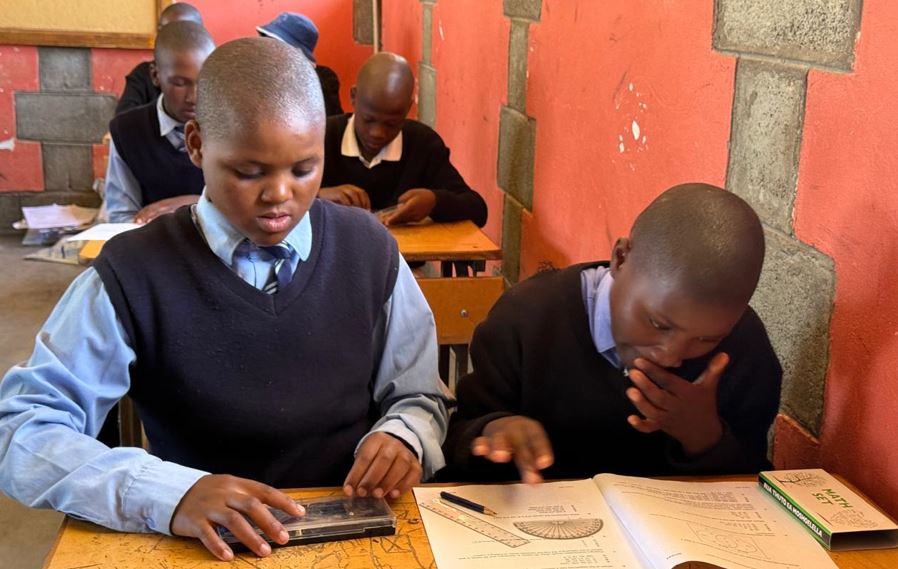
“If a school is a place of safety, children will be able to reach their full potential,” said Thabang Hloele, a facilitator on the Safe and Inclusive Schools intervention, echoing a conviction now fuelling an effort to transform Lesotho’s schools into violence-free learning environments.
According to Hloele, in a country where the majority of children’s time is spent in the classroom, the importance of school safety cannot be overstated. “Creating safe spaces is not only about physical security, but also about emotional well-being and the opportunity for every learner to flourish,” he said.
That conviction now has the full weight of government and international backing behind it. Ministry of Education and Training, with support from UNICEF and the Global Partnership for Education (GPE), has launched the Safe and Inclusive Schools intervention, a programme targeting 300 primary schools and 52,695 learners across the country.
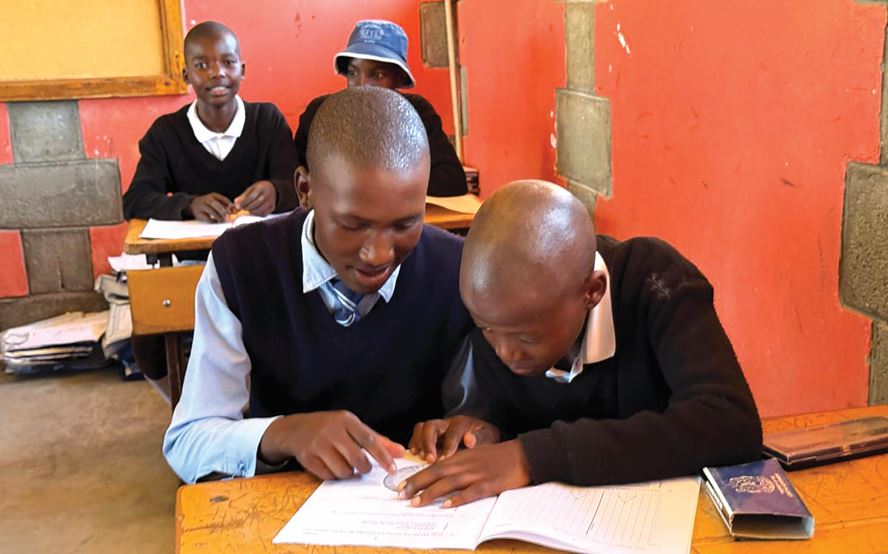
The initiative stems from a pressing reality that violence in and around schools, whether physical, emotional or sexual, continues to harm children, disrupt attendance and undermine learning outcomes.
The Minister of Education and Training, Ntoi Rapapa, said the programme goes beyond training and pamphlets, and is intended to rewire how schools function. “This intervention strengthens the institutional systems our schools require to identify, prevent and respond to violence against children, including clear safeguarding protocols, trained personnel and functional case-management processes. It thus strengthens the Child Friendly Schools approach, which emphasises that schools need to be more welcoming, more child-centred, where all children are equally respected and valued,” he said. “The Government’s commitment is to ensure schools become safe, supportive and conducive areas for quality education. Therefore, across all 300 targeted schools, safeguarding becomes an embedded standard, not an isolated effort.”
For years, Hloele said, Lesotho’s schools lacked a dedicated policy focused on addressing violence in schools. “The programme aims to make sure there are clear, child-friendly reporting mechanisms,” he explained.
“Teachers and non-teaching staff are being trained on identification, prevention and response to school-based gender-based violence. But it is not only up to staff, learners themselves are expected to take an active role in preventing violence. This shift in responsibility aims to cultivate a culture where everyone in the school community is empowered and accountable.
“The intervention includes the development of Zero Tolerance Policy Guidelines, which will set out clear procedures for reporting and responding to incidents, and clarify standards of conduct for all adults on school premises. We want to popularise the Child Helpline, and we are printing tools to guide schools in addressing issues of violence,” said Hloele.
He said most of the time, learners are at school and they should be there to learn, not to be violated. “When a teacher looks at a learner, they should see a learner, not a potential boyfriend or girlfriend, and vice versa,” he said. He emphasised, similarly, that a learner should see a teacher as a teacher, a parent and a protector.
For UNICEF, which is co-financing the intervention alongside GPE, the ambition is to make these safeguards permanent rather than another short-lived campaign. “Every child has the right to learn in an environment where they feel safe, respected and protected from violence. When children feel protected and know that their concerns will be heard and acted upon, they are better able to attend school regularly and focus on learning,” said Dr Bob Muchabaiwa, Acting UNICEF Lesotho Representative. “Through this partnership with the Government of Lesotho and the Global Partnership for Education, UNICEF remains committed to strengthening these systems and supporting schools to become safer, more inclusive and supportive spaces where every child can thrive and realise their full potential.”
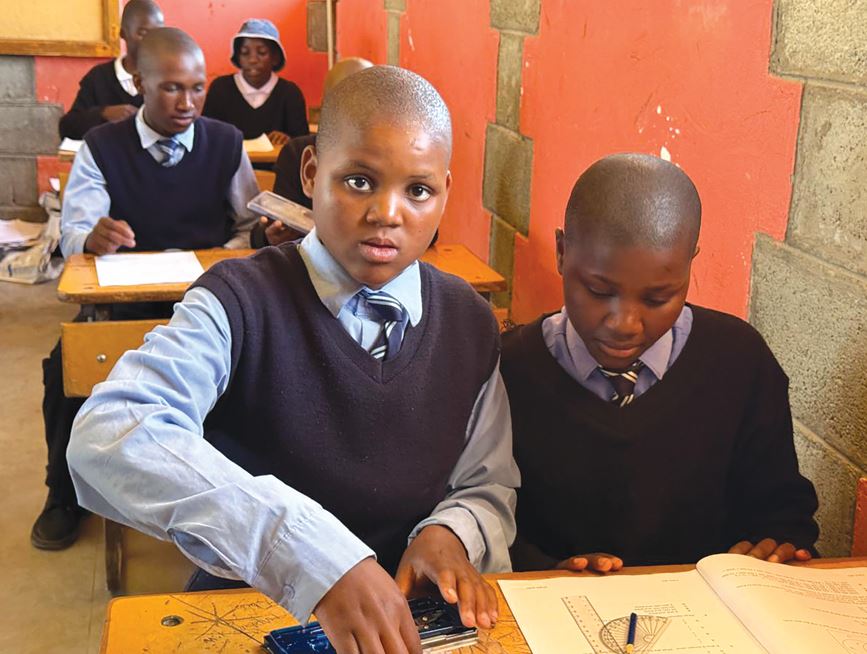
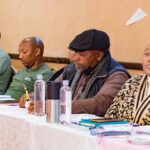
At the heart of the programme are intensive training workshops for teachers, principals and support staff. Mpheng Molapo, a facilitator from the Ministry’s Learner Care and Welfare Support Unit, outlined the scope: “We have been in Mokhotlong and Mafeteng, and now we are training educators in Mohale’s Hoek and Quthing. The aim is to equip stakeholders on child protection and to eliminate violence in schools.”
Molapo highlighted a stubborn problem, violence often goes unreported and is sometimes normalised, even by teachers. “Corporal punishment is still being used,” she noted, “but we are training teachers in alternative discipline methods. There are also new referral mechanisms to support children who have been violated, whether that means healthcare or legal assistance. Our goal is to reduce dropout rates by making children feel safe in schools.”
It is precisely this link between school-level reporting and the wider child-protection system that the Minister returned to. “Sustainable protection for children depends on functional, interlinked systems, prevention measures, trusted reporting channels and reliable referral pathways operating together,” he said. “By strengthening these linkages between school-level mechanisms and national child protection structures, we ensure that concerns raised by and affecting children are identified and addressed consistently, and that schools remain safe, stable environments where children learn and thrive.”
Molapo added that the training will also improve the reliability of the data schools generate. “The training will help us get reliable statistics, because schools will use new tools for reporting incidents,” she said.
For educators like Teboho Setumo of Phatlalla Primary in Mohale’s Hoek, the training has been eye-opening. “We learned that some things we used to do, like corporal punishment, are not only harmful towards children, but could also get us into trouble. We are now expected to pass this information to colleagues, school boards and the whole school community so we can move away from harmful norms and promote child-friendly schools.”
Setumo admitted that bullying and violence among learners was often addressed with more violence. “But we learned that beating does not solve the problem, it can hurt the learner and put the teacher at risk legally. Now, I understand that talking to learners and making them comfortable can reveal the root causes, which may even come from home.”
He also noted that while his school has not experienced cases of teacher-learner relationships, these situations have occurred elsewhere. “Getting into a relationship with a learner removes from the teacher that image of being a teacher, and learners see them as their peers, resulting in distorted relationships between a teacher and a learner. In such cases, a child may not perform well in school,” Setumo explained, an awareness he said is part of the wider shift towards professional conduct and safeguarding standards.
‘Marathabeng Nkhula, principal at Qhoqhoane Primary, is grateful for the practical tools and guidelines. “We have to change how we do things, prevent violence, and know how to report and refer cases, whether it is learner-to-learner, teacher-to-learner, or between teachers,” she said. “The approach will help build trust, so learners feel safe and perform better.”
She highlighted the importance of trust between learners and teachers. When learners feel safe, they are more likely to confide in adults about problems they may face, whether in school or at home, a sense of security she called fundamental to academic success and personal development.
District Education Manager ‘Mahlompho Shabe, in Mafeteng, stressed that violence is pervasive and affects learning. “Where there is violence, learning does not take place. We are dealing with vulnerable learners, many of whom are self-raising because their parents are working in other countries. This intervention fills serious gaps, many teachers could not previously identify what violence really means or how to prevent it.”
Shabe expected teachers and principals to share their new knowledge with school boards and communities, cascading the training’s impact. “It’s about getting rid of violence at all levels, and learners must be involved, like the saying that nothing for us, without us. Committees including even the youngest learners can be formed to give them a voice in their own protection.”
She noted that violence can occur across all ages and backgrounds, and that the training has helped clarify definitions and approaches to gender-based violence. “We are not skilled, we are not technical in dealing with issues of violence. This workshop has given direction to principals, teachers, school boards and communities. Teachers need to escalate training sessions and disseminate information, starting with their peers and then moving to school boards and the community.”
The scale of the problem is what makes the intervention urgent. UNICEF data show that 22 percent of girls aged 13–17 who experienced sexual violence in the past year identified classmates as perpetrators, and more than a quarter said the incidents occurred on school premises.
More than 40 percent of adults surveyed agreed that corporal punishment is necessary, yet 82 percent of staff expressed willingness to attend violence-prevention training, a sign of readiness for change.
The Safe and Inclusive Schools intervention is designed to deliver lasting change. It will establish accessible, child-friendly reporting channels, align referrals with social welfare and police services, and disseminate prevention messages, including on the Child Helpline. Child protection committees and clubs will be set up or reactivated, giving children a meaningful voice in their own safety.
The intervention also includes efforts to raise awareness across families and communities. Parents, caregivers and community leaders will be equipped with information about preventing and reporting violence, so the support system for learners extends beyond the classroom, recognising that violence is not just a school issue, but a community concern.
The initiative ties directly into Lesotho’s National Prevention and Response Plan on Violence Against Children and Youth (2022), and advances priorities under the country’s education system transformation agenda. By aligning with national policies and international best practice, Lesotho aims to ensure that the gains from this intervention are sustainable, and that progress is monitored, so that, as Hloele puts it, every school becomes a place where children go to learn, not to be violated.
Summary
- “If a school is a place of safety, children will be able to reach their full potential,” said Thabang Hloele, a facilitator on the Safe and Inclusive Schools intervention, echoing a conviction now fuelling an effort to transform Lesotho’s schools into violence-free learning environments.
- Ministry of Education and Training, with support from UNICEF and the Global Partnership for Education (GPE), has launched the Safe and Inclusive Schools intervention, a programme targeting 300 primary schools and 52,695 learners across the country.
- “Through this partnership with the Government of Lesotho and the Global Partnership for Education, UNICEF remains committed to strengthening these systems and supporting schools to become safer, more inclusive and supportive spaces where every child can thrive and realise their full potential.
Ntsoaki Motaung is an award-winning health journalist from Lesotho, specializing in community health stories with a focus on sexual and reproductive health and rights, as well as HIV. She has contributed to platforms like “Be in the KNOW,” highlighting issues such as the exclusion of people with disabilities from HIV prevention efforts in Lesotho.
In addition to her journalism, Ntsoaki serves as the Country Coordinator for the Regional Media Action Plan Support Network (REMAPSEN). She is also a 2023 CPHIA Journalism Fellow.