
… Inside Lesotho’s Multiplier 1 classrooms
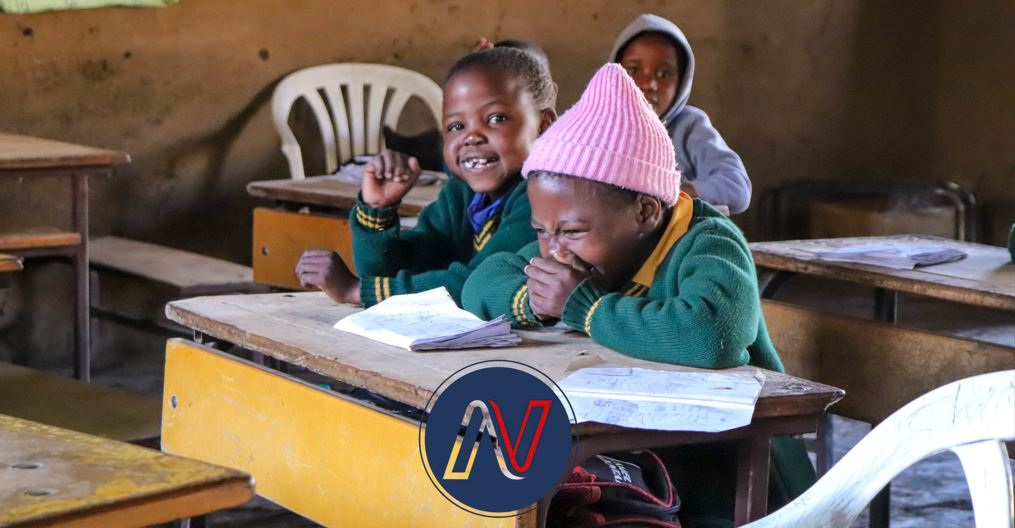
The sound reaches you before the village does. A rise and fall of small voices, singing something half-remembered from a nursery rhyme, carried on the thin mountain air of Thaba-Tseka. Follow it, and you will find a playground that did not exist a year ago, full of children who, for many of them, are discovering for the first time what it feels like to belong to a classroom.
This is what change looks like at ground level. It has a name, the Multiplier 1 Programme, a three-year initiative of the Ministry of Education and Training, the Global Partnership for Education, and UNICEF, but in Thaba-Tseka’s villages, it looks simpler than any policy document could make it sound. Children playing, learning, and being counted, some for the very first time. The ambition behind it is disarmingly modest and enormous all at once, that every child in Lesotho should get the strong start they deserve, the foundation on which everything else in a life of learning is built.
A new dawn at Mahlong Primary School
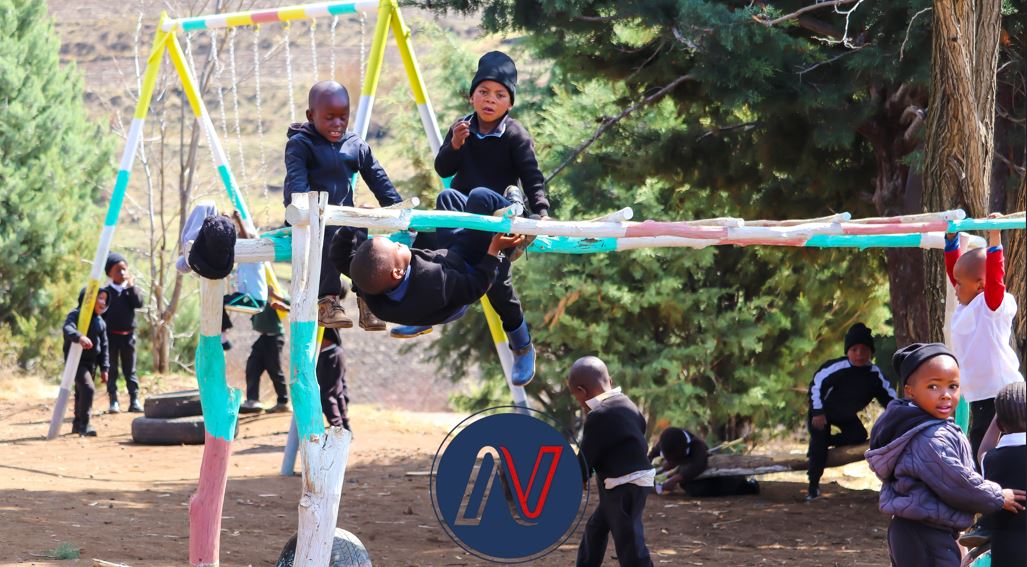
At Mahlong Primary School, you do not need statistics to see that something has shifted. A year ago, a proper reception class here was little more than a hope. Today, Principal Mahloane Mahloane stands at the edge of a newly refurbished playground and watches children in uniform chase each other across it, unable to keep the smile off his face.
“We were introduced to the programme at the beginning of the year,” he says. “It was aimed at improving what we already had in terms of early childhood education. Last year, we prepared ourselves with training, but this year our reception class became real.”
Getting there was not easy. Before the programme arrived, Mahlong already ran its own preschool, but it survived on the goodwill and the wallets of parents, who covered the teacher’s salary between them. For many families, that was a burden too heavy to carry for long. “Now, parents are not responsible for the teacher’s pay,” Mahloane says, “and the programme even helped us repair the classroom door and paint the playground. We also received cement for the classroom, and resources like a tablet full of learning modules for the teacher.”
More children, brighter futures
Take away the fees, and something predictable happens, more children walk through the gate. “We have seen our numbers go up,” the principal says. “Because parents no longer have to pay, more children are able to come to school. They also benefit from the school feeding programme, so there’s no reason to keep them at home.”
The change is visible in the smallest daily rituals. At morning assembly, learners take turns presenting what they have learned that week, a fixture of school life that, until this year, belonged only to the older grades. “Our preschool children now take part in these presentations, something they could not do last year,” Mahloane says. “They are maturing before our eyes.”
Even the playground tells its own story of shared effort. Once dull and worn, it is now bright with colour, much of it thanks to parents who brought whatever materials they had at home to help build swings and climbing frames. “It feels like the whole community is involved,” the principal says.
Yet progress here has not erased its limits. “Our classroom is still small, and the toilets are designed for older learners, not suitable for our youngest children,” Mahloane admits. Twenty-two children now fill a space built for far fewer, a number he hopes, cautiously, will keep growing.
A teacher’s perspective
For ‘Mathato Tsolo, who joined Mahlong at the start of the year to lead the new reception class, the programme’s real impact lies less in bricks and cement than in what it has taught her about the children in front of her.
“I have learned how to help a child improve physically, emotionally, spiritually, and socially,” she says. “The programme showed us how to assess each learner individually. Now, I can spot a child who needs extra help much sooner.”
She speaks of the playground the way someone speaks of a favourite tool. “Play is so important. It helps children’s minds grow, makes their muscles strong, and teaches them how to get along with others.” The tablet loaded with learning modules has become another ally in her classroom, though not without its wish list. “I wish it had videos as well instead of pictures only, and I hope we can receive more training in the future.”
Space remains her most persistent frustration. Her classroom doubles as a church hall. “Every Friday, we have to pack up all our teaching materials to make space. We need a classroom of our own.”
Parents join the journey
Ask a parent what the programme has meant, and the answers come quickly, almost urgently. ‘Masechaba Maqai’s six-year-old daughter is now in Mahlong’s reception class, and the transformation, she says, has been nothing short of life-changing. “We were asked to help build a child-friendly playground, using whatever we had at home,” she recalls. “Since January, I have seen a huge difference in my child. She can write, remember what she learned, and even play with older children. My older children were not able to do these things at her age.”
Maqai has become something of an evangelist for the programme among her neighbours. “Reception class helps children learn to write and speak for themselves before grade 1. I advise other parents to bring their children too.”
‘Makhosi Nthoana, another parent, sees the same pattern. “Children in the reception class develop faster in every way, emotionally, physically, mentally. There is a big difference between those who attended and those who do not, even if they are the same age.” Her message to families still holding back is blunt. “There is no reason to keep your child at home. Education is free now.”
Building for the future
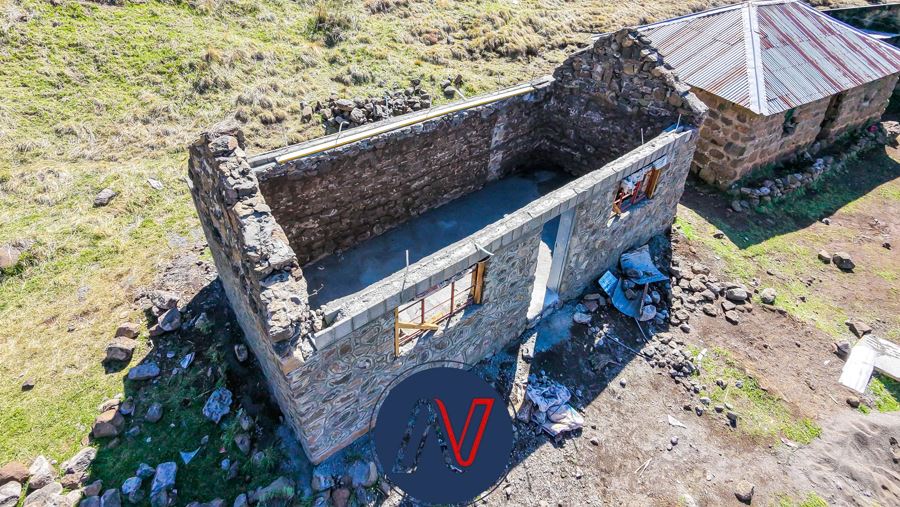
Not every school is as far along the road, and their stories are a reminder of how much groundwork still lies ahead. At Majara Roman Catholic Primary School, Principal ‘Mateboho Kuni, a teacher since 2001, is watching her school take its first steps toward the same transformation. “We have classes from grade 1 to 7, but now we are preparing for a reception class,” she says. “With the Multiplier 1 Programme’s help, we are turning an old storage building into a classroom for our youngest learners.”
Kuni has seen, up close, what happens when children skip this stage altogether. “When children come straight from home into grade 1, it is hard for them. They cry a lot, sometimes even wet themselves, and it takes time for teachers to manage their behaviour. With a reception class, children will be ready, they will know how to sit in class and listen.”
She remembers an earlier, short-lived attempt at early learning at her school, one that folded when parents could no longer afford the fees. “For the short time it ran, we saw a real difference. I believe that with this programme, our results will improve, and by grade 3, our children will be able to read and write.”
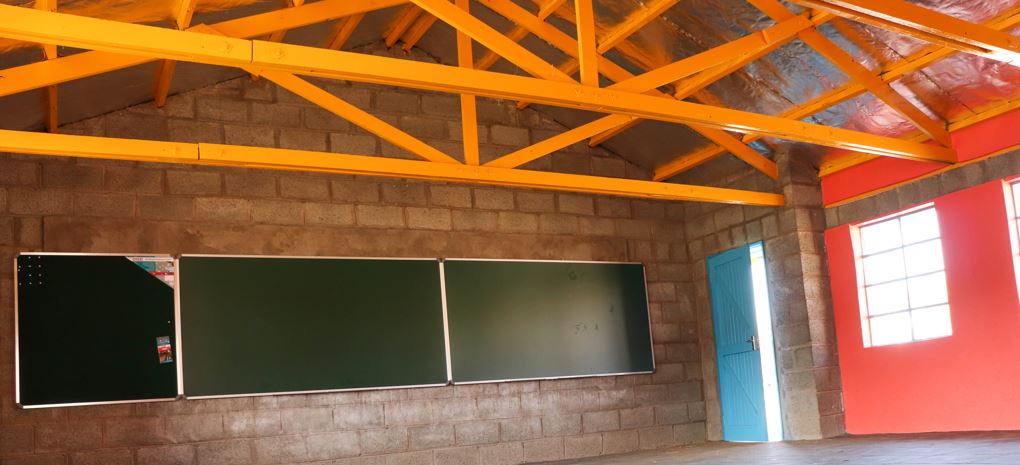
At Mokoto Primary School, teacher ‘Mathabile Mohlomi describes a similar act of collective rebuilding. “We have a classroom ready for the reception class. Parents helped to put in windows, plaster the walls and paint, install a door and chalkboard with support from the programme.” What was once an empty building, one occasionally damaged by local boys with nothing better to do, is now waiting only for furniture.
Mohlomi is under no illusions about what a reception class is for. “Reception class helps children to be ready for grade 1 — to listen, to talk, to understand.” But geography still has the final word some days. “In rainy weather, the river floods and children cannot come to school. But when the weather is good, every child can get here.”
The Multiplier 1 Programme: Facts and Figures
The Multiplier 1 Programme is at work across five of Lesotho’s most disadvantaged districts, with a goal simple enough to fit on a classroom wall: make sure every girl and boy enters school ready to learn, and stays on track through grade 3.
- Duration: Three years
- Direct reach: 57,480 learners in grades R–3, including at least 2,565 children with disabilities
- Teachers and leaders trained: 1,350 teachers, 300 school principals, and around 100 district education officials
Objectives:
- Establish and equip 300 new reception classes
- Refurbish existing classrooms and supply child-friendly furniture and materials
- Train more than 1,300 teachers and principals in the latest early-learning methods
- Provide tablets and learning kits to support teaching and gather data
- Mobilise parents and communities to support enrolment and learning at home
The numbers explain why this work matters. In 2020, only 36.4 percent of children in Lesotho were enrolled in pre-primary education, and just 15 percent of pre-primary learners showed basic literacy and numeracy skills. The Multiplier 1 Programme is trying to bend that curve, aiming to lift school readiness by 10 percent, strengthen grade 3 literacy and numeracy, and give every child, wherever they start, a real chance to succeed.
Back in Thaba-Tseka, that ambition is still measured in smaller units: a repainted playground, a door that finally shuts properly, a six-year-old who can now write her own name. It is slow, patient work, the kind that rarely makes headlines on its own, but that, village by village, is quietly redrawing what childhood in Lesotho’s classrooms can look like.
Summary
- Follow it, and you will find a playground that did not exist a year ago, full of children who, for many of them, are discovering for the first time what it feels like to belong to a classroom.
- It has a name, the Multiplier 1 Programme, a three-year initiative of the Ministry of Education and Training, the Global Partnership for Education, and UNICEF, but in Thaba-Tseka’s villages, it looks simpler than any policy document could make it sound.
- For ‘Mathato Tsolo, who joined Mahlong at the start of the year to lead the new reception class, the programme’s real impact lies less in bricks and cement than in what it has taught her about the children in front of her.
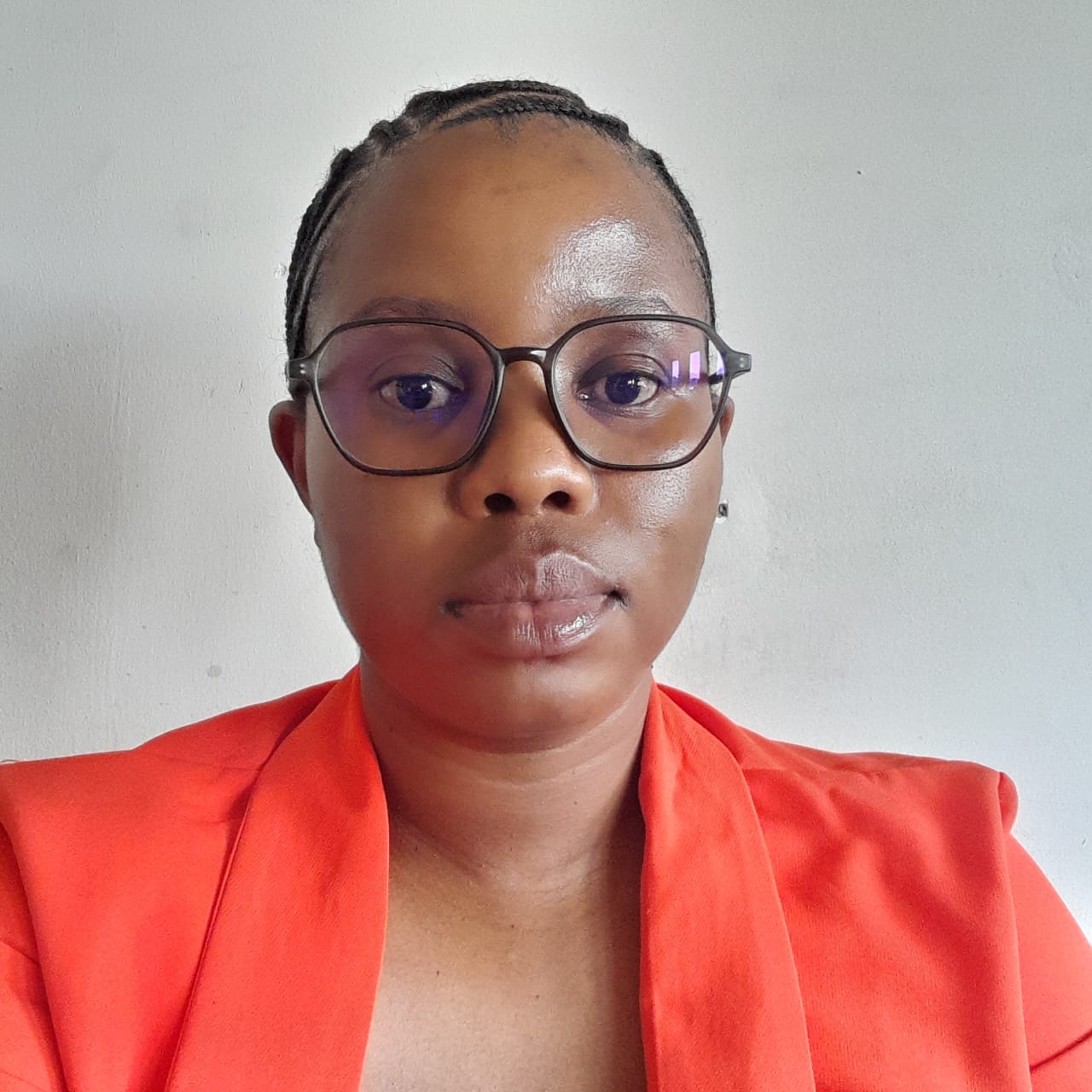
Ntsoaki Motaung is an award-winning health journalist from Lesotho, specializing in community health stories with a focus on sexual and reproductive health and rights, as well as HIV. She has contributed to platforms like “Be in the KNOW,” highlighting issues such as the exclusion of people with disabilities from HIV prevention efforts in Lesotho.
In addition to her journalism, Ntsoaki serves as the Country Coordinator for the Regional Media Action Plan Support Network (REMAPSEN). She is also a 2023 CPHIA Journalism Fellow.