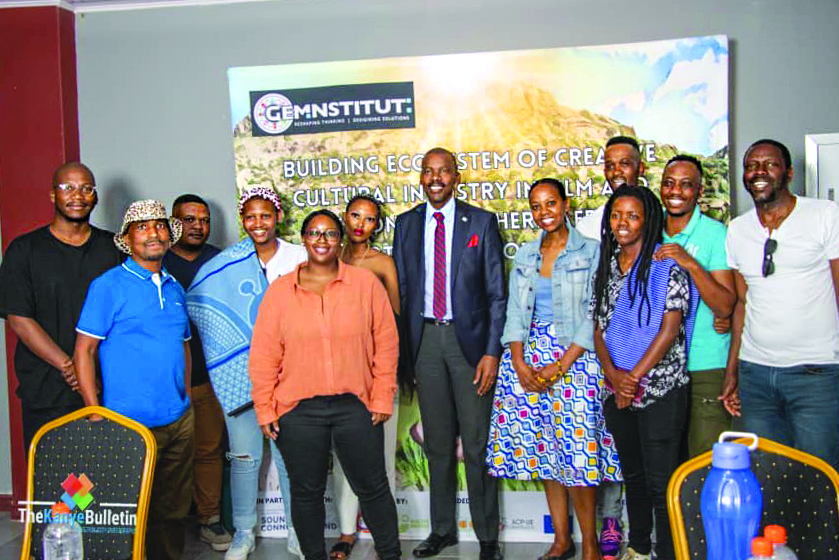

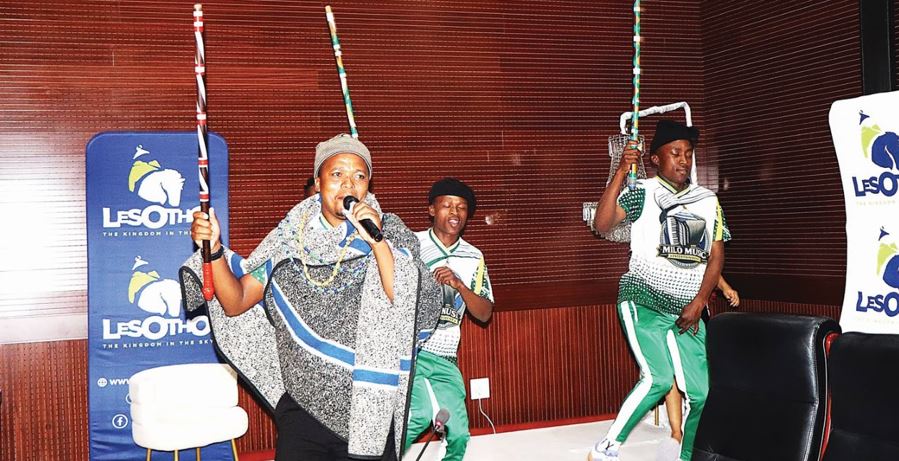
The inaugural Tourism Pitso, convened by the Lesotho Tourism Development Corporation (LTDC) to commemorate Tourism Month, has showcased Lesotho as a potential premier tourism destination, and thrown into sharp relief just how much of that potential remains locked away.
First of its kind, the Tourism Pitso launched this month brought together stakeholders from industry, investors, creative entrepreneurs, partners and government alongside the LTDC, the convener.
The two-day affair was held under the theme “Unblocking tourism investment and sustainable growth for inclusive economic development.” The initiative is expected to become an annual fixture to promote the tourism industry.
Tourism has been earmarked as a priority sector under the National Strategic Development Plan II (NSDP II), as extended, and the numbers explain why.
According to the Lesotho National Development Corporation (LNDC), tourism is rebounding and effectively leveraging the country’s unique mountain landscapes and cultural assets, with international arrivals reaching around 1.14 million in 2019, contributing about 5.5% of GDP, a figure projected to climb toward 6.1% by 2024 as recovery continued.
A sector still punching below its weight
More recent figures suggest that recovery, while real, has been uneven. The tourism sector generated over M562 million from accommodation, food and beverages in the 2025/26 financial year, despite a slight decline in visitor arrivals.
Speaking in Parliament, Tourism Minister Motlatsi Maqelepo said this marked an improvement on the M541 million recorded the previous year, pointing to higher spending per visitor among the roughly 787,000 tourists recorded, even as overall numbers dipped from a peak of over 900,000 the year before, largely on the back of an 18% drop in arrivals from South Africa, Lesotho’s primary source market, which the minister linked to ongoing border management challenges.
The government has set its sights considerably higher: officials say the goal is to reach one million visitors annually, and have earmarked fresh private-sector investment through the LTDC to upgrade key destinations toward that target.
Yet even against these gains, Lesotho’s tourism sector remains, by regional standards, dramatically underdeveloped relative to its natural assets. As one recent analysis put it, Lesotho is the only country on Earth whose entire territory lies above 1,000 metres and hosts the only ski resort in sub-Saharan Africa, yet tourism’s total contribution to GDP has hovered around 5.5%, with international tourism receipts sitting at roughly 2.5% of GDP.
Locally, the sector has employed about 25,000 people, and the government’s 2025/26 budget allocated M207.2 million to tourism under an “Economic Transformation” theme, part of a broader push, officials say, to diversify an economy still leaning heavily on textiles, remittances and SACU receipts.
The draw: falls, dams and festivals
Lesotho’s appeal lies in destinations such as the Maletsunyane Falls, Thaba-Bosiu Cultural Village, the Maloti Mountains and the Katse Dam, offering sightseeing, hiking and cultural exploration, alongside annual drawcards such as the Maletsunyane Braai Festival, the Moshoeshoe Walk and the Roof of Africa.
The Falls alone recorded an 8.6% rise in visitors, from 7,468 in 2024 to 8,093 in 2025, while the Roof of Africa event has grown into a fixture on the global motorsport calendar, drawing more than 400 registered riders annually and generating millions in revenue across accommodation, hospitality, fuel and retail.
The creative economy, crafts, music, film and fashion, is increasingly positioned as tourism’s natural partner, offering youth-intensive entrepreneurship opportunities that stretch the sector’s economic footprint beyond hotel beds and entrance fees.
Globally, the backdrop is one of cautious recovery: the UN Tourism World Tourism Barometer estimates 690 million international arrivals were recorded worldwide between January and June 2026, about three million more than the same period last year, though growth has been uneven, up 2% in the first quarter before slipping 1% in the second, following a 3% decline in April.
The investment gap
Chaba Mokuku, Project Manager and Managing Director for the Competitiveness and Financial Inclusion (CAFI) programme, decried that Lesotho does not have an investment law and this does not augur well for the country.
“Without the investment law, the investors have no trust in the business environment,” he said.
He also noted that this law protects the interests of the investors, calling for a reformed tourism act.
The concern is not new. Officials have for years acknowledged that the sector remains largely untapped relative to its promise, hampered by limited product development and thin recreational offerings that fail to keep visitors engaged for longer stays.
One of the players in the creative industry, Mpho Letima, emphasised the importance of joining forces with the communities, saying they should be taught to create their own work.
After visiting the heritage sites, Letima lamented that a 72-year-old resident of one of the country’s tourist destinations admitted that they were unaware of the attractions in their own area.
She stressed that heritage is also an important component that should not be neglected.
Turning assets into industry
Speaking at the event, the Minister of Tourism, Sports, Arts and Culture, Mputi Stephen Mputi, highlighted that the warmness of Basotho helps to position tourism promotion in the country.
He highlighted the importance of the Tourism Pitso, saying it gives the country a platform to showcase Lesotho’s tourism potential and growth.
“This is why Tourism Pitso is important, it gives us a platform to move beyond discussions, identify opportunities, build partnerships, expand market access and find practical solutions to the challenges facing our tourism sector.”
Mputi emphasised that host communities should also benefit, and that the country must not lose what makes Lesotho unique in the process of developing it.
He called on players within the sector to make it a point to understand tourists’ preferences and ensure personalised experiences for visitors.
Describing tourism as one of the key drivers of economic growth, job creation and cultural promotion, the Minister called on participants to exploit it for the benefit of the country.
“We must turn our assets into products, our products into business and our businesses into investment opportunities that create sustainable livelihoods especially within the host communities,” Mputi said.
Summary
- Speaking in Parliament, Tourism Minister Motlatsi Maqelepo said this marked an improvement on the M541 million recorded the previous year, pointing to higher spending per visitor among the roughly 787,000 tourists recorded, even as overall numbers dipped from a peak of over 900,000 the year before, largely on the back of an 18% drop in arrivals from South Africa, Lesotho’s primary source market, which the minister linked to ongoing border management challenges.
- 6% rise in visitors, from 7,468 in 2024 to 8,093 in 2025, while the Roof of Africa event has grown into a fixture on the global motorsport calendar, drawing more than 400 registered riders annually and generating millions in revenue across accommodation, hospitality, fuel and retail.
- the UN Tourism World Tourism Barometer estimates 690 million international arrivals were recorded worldwide between January and June 2026, about three million more than the same period last year, though growth has been uneven, up 2% in the first quarter before slipping 1% in the second, following a 3% decline in April.
Thoboloko Ntšonyane is a dedicated journalist who has contributed to various publications. He reports on accountability, human rights, exposes corruption and wrong doing by those in power. He reports have exposed corruption, abuse of power, fraud, misconduct and negligence. He subscribes to evidence-based reporting. He reports on governance, parliament, courts, climate change, human rights, sexual and reproductive health rights (SRHR), health, business and agriculture. He gives a voice to the marginalised while also demanding accountability. His work inspires change, triggers dialogue and also promote transparency in a society.