
Dr Theko Tlebere
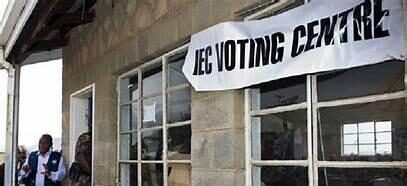
As Lesotho moves closer to another general election, the country is entering that familiar season when political temperatures begin to rise.
Parties are organizing, politicians are positioning themselves, supporters are choosing sides and social media is becoming increasingly political. The arguments will become louder, the promises bigger and, inevitably, some political disagreements will become personal. This is precisely when Lesotho needs something that is often discussed but poorly practised: political tolerance.
Political tolerance does not mean agreeing with everyone. It does not mean accepting bad governance, remaining silent when leaders make mistakes, or abandoning one’s political principles. It simply means accepting that another person has the right to hold political beliefs that are different from yours, and that they remain a fellow citizen despite that difference.
That distinction is important. An English philosopher John Locke argued that society must learn to live with differences in belief because human beings cannot reasonably be expected to think alike. His argument was developed primarily around religious tolerance, but its lesson is equally relevant to politics: a peaceful society cannot depend on everybody believing the same thing.
Another philosopher that I like so much, John Stuart Mill takes the argument further. In On Liberty, Mill warned against the danger of suppressing opinions merely because they are unpopular. For Mill, even an opinion we believe to be wrong can force society to examine why it believes what it believes.
There is a lesson here for Lesotho. If my uncle in Ha Khohlopo supports one political party while his neighbour supports another, neither has become less Mosotho. If one brother supports the government while another supports the opposition, the political disagreement should not destroy the family relationship.
If a village chief, civil servant, businessman, teacher or student holds a political opinion different from ours, that person does not suddenly become an enemy. Democracy is precisely the arrangement that allows us to disagree without destroying one another.
Lesotho’s political history reminds us why this matters. Our democracy has repeatedly been tested by disputes between political parties, internal party divisions and disagreements about elections and political power. Scholars of Lesotho’s democratization have long argued that a culture of political tolerance is particularly important in a country where electoral outcomes and political transitions have often generated serious tensions.
As we approach the next election, therefore, tolerance should not be treated as a nice word for political speeches. It should become a practical principle guiding political decision-making. This is particularly important for politicians. A government must be able to listen to opposition voices without interpreting every criticism as an attempt to overthrow it. An opposition party must be able to criticize government without treating every government decision as evidence of corruption, treason or maladministration. Political parties must also learn that losing a debate does not necessarily mean losing one’s dignity.
Another philosopher Karl Popper famously argued for what became known as the “paradox of tolerance”, a society that tolerates everything, including forces determined to destroy tolerance itself, may eventually lose its freedom. The point is not that democracy should tolerate violence or intimidation.
The point is that tolerance must operate within democratic rules. We should tolerate political differences, competing ideas, criticism and peaceful mobilization. We should not tolerate threats, political violence, intimidation or the destruction of another citizen’s democratic rights.
Hannah Arendt, writing about politics and public life, emphasised the importance of people appearing before one another in a shared public space. Politics, in this sense, exists because human beings are different. If we were all identical in our opinions, there would be little need for politics. That is perhaps one of the most important lessons for our election season.
Difference is not the problem, The problem is what we do with difference. Lesotho has many political parties. The Independent Electoral Commission currently lists a large number of registered parties, reflecting the diversity and fragmentation of our political landscape. The existence of many parties should therefore not frighten us. What should concern us is whether these differences can be managed peacefully and democratically.
Another important lesson is that Political tolerance must also extend beyond political leaders to ordinary citizens. The danger is that politicians sometimes leave the political rally and return to their homes as neighbors, while their supporters remain behind fighting one another.
A politician can exchange harsh words with another politician today and share a parliamentary corridor with that same person tomorrow. But ordinary Basotho can allow political arguments to destroy friendships, marriages, businesses and family relationships. We must know where politics ends and citizenship begins.
The ballot paper should determine who governs. It should not determine who deserves respect. This is also why political tolerance is important in decision-making at this particular moment. Electoral reforms, constituency boundaries, voter registration, electoral laws and other institutional questions require decisions that enjoy public confidence.
Lesotho is already engaged in discussions about electoral reforms ahead of the next elections, with political parties and other stakeholders participating in dialogue. Such decisions cannot be made properly when political actors approach every proposal with the assumption that the other side is acting in bad faith.
Tolerance creates room for compromise, and compromise is not betrayal. In a democracy, compromise is often the mechanism through which competing interests find a common national interest. A political leader who changes his position after hearing a convincing argument has not necessarily become weak.
He may simply have demonstrated the intellectual maturity that democracy requires. A French writer Voltaire, is often associated with the defence of freedom of expression, although the famous statement attributed to him about defending another person’s right to speak was actually written later by his biographer Evelyn Beatrice Hall. The broader principle, however, remains useful: democratic politics requires us to defend the space in which disagreement can occur.
As we approach the next election, Basotho therefore need to ask themselves a simple question: Can I disagree with you politically and still respect you as a Mosotho? If the answer is yes, then democracy still has fertile ground. If the answer is no, then the problem is bigger than political parties. It is a problem with our democratic culture.
And we should not forget that Elections are temporary. Governments change. Ministers come and go. MPs lose constituencies and sometimes return to Parliament. Political parties rise, split and disappear. But the nation remains. Our political opponents are therefore not enemies of Lesotho simply because they want a different government.
They are fellow citizens competing for the same national future. That is why political tolerance is not merely a philosophical concept for university classrooms. It is a practical necessity for Lesotho that we must all adhere to.
As the election approaches, let us argue fiercely about ideas, policies and leadership. Let us question those in power and scrutinise those seeking power. Let us defend our political convictions. But let us also remember that after the speeches, the rallies, the posters and the ballot boxes, we will still be neighbors. And the Kingdom of Lesotho will still belong to all of us. The Future is NOW!
Summary
- It simply means accepting that another person has the right to hold political beliefs that are different from yours, and that they remain a fellow citizen despite that difference.
- If a village chief, civil servant, businessman, teacher or student holds a political opinion different from ours, that person does not suddenly become an enemy.
- Scholars of Lesotho’s democratization have long argued that a culture of political tolerance is particularly important in a country where electoral outcomes and political transitions have often generated serious tensions.

Welcome to Newsday Media – Your Trusted Source for News and Insights in Lesotho!
At Newsday Media, we are passionate about delivering accurate, timely, and engaging news and multimedia content to our diverse audience. Founded with the vision of revolutionizing the media landscape in Lesotho, we have grown into a leading hybrid media company that blends traditional journalism with innovative digital platforms.
Our mission is simple: to inform, inspire, and empower our readers by providing comprehensive coverage of local and global events, current affairs, and cultural happenings. Whether you’re looking for breaking news, in-depth analysis, or captivating storytelling, Newsday Media is your go-to destination for all things news-related.
With a dedicated team of journalists, editors, and multimedia experts, we are committed to upholding the highest standards of journalistic integrity and professionalism. We pride ourselves on delivering content that not only informs but also sparks conversation, fosters understanding, and drives positive change in our society.
From our flagship newspaper to our dynamic digital platforms, we offer a wide range of multimedia content to cater to the diverse interests and preferences of our audience. Whether you prefer to stay informed through print, online articles, videos, or podcasts, Newsday Media has something for everyone.
We believe in the power of storytelling to connect people, bridge divides, and inspire action. That’s why we’re dedicated to providing a platform for voices from all walks of life, championing diversity, inclusion, and authenticity in everything we do.
Thank you for visiting Newsday Media. We invite you to explore our website, engage with our content, and join us on our journey to inform, inspire, and empower our community. Together, let’s shape the future of media in Lesotho.