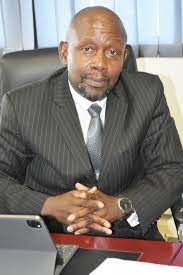



The Independent Electoral Commission (IEC) has appointed Tebello J. Nthakong as the new Director of Elections, filling a position that has remained under interim leadership since the abrupt resignation of her predecessor earlier this year.
“The Independent Electoral Commission (IEC) has appointed Ms Tebello J. Nthakong as the new Director of Elections in accordance with the National Electoral Act, 2011, Section 114,” the IEC said in a statement this week.
Nthakong takes over from Advocate Mpaiphele Maqutu, who resigned abruptly in February, shortly after the current Commissioners assumed office.
Since Maqutu’s departure, Lydia Macheli, the recently retired Civic Education Manager, had been acting as Director of Elections.
The Director of Elections is responsible for managing the operations of the Commission under its supervision and direction. The Director is the most senior officer among IEC staff and is answerable to the Commissioners.
IEC Chairperson Dr John Maphephe previously disclosed that the Commission had received 27 applications for the position. A consultancy firm was engaged to screen the applicants and recommend five candidates for interviews by the Commission.
Registered political parties were present during the interviews to observe the proceedings, although they did not participate in the selection process, which was conducted by the Commission.
Nthakong is no stranger to the IEC, having previously worked for the electoral body. She brings 16 years of experience in governance and electoral affairs, with expertise in electoral administration, project management, institutional strengthening and democratic governance.
She has held senior leadership positions in Maseru, Leribe and Mafeteng, where she served as the principal representative of the Director of Elections.
In that capacity, she oversaw the implementation of IEC policies, coordinated operations and managed electoral projects.
Nthakong has also played a role in facilitating national, local government, by-election and fresh election processes, including two national snap elections.
She holds two master’s degrees, in Electoral Policy and Administration and Governance and Political Transformation.
Her experience in electoral operations, stakeholder engagement, conflict prevention and mediation, and capacity building is expected to be critical as she assumes the leadership of the Commission’s secretariat.
Her appointment comes at a politically significant time, with the lifespan of the 11th Parliament due to expire in November 2027. The next general election is expected to be held in early 2028, meaning Nthakong will oversee key preparations for the polls.
The IEC has also proposed synchronising national and local government elections. In July, the Commission said holding the elections concurrently could save the country money and reduce administrative costs.
As Director of Elections, Nthakong is likely to play a central role in engaging political parties and other stakeholders to build support for the proposal, particularly as it would require political and legislative buy-in.
She also takes office as Parliament considers proposed changes to the electoral system, including the controversial “best loser” Bill, a Private Member’s Bill seeking to reform the allocation of proportional representation seats.
The Bill, sponsored by Revolution for Prosperity (RFP) Member of Parliament Mootsi Lehata and seconded by All Basotho Convention (ABC) proportional representation member Lebohang Hlaele, is currently before the National Assembly.
It proposes amendments to the National Assembly Electoral Act, 2011, including the abolition of party lists and the introduction of a system under which the IEC would allocate proportional representation seats based on individual constituency performance, particularly among losing candidates.
Nthakong’s appointment therefore comes as the electoral body prepares not only for the next national elections but also for possible changes to the country’s electoral framework.
It is not yet clear when she will formally assume office, as she is expected to serve notice with her current employer, the United Nations Development Programme (UNDP).
Her appointment is for a five-year term.
Summary
- Nthakong as the new Director of Elections in accordance with the National Electoral Act, 2011, Section 114,” the IEC said in a statement this week.
- As Director of Elections, Nthakong is likely to play a central role in engaging political parties and other stakeholders to build support for the proposal, particularly as it would require political and legislative buy-in.
- It proposes amendments to the National Assembly Electoral Act, 2011, including the abolition of party lists and the introduction of a system under which the IEC would allocate proportional representation seats based on individual constituency performance, particularly among losing candidates.
Thoboloko Ntšonyane is a dedicated journalist who has contributed to various publications. He reports on accountability, human rights, exposes corruption and wrong doing by those in power. He reports have exposed corruption, abuse of power, fraud, misconduct and negligence. He subscribes to evidence-based reporting. He reports on governance, parliament, courts, climate change, human rights, sexual and reproductive health rights (SRHR), health, business and agriculture. He gives a voice to the marginalised while also demanding accountability. His work inspires change, triggers dialogue and also promote transparency in a society.