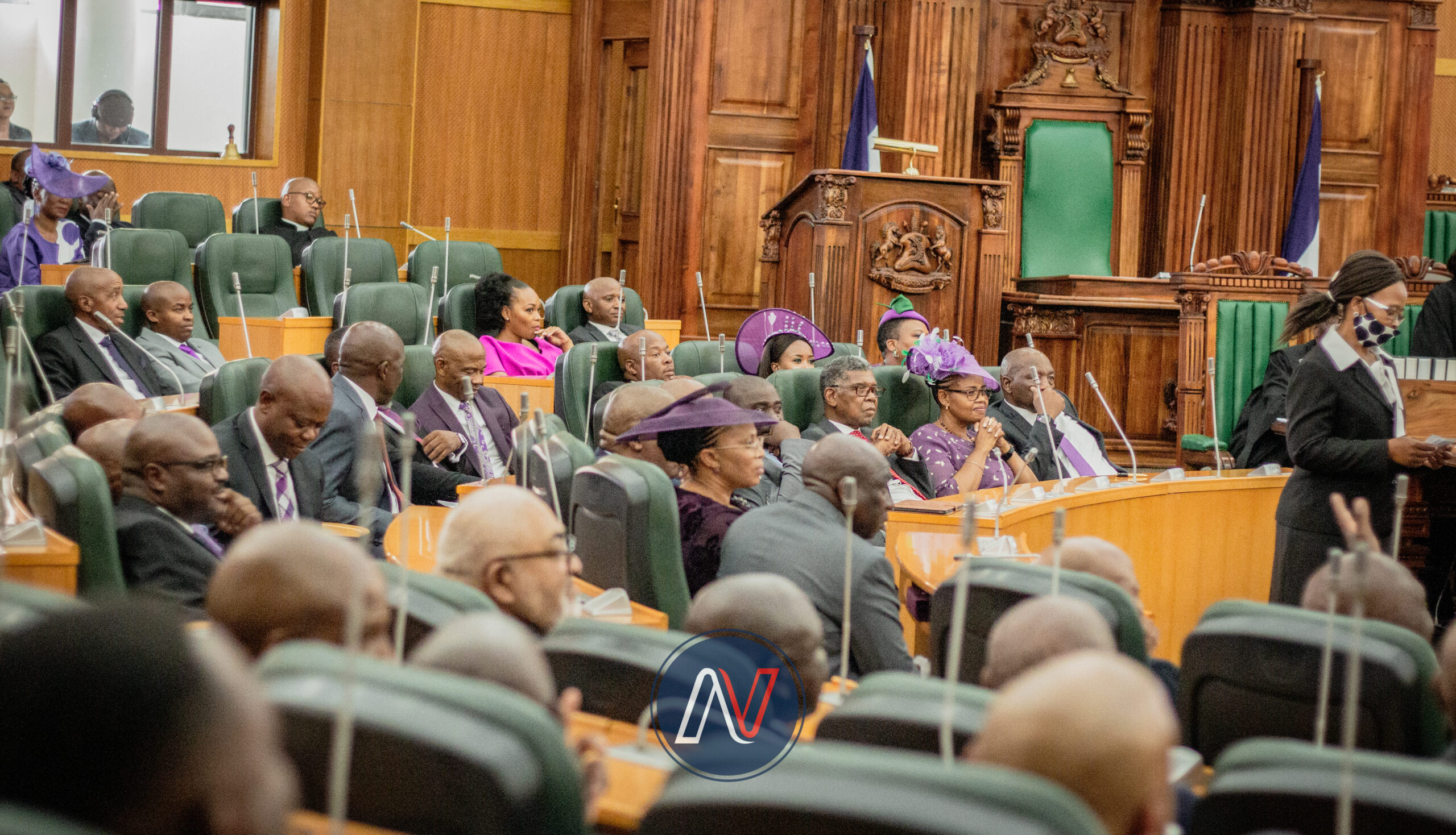

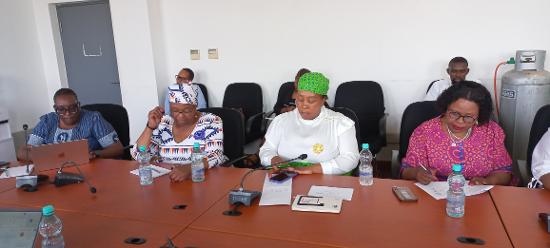
Members of Parliament (MPs) this week underwent training aimed at equipping them with practical tools to track progress on regional commitments and hold the government accountable for their implementation.
The three-day training was conducted by the Southern African Development Community Parliamentary Forum (SADC-PF).
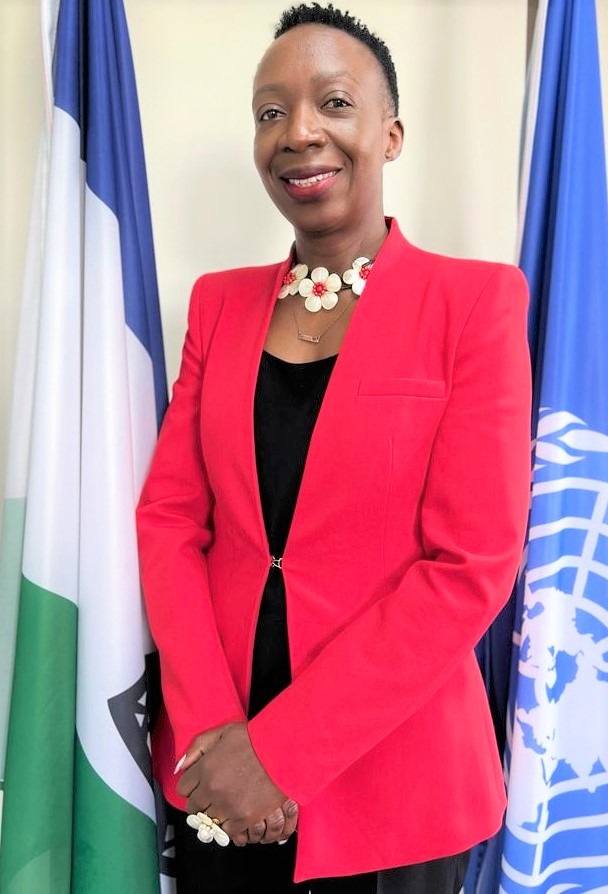
The chairperson of the Sustainable Development Goals (SDGs) Committee, Itumelang Rantšo called on parliament to strengthen its oversight role in ensuring that SADC SRHR Strategy 2019- 2030 is effectively implemented, adequately financed and monitored.
Rantsho said regional commitments must translate into measurable improvements in people’s lives as the 2030 deadline approaches.
She added that parliament must use its legislative, budgetary and oversight mandates to ensure that regional commitments are reflected in national laws, policies, programmes and budgets.
“The true value lies in their effective implementation, adequate financing, regular monitoring and accountability for results,” she said. She added that parliamentary committees should scrutinise government expenditure, question ministries on implementation progress and demand accountability where commitments are not being fulfilled.
Rantsho said the engagement, which runs from 27 to 29 October 2026, should identify implementation gaps, establish key questions for government ministries and develop clear parliamentary follow-up actions.
She further called for the development of a Parliamentary SRHR Oversight and Accountability Action Plan with defined responsibilities, indicators and timelines. She said the success of the meeting would ultimately depend on the actions taken afterwards and their contribution to improved access to quality SRHR, HIV and gender-based violence prevention and response services.
SADC-PF Sexual and Reproductive Health and Rights (SRHR) Country Focal Person, ‘Mammehela Matamane, said Parliament has a critical role to play in ensuring that regional commitments are implemented.
She highlighted Parliament’s role in implementation through legislation, policy review, budget allocation, oversight, committee work and engagement with citizens.
A mid-term review of the strategy was conducted in 2025.
The capacity-building followed Regional discussions where the SADC Joint Regional Meeting on Strengthening SRHR Programmes and Health Information Systems and the Meeting of SADC Ministers of Health/HIV, held from 21 to 24 February 2026, in South Africa.
It was also assessing commitments by the SADC Ministers of Finance and Health joint meeting that took place in Zimbabwe on 2nd to 3rd July 2026.
Key areas of discussion included minimum standards for integrating HIV, SRHR and GBV services, resilient health delivery systems, implementation of the strategy’s ministerial decisions and a roadmap to strengthen implementation, monitoring and reporting.
The discussions also sought to assess regional milestones and address implementation gaps.
Matamane called for stronger parliamentary oversight of SRHR programmes, including those addressing HIV, gender-based violence (GBV), maternal and adolescent health, family planning, comprehensive sexuality education and other priority areas.
She said MPs needed to be familiar with Parliament’s work to effectively hold the government accountable.
“If MPs are not aware of what Parliament is doing, it will defeat the very purpose of holding the government accountable,” she said.
Matamane said the meeting was intended to ensure that MPs were on the same page and equipped with the necessary knowledge to carry out their oversight responsibilities.
She encouraged MPs to engage technocrats for assistance, including in drafting parliamentary questions.
“Where is the problem? What are the challenges? We are here to assist,” she said.
The training also sought to strengthen Parliament’s role in following up on the implementation of the SADC SRHR Strategy 2019-2030.
SADC has committed to improving sexual and reproductive health and rights across the region, recognising their importance in achieving universal health coverage, gender equality and sustainable development.
The strategy provides a regional policy and programming framework for addressing persistent challenges related to HIV, gender-based violence, adolescent and youth sexual and reproductive health, maternal health and access to quality health services.
It was developed in response to challenges including high maternal and newborn mortality, the high HIV and AIDS burden among adolescents and young women, high rates of teenage pregnancy, gender-based violence and unmet needs for family planning.
The training was aimed at discussing the findings of the regional meeting and strengthening follow-up on the national implementation of the SADC SRHR Strategy.
Thabiso Lekhotsa, presenting on behalf of the team that attended the regional meeting on mid-term review in Zimbabwe, reported that countries were assessed on their implementation of the SADC SRHR Strategy 2019 – 2030 between 2019 and 2025.
The assessment examined the relevance, effectiveness, efficiency, coherence, impact and sustainability of the strategy.
The review found that there was political commitment across member states, alongside significant policy, domestication and legal reforms. It also noted the expansion of integrated SRHR, HIV and GBV services, as well as improved monitoring through the SADC SRHR Scorecard.
In Lesotho, identified gaps and shortcomings included a lack of sustainable funding, which remained a major concern.
Persistent inequalities continued to affect adolescents, key populations, people with disabilities and out-of-school youth. The review also found that progress across outcome indicators remained uneven.
Director of Finance at the SADC-PF said Mahendrasing Khooblall said the SRHR governance project was initially expected to conclude this year but had been extended to 31 March 2027.
He said Lesotho’s positive response would help the project advance to its next phase.
SRHR inclusivity and implementation challenges
Mamello Phooko said SRHR was inclusive of everyone, but people with disabilities remained among those frequently overlooked.
“When we are talking about SRHR, we are talking about everyone. There is a population that is left out, that is not seen. That’s the population of people with disabilities. They are being abused,” she said.
Phooko said the country was still far from ensuring that people with disabilities enjoyed their SRHR.
She said visually impaired people were sometimes raped, while the inability to identify perpetrators was used as a challenge in pursuing justice.
Phooko also criticised the lack of costing for GBV laws, saying courts faced challenges in implementing them.
She highlighted the lack of coordination between the Ministries of Law, Health and Education, saying people were living in “inhumane” conditions.
She also raised concerns about correctional facilities, saying the conditions were not conducive to establishing clinics.
Phooko said she had established that abuse was taking place within prison walls.
She further raised the issue of abortion, saying it was happening despite being illegal in the country, and questioned whether there should be advocacy for the legalisation of abortion.
One of the participants, Lethola Mafisa from UNAIDS, said the country’s lack of proper coordination was being exposed through its response to GBV.
He said the courts, correctional facilities, education sector, police and health services all had critical roles to play in addressing GBV.
Mafisa recalled a case in which a child had been sexually abused, saying that each time the child returned from court, she was more traumatised.
He said the situation became so distressing that the child’s siblings called for the charges to be dropped.
Mafisa also highlighted challenges in accessing family planning services, citing people in Mohale’s Hoek who travelled long distances to access services despite having health facilities within their communities.
He said some facilities did not offer family planning services because of religious beliefs.
Mafisa said some girls resorted to abortion because of cultural and religious beliefs, particularly when they faced ostracism from their families, communities, churches and schools.
He said the pressure placed on them could become so overwhelming that they saw abortion as the only way out.
‘Matiisetso Matsie recommended the revival of the now-defunct village support groups, saying they should cater for older people, women, men and young people.
She said the groups could serve as gateways to fighting HIV and AIDS.
MPs urged to address cultural barriers. The chairperson of the Women’s Caucus, ‘Mamamello Holomo, encouraged MPs to relay SRHR messages during their lipitso (public gatherings).
She said that despite global progress and development, Basotho continued to be held back by cultural norms, with discussions about sexual intercourse between parents and their children remaining taboo.
Napo Moshoeshoe, who is also a member of the SADC-PF, highlighted resistance to the passage of certain laws because of cultural and religious beliefs.
He said resistance at community level was often carried into Parliament, where cultural and religious barriers could prevent the passage of legislation.
Moshoeshoe said some MPs became personally attached to certain issues, to the extent that their personal beliefs affected their parliamentary duties, including advocating for and voting on legislation.
He called for sensitive discussions on cultural issues.
“Our mandate as Members of Parliament is not a simple one. Our deliverables are not simple either. How do we ensure that the other arm, the executive, delivers and solves the problems that we have?” he said.
Summary
- She said the success of the meeting would ultimately depend on the actions taken afterwards and their contribution to improved access to quality SRHR, HIV and gender-based violence prevention and response services.
- The SADC Joint Regional Meeting on Strengthening SRHR Programmes and Health Information Systems and the Meeting of SADC Ministers of Health/HIV, held from 21 to 24 February 2026, in South Africa.
- The strategy provides a regional policy and programming framework for addressing persistent challenges related to HIV, gender-based violence, adolescent and youth sexual and reproductive health, maternal health and access to quality health services.
Thoboloko Ntšonyane is a dedicated journalist who has contributed to various publications. He reports on accountability, human rights, exposes corruption and wrong doing by those in power. He reports have exposed corruption, abuse of power, fraud, misconduct and negligence. He subscribes to evidence-based reporting. He reports on governance, parliament, courts, climate change, human rights, sexual and reproductive health rights (SRHR), health, business and agriculture. He gives a voice to the marginalised while also demanding accountability. His work inspires change, triggers dialogue and also promote transparency in a society.