New study to tackle rising antimicrobial resistance
Nteboheng Tjobe Maina, National Focal Point for AMR and a pharmacist with the Ministry of Health at inception meeting of AMR resistance knowledge, attitudes and practices baseline study.
Ntsoaki Motaung is an award-winning health journalist from Lesotho, specializing in community health stories with a focus on sexual and reproductive health and rights, as well as HIV. She has contributed to platforms like "Be in the KNOW," highlighting issues such as the exclusion of people with disabilities from HIV prevention efforts in Lesotho.
In addition to her journalism, Ntsoaki serves as the Country Coordinator for the Regional Media Action Plan Support Network (REMAPSEN). She is also a 2023 CPHIA Journalism Fellow.
In a bold move to confront the growing threat of antimicrobial resistance (AMR), Ministry of Environment and Forestry, in partnership with the AMR National Learning Committee and the Ministry of Health, will launch a pioneering baseline study to assess knowledge, attitudes and practices relating to antimicrobial use among One Health professionals and the general public.
Earlier this week, senior officials and researchers outlined the country’s proactive efforts to tackle AMR, a problem that undermines not only clinical health but also animal health, agriculture, environmental protection and national development.
“Antimicrobial resistance is not a challenge that can be addressed by one profession, one institution, or even one ministry,” said Matšeliso Machake, Senior Legal Officer, speaking on behalf of the Principal Secretary of the Ministry of Environment and Forestry.
Machake expressed gratitude to all stakeholders for their tireless commitment and partnership in strengthening Lesotho’s response to AMR.
The meeting aimed to introduce and sensitise stakeholders to the upcoming study, which will examine how antimicrobials are understood, accessed, used and reported within the One Health framework.
The research will also explore the factors that influence antimicrobial use and management.
AMR’s danger lies in its ability to render vital medicines ineffective against infections in both humans and animals. “This is not only a clinical issue,” Machake emphasised. “It has implications for public health, animal health, food production, agriculture, environmental protection, health security and national development.”
Lesotho’s National Action Plan on Antimicrobial Resistance (2021–2026) already embraces the One Health approach, calling for coordinated action across sectors.
According to Machake, the study’s findings will feed into this plan, supporting evidence-based interventions and helping ensure that environmental considerations are incorporated into future AMR policies.
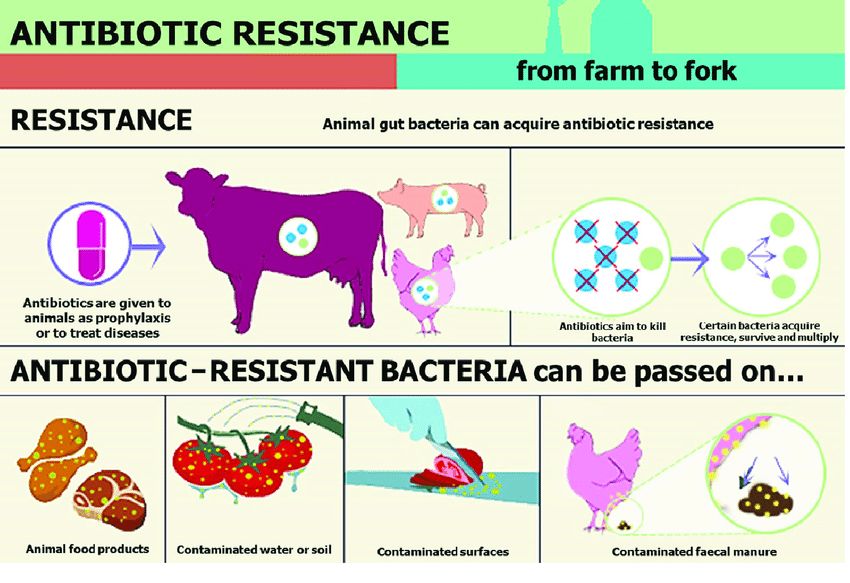
“One Health recognises that human health, animal health and environmental health are interconnected,” she noted. “The way antimicrobials are prescribed and used in hospitals, clinics and communities can influence resistance in humans. Their use in animals can contribute to the emergence and spread of resistant organisms, while environmental pathways, such as wastewater, healthcare waste, agricultural runoff and inappropriate disposal, can further propagate antimicrobial resistance.”
Nteboheng Tjobe Maina, National Focal Point for AMR and a pharmacist with the Ministry of Health, outlined the meeting’s objectives – to reaffirm AMR as a national priority; to situate the upcoming knowledge, attitudes and practices (KAP) study within the broader action plan; to align stakeholders across human, animal and environmental health sectors; and to ensure that the data gathered informs national decisions.
Maina highlighted how antimicrobial medicines, which are crucial for treating common conditions such as HIV-related infections, wound infections and sexually transmitted diseases, are becoming less effective due to resistance.
“AMR is not just a problem for human and animal health, but also for the environment sector,” she said, pointing to the ease with which resistant organisms can spread across people, animals, food and the environment.
Lead researcher Molungoa Sello, Senior Lecturer at the National University of Lesotho (NUL), explained the importance of the baseline KAP study. He said the research aims to generate local data that will inform policy and practice by identifying existing knowledge gaps and the factors that influence antimicrobial use and resistance.
Sello stressed the need to understand not only what people know, but also their attitudes and the barriers to best practice, in order to design interventions that can change behaviour and reduce resistance.
The urgency of Lesotho’s efforts is underscored by alarming global trends. According to the 2025 Global Antibiotic Resistance Surveillance Report, participation in AMR surveillance has increased worldwide, but major gaps remain, particularly in Africa. Lesotho is among the ten countries most affected by AMR, with more than 2,800 deaths linked to drug-resistant infections in 2019.
AMR was also a topic of concern at the recent International AIDS Society (IAS) summit in Rio de Janeiro, where researchers reported a troubling rise in HIV drug resistance across sub-Saharan Africa, including Lesotho.
Findings from the Ndovu Study reveal that resistance to dolutegravir (DTG), a key HIV treatment, is emerging in Kenya, Tanzania, Mozambique and Lesotho.
“While nearly nine in ten people on DTG respond well and achieve viral suppression, a proportion fail to suppress the virus, often due to inconsistent medication use,” explained Dr Loice Ombajo, principal investigator of the study.
For those with drug-resistant HIV, treatment options become limited and more costly, and the risk of mother-to-child and partner transmission rises.
The World Health Organization (WHO) has urged countries to implement standardised surveillance of HIV drug resistance to track trends and guide treatment decisions. However, resource limitations mean that regular resistance testing remains a challenge in many African countries.
Lesotho’s new baseline study represents a critical step in generating the local evidence needed to guide effective interventions and uphold the country’s commitment to the One Health approach.
“We request the support of all relevant ministries, institutions, professionals and communities to ensure coordinated implementation of this study,” said Machake.
Summary
In a bold move to confront the growing threat of antimicrobial resistance (AMR), Ministry of Environment and Forestry, in partnership with the AMR National Learning Committee and the Ministry of Health, will launch a pioneering baseline study to assess knowledge, attitudes and practices relating to antimicrobial use among One Health professionals and the general public.
“Antimicrobial resistance is not a challenge that can be addressed by one profession, one institution, or even one ministry,” said Matšeliso Machake, Senior Legal Officer, speaking on behalf of the Principal Secretary of the Ministry of Environment and Forestry.
“AMR is not just a problem for human and animal health, but also for the environment sector,” she said, pointing to the ease with which resistant organisms can spread across people, animals, food and the environment.
Ntsoaki Motaung is an award-winning health journalist from Lesotho, specializing in community health stories with a focus on sexual and reproductive health and rights, as well as HIV. She has contributed to platforms like “Be in the KNOW,” highlighting issues such as the exclusion of people with disabilities from HIV prevention efforts in Lesotho.
In addition to her journalism, Ntsoaki serves as the Country Coordinator for the Regional Media Action Plan Support Network (REMAPSEN). She is also a 2023 CPHIA Journalism Fellow.
To ensure optimal experiences, we utilize technologies such as cookies to store and/or access information from your device. Granting consent to these technologies enables us to process data, including browsing habits or unique identifiers on this website. Conversely, not consenting or revoking consent may negatively impact specific features and functionalities.
Functional
Always active
The technical storage or access is strictly necessary for the legitimate purpose of enabling the use of a specific service explicitly requested by the subscriber or user, or for the sole purpose of carrying out the transmission of a communication over an electronic communications network.
Preferences
The technical storage or access is necessary for the legitimate purpose of storing preferences that are not requested by the subscriber or user.
Statistics
The technical storage or access that is used exclusively for statistical purposes.The technical storage or access that is used exclusively for anonymous statistical purposes. Without a subpoena, voluntary compliance on the part of your Internet Service Provider, or additional records from a third party, information stored or retrieved for this purpose alone cannot usually be used to identify you.
Marketing
The technical storage or access is required to create user profiles to send advertising, or to track the user on a website or across several websites for similar marketing purposes.