New waiting home for expectant mothers upgrades Mapholaneng clinic
For many women in Lesotho’s remote districts, the journey to a health facility when labour begins is often long, difficult, and uncertain.
In places like Mapholaneng, a community in Mokhotlong district, the challenges faced by expectant mothers are a daily reality.
Ntsoaki Motaung is an award-winning health journalist from Lesotho, specializing in community health stories with a focus on sexual and reproductive health and rights, as well as HIV. She has contributed to platforms like "Be in the KNOW," highlighting issues such as the exclusion of people with disabilities from HIV prevention efforts in Lesotho.
In addition to her journalism, Ntsoaki serves as the Country Coordinator for the Regional Media Action Plan Support Network (REMAPSEN). She is also a 2023 CPHIA Journalism Fellow.
For many women in Lesotho’s remote districts, the journey to a health facility when labour begins is often long, difficult, and uncertain.
In places like Mapholaneng, a community in Mokhotlong district, the challenges faced by expectant mothers are a daily reality.
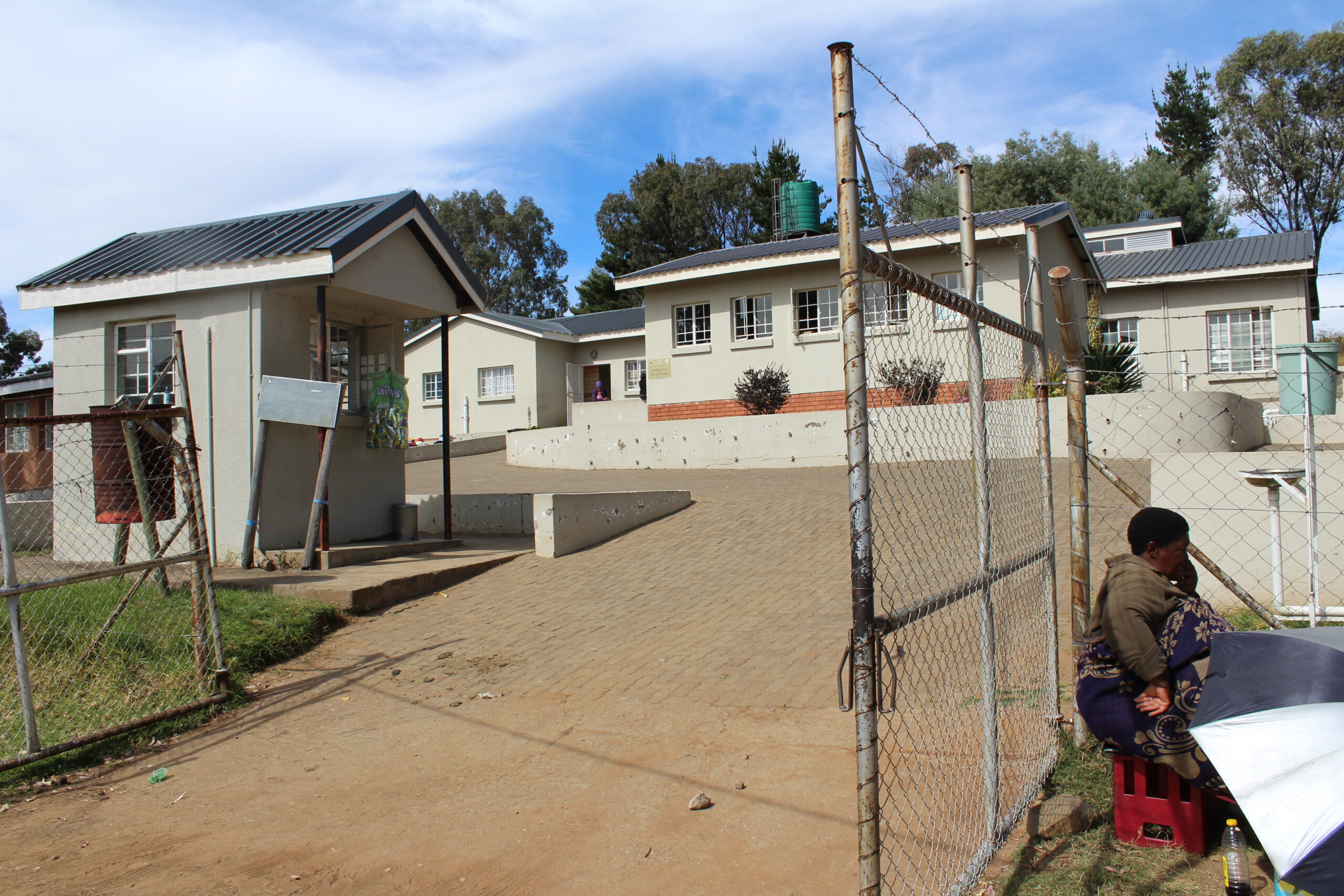
Last year alone, 18 women gave birth at home in the Mapholaneng area, a number attributed to the limited space at the health centre for pregnant women to wait their turn “Waiting mothers Home”.
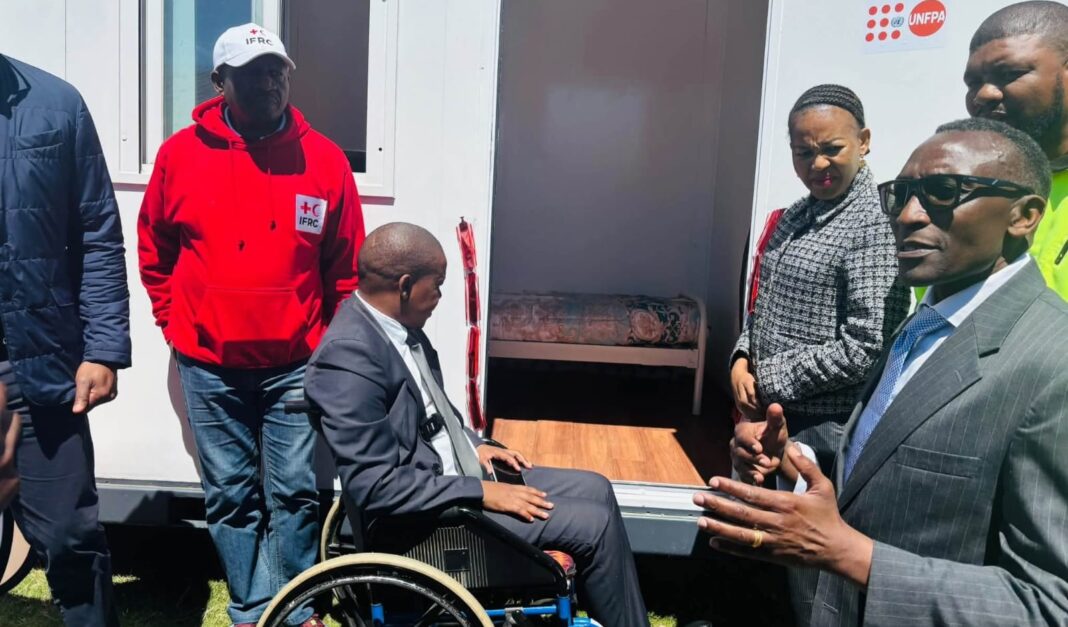
Dr. ‘Mamohanyane Chabana, the District Medical Officer (DMO) for the Mokhotlong District Health Management Team, stressed the importance of the new park home that was provided at Mapholaneng Health Centre.
“For us health professionals, this is the most important shelter we could have in a health facility compound. This house is going to be a solution to many challenges facing Mapholaneng Health Centre,” she said.
The Mapholaneng Health Centre serves a population of over 15,700 people, spread across 72 villages and supported by 39 Village Health Workers (VHWs). Yet, many people live in remote areas not always reached by health workers.
In 2025 alone, the health centre saw 315 pregnant women, with 160 delivering at the facility and 18 delivering at home.
Previously, the waiting mothers’ home at the health centre could accommodate only two women, forcing many others to wait for labour at home.
This lack of space is a key reason why so many mothers ended up giving birth without medical assistance. “Waiting mothers’ home is where we expect that expecting mothers who are at their 38th week and are close to 40 weeks are housed to be closely monitored,” Chabana explained.
“Most are our high-risk mothers, including those who once delivered with C-section and those with other health issues. Even women who do not have specific problems are at risk simply because of our difficult terrain and long distances to the health centre.”
Villages are often located far from the facility, and the new park home is intended to provide a safe place for expectant mothers to stay as they approach their due date. This will help ensure that pregnant women arrive at the health centre before labour begins, allowing health workers to monitor them closely and reducing the number of home births.
“As a result, the number of women who deliver babies at home is going to go down,” said Chabana.
She expressed gratitude to the health facility management and staff for their efforts to ensure that no woman dies while giving birth, and that no child dies during or after birth.
One parkhome was given to the Mapholaneng health centre for use as a waiting mothers’ home, while two others were provided to the Child and Gender Protection Unit (CGPU) within the Mokhotlong Police Station.
At the CGPU, one parkhome will serve as a temporary emergency shelter for survivors of gender-based violence, offering them a safe place to stay until it is safe for them to go back home. The other park home is furbished one used as an office space for the CGPU.
At both handover ceremonies, the Minister of Gender, Youth and Social Development, Pitso Lesaoana, praised the partnership between the private sector and the government to promote maternal health and protect communities against gender-based violence (GBV).
He singled out the United Nations Population Fund (UNFPA) and thanked all partners for turning recent pledges into action for women and young people in Mokhotlong.
“This is what partnership for impact looks like,” said John Mosoti, UNFPA’s Representative to Lesotho, who attended the event. “Our support is helping to create safer spaces, stronger services, and greater opportunities for the people of Mokhotlong.”
Senior Assistant Commissioner of Police Khethang Tenane also pledged that the new property would be used as intended, helping to reduce GBV cases in the country.
The Chief Executive Officer of Vodacom Lesotho, Mohale Ralebitso, called on all stakeholders to ensure that communities are protected and served with dignity, making Mokhotlong a peaceful place to live.
On behalf of Lets’eng Diamonds Mine, Sefefo Tiela said the mine’s contribution aims to improve living conditions in local communities by supporting initiatives like the new parkhomes.
The investment in maternal health and community wellbeing has come from a coalition including Vodacom Lesotho, Lets’eng Diamonds, the Ministry of Gender, Youth and Social Development, the Ministry of Health, and UNFPA.
’Maseretse Ratiea, National Programme Analyst for Adolescents and Young People at UNFPA, explained that, a joined fact-finding mission to Mokhotlong was held.
Alongside partners from Vodacom Lesotho, Lets’eng Diamond Mine, Lesotho Highlands Development Authority (LHDA), and relevant government ministries, the group listened to the realities faced by youth in the district.
They found that early and unintended pregnancies, sexual violence, and a lack of access to quality services were among the biggest challenges for young people.
In Mapholaneng, the team visited the adolescent corner of the health centre and saw that the facility served many young people.
At that time, the waiting mothers’ home designed for two women was accommodating six, with others sleeping in consultation rooms.
This highlighted the urgent need for more space. Vodacom Lesotho and UNFPA had already provided computers for the adolescent corner, and Lets’eng Diamond Mine stepped in to provide a park home to house at least four pregnant women.
The recent handover officially transferred the park home to the Ministry of Health.
According to research published on ResearchGate about the management of labour by Basotho traditional birth attendants, distance remains one of the biggest hurdles for pregnant women.
Some women still travel for more than eight hours by foot or horseback to reach a health facility. This journey is especially dangerous for women experiencing complications, such as retained placenta, and has led to tragic maternal deaths on the way to care.
Data from the 2023–24 Lesotho Demographic and Health Survey (LDHS) shows that home births in Lesotho have declined as more women deliver in health facilities.
Currently, around 14–15 percent of births take place at home, while the vast majority, about 85–86 percent occur in hospitals, clinics, or health centres.
Nationally, 92 percent of deliveries are attended by a skilled provider such as a doctor, nurse, or certified midwife.
However, home births are usually assisted by traditional birth attendants, relatives, or family members, who lack formal training and equipment to handle emergencies.
The LDHS also highlights persistent disparities. Home births are much more common in remote, mountainous, and hard-to-reach districts like Mokhotlong, Thaba-Tseka, and Qacha’s Nek. Urban and lowland areas enjoy higher rates of facility deliveries, thanks to better roads and closer health centres.
Summary
Last year alone, 18 women gave birth at home in the Mapholaneng area, a number attributed to the limited space at the health centre for pregnant women to wait their turn “Waiting mothers Home”.
One parkhome was given to the Mapholaneng health centre for use as a waiting mothers’ home, while two others were provided to the Child and Gender Protection Unit (CGPU) within the Mokhotlong Police Station.
At the CGPU, one parkhome will serve as a temporary emergency shelter for survivors of gender-based violence, offering them a safe place to stay until it is safe for them to go back home.
Ntsoaki Motaung is an award-winning health journalist from Lesotho, specializing in community health stories with a focus on sexual and reproductive health and rights, as well as HIV. She has contributed to platforms like “Be in the KNOW,” highlighting issues such as the exclusion of people with disabilities from HIV prevention efforts in Lesotho.
In addition to her journalism, Ntsoaki serves as the Country Coordinator for the Regional Media Action Plan Support Network (REMAPSEN). She is also a 2023 CPHIA Journalism Fellow.
To ensure optimal experiences, we utilize technologies such as cookies to store and/or access information from your device. Granting consent to these technologies enables us to process data, including browsing habits or unique identifiers on this website. Conversely, not consenting or revoking consent may negatively impact specific features and functionalities.
Functional
Always active
The technical storage or access is strictly necessary for the legitimate purpose of enabling the use of a specific service explicitly requested by the subscriber or user, or for the sole purpose of carrying out the transmission of a communication over an electronic communications network.
Preferences
The technical storage or access is necessary for the legitimate purpose of storing preferences that are not requested by the subscriber or user.
Statistics
The technical storage or access that is used exclusively for statistical purposes.The technical storage or access that is used exclusively for anonymous statistical purposes. Without a subpoena, voluntary compliance on the part of your Internet Service Provider, or additional records from a third party, information stored or retrieved for this purpose alone cannot usually be used to identify you.
Marketing
The technical storage or access is required to create user profiles to send advertising, or to track the user on a website or across several websites for similar marketing purposes.