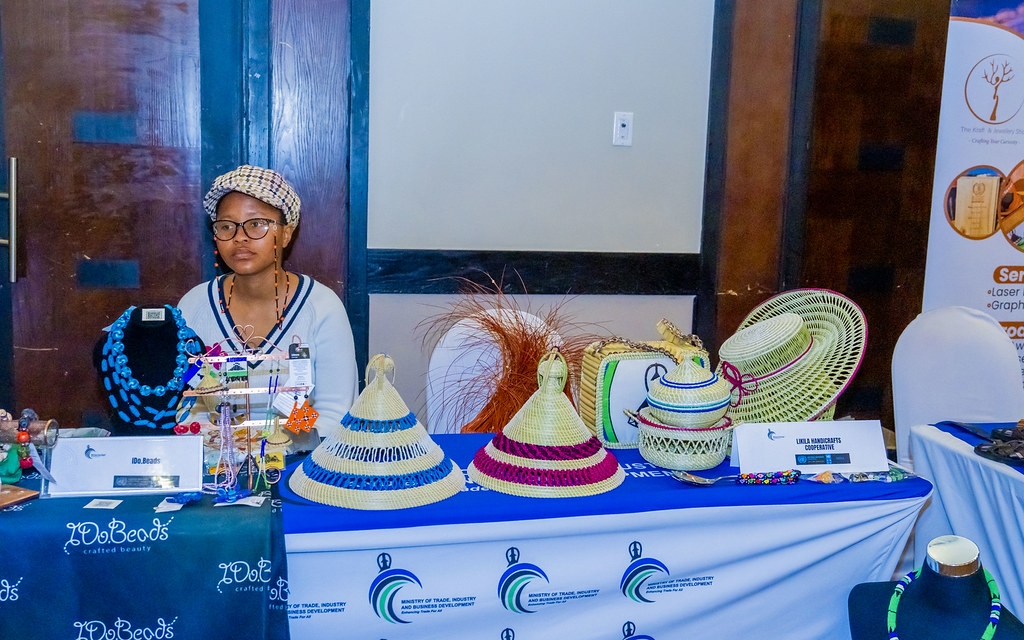
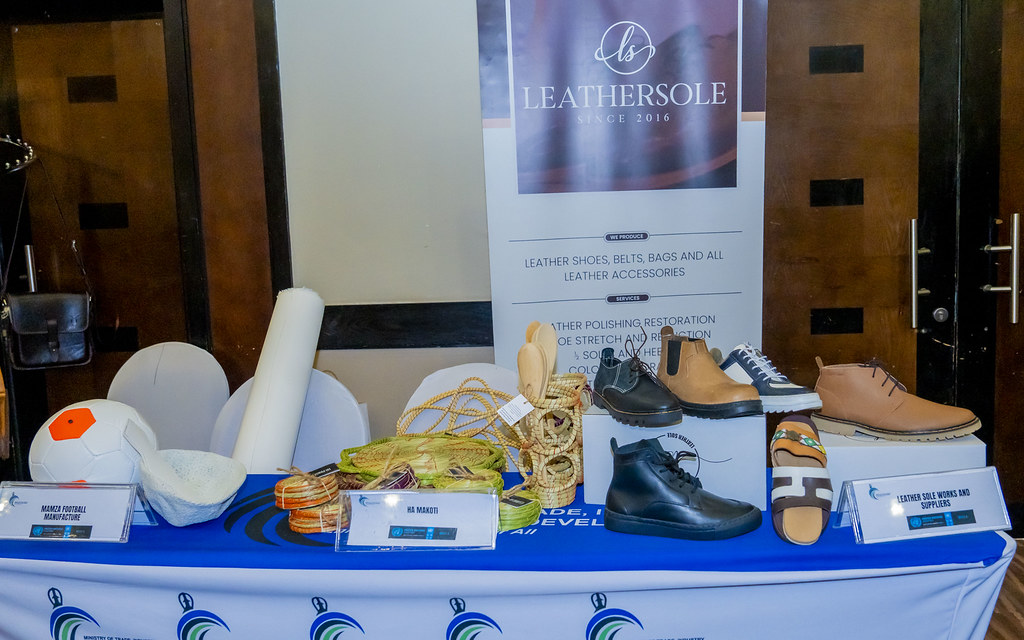
Basotho-owned enterprises in the leather, textiles and handicrafts sectors are being positioned for wider domestic and regional markets following a business-to-business (B2B) workshop that connected promising micro, small and medium enterprises (MSMEs) with buyers and investors
Seabata Mahao is a general news reporter with special focus on Business and Sports. Started working at Newsday in 2021. Working in a team with a shared goal is what I enjoy most and that gives me the motivation to work under any environment leading to growth.
Basotho-owned enterprises in the leather, textiles and handicrafts sectors are being positioned for wider domestic and regional markets following a business-to-business (B2B) workshop that connected promising micro, small and medium enterprises (MSMEs) with buyers and investors.
The Ministry of Trade, Industry and Business Development hosted the workshop in partnership with the United Nations Development Programme (UNDP) and the United Nations Economic Commission for Africa (UNECA). It is part of efforts to tackle a major constraint facing small businesses: limited access to markets and finance.
The event brought together selected enterprises, potential buyers and investors. Discussions focused on export readiness, standards, certification, market intelligence, financing and the opportunities offered by regional trade arrangements.
Principal Secretary in the Ministry, Palesa Matobako, said the Government was placing private-sector-led growth at the centre of its development agenda.
“Lesotho’s entrepreneurs possess the talent, the ideas, and the determination to compete. What they require are the connections that transform potential into commercial reality. This Business to business event creates precisely that bridge,” Matobako said.
She said the Government had created an environment conducive to business growth and investment, including incentives through the Lesotho National Development Corporation (LNDC) and institutional support through the Competitiveness and Financial Inclusion Programme.
According to Matobako, the Ministry and UNDP had identified high-potential enterprises and helped them improve their investment and export readiness. She urged buyers and investors to explore the businesses represented at the workshop, particularly those in leather, textiles and handicrafts.
“I would like to see some of your products on the shelves of businesses across the country and also on shelves within the region,” she said.
leather, textiles and handicrafts products from Basotho firms
From local shelves to regional markets
Ha Makoti, an enterprise founded in Qacha’s Nek and now based in Khubetsoana, Berea, said the workshop strengthened its understanding of business operations and export logistics.
Founder Mosa Sixishe said the programme exposed entrepreneurs to areas ranging from financial management and value-chain development to building business networks and preparing for cross-border trade. She said the lessons would also be shared with the young people involved in the business.
Ha Makoti sources Drakensberg alpine oat grass, commonly known as moseea, from districts including Thaba-Tseka and Berea. Sixishe said the business works with communities that harvest, group and preserve the material before it is collected for production.
The enterprise already supplies stores in Lesotho and is working towards entering neighbouring markets within the next six to 12 months.
Leather businesses eye bigger orders
Leathersole and Suppliers, meanwhile, is looking beyond its existing market as it prepares to increase production of its bespoke leather shoes.
The company began operating in 2016, was incubated under BEDCO and employs about 10 people. It has received support through the Competitiveness and Financial Inclusion Programme.
Its representative, Thabo Nchemane, said the workshop helped the company better understand the certification and standardisation requirements it will face as it expands. The company has already exported to South Africa and eSwatini and is working on an order from the United States, he said.
However, production capacity remains a major challenge.
“The challenges that we are facing so far are labour which is expensive if you do not have machinery,” Nchemane said, adding that the company was working towards acquiring machinery and suitable production space.
He said increasing production was essential if local manufacturers were to compete for large orders, including in the school-shoe market.
Nchemane said the company’s strategy is to strengthen the domestic market first, improve cash flow and build the capacity needed to compete in the SADC and wider African markets. It sources most of its leather, soles and glue from South Africa.
Disability no barrier to enterprise
For Stixs Leather and Upholstery co-founder Setenane Makhabane, entrepreneurship is also a route to economic participation despite the challenges associated with disability.
Based in Hlotse, Leribe, the business has operated for about two to three years. It specialises in leather products, upholstery and the re-covering of seats, and also makes belts, sandals and horse-related leather products.
Makhabane said the business works mainly on a customised, order-based model rather than producing goods for retail shelves. The high cost of leather, which raises the final price of its products, is one of its challenges. To reduce transport costs for clients, the business also provides upholstery services at customers’ homes.
Makhabane said his experience had reinforced his determination to show what persons with disabilities can contribute to the economy.
Retailers demand quality and reliability
For potential buyers, however, access to markets depends not only on attractive products but also on the ability to meet commercial requirements consistently.
Michael Lawrence, Executive Director of the National Clothing Retail Federation of South Africa, said the organisation was assessing whether Lesotho’s small manufacturers could provide the quality, quantity, reliability and delivery capacity that large retail chains require. He said the workshop had revealed several creative and potentially interesting business opportunities.
However, Lawrence said businesses must communicate their production capacity and product information clearly so buyers can judge whether they can fill particular orders. He also stressed the importance of standards, quality, rules of origin, trade conditions, safety and environmentally responsible production.
For smaller manufacturers, he said, there could be opportunities either to supply larger producers or to develop niche products for retailers.
ECA: Market access goes beyond tariffs
Zodwa Mabuza, Regional Adviser on Trade and Regional Integration at the UNECA, said market access involved much more than removing tariffs. She said small businesses needed to understand where opportunities existed, what buyers wanted, which rules applied and how to meet market requirements consistently and competitively.
The workshop therefore covered market intelligence, export markets, tariffs, market-entry requirements, rules of origin, technical barriers to trade, standards, certification, and sanitary and phytosanitary requirements.
Mabuza said businesses should treat quality and compliance as investments in competitiveness rather than administrative costs. Proper records, traceability, improved production processes and appropriate certification, she said, could help them build buyer confidence and gain access to larger and more sophisticated markets.
“Ultimately, trade happens between businesses,” Mabuza said, adding that the B2B engagement and exhibition allowed MSMEs to showcase their products, meet potential buyers and investors and begin building relationships that could translate into commercial transactions.
She encouraged participating enterprises to follow up on contacts made during the workshop, understand customer requirements and keep improving their products. She also urged entrepreneurs to join chambers of commerce and other business associations, saying stronger networks and collective support would benefit them.
Mabuza said the African Continental Free Trade Area (AfCFTA) offered African businesses access to a much larger continental market, but it would be up to the enterprises themselves to turn that opportunity into increased trade, investment and employment.
The workshop highlighted a central challenge for Lesotho’s MSMEs: turning production capability into sustainable commercial opportunities. For the participating enterprises, the next step is to convert the contacts, knowledge and market information gained into orders, partnerships, higher production and access to new markets.
Summary
She said the Government had created an environment conducive to business growth and investment, including incentives through the Lesotho National Development Corporation (LNDC) and institutional support through the Competitiveness and Financial Inclusion Programme.
The company has already exported to South Africa and eSwatini and is working on an order from the United States, he said.
Nchemane said the company’s strategy is to strengthen the domestic market first, improve cash flow and build the capacity needed to compete in the SADC and wider African markets.
Seabata Mahao is a general news reporter with special focus on Business and Sports. Started working at Newsday in 2021. Working in a team with a shared goal is what I enjoy most and that gives me the motivation to work under any environment leading to growth.
To ensure optimal experiences, we utilize technologies such as cookies to store and/or access information from your device. Granting consent to these technologies enables us to process data, including browsing habits or unique identifiers on this website. Conversely, not consenting or revoking consent may negatively impact specific features and functionalities.
Functional
Always active
The technical storage or access is strictly necessary for the legitimate purpose of enabling the use of a specific service explicitly requested by the subscriber or user, or for the sole purpose of carrying out the transmission of a communication over an electronic communications network.
Preferences
The technical storage or access is necessary for the legitimate purpose of storing preferences that are not requested by the subscriber or user.
Statistics
The technical storage or access that is used exclusively for statistical purposes.The technical storage or access that is used exclusively for anonymous statistical purposes. Without a subpoena, voluntary compliance on the part of your Internet Service Provider, or additional records from a third party, information stored or retrieved for this purpose alone cannot usually be used to identify you.
Marketing
The technical storage or access is required to create user profiles to send advertising, or to track the user on a website or across several websites for similar marketing purposes.