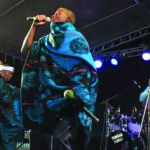

As I write this opinion, my playlist includes Nyamatsana by Khopolo, Bophelo by Peipi, Bophelo by Matšoao, Liphephetso tsa Bophelo by Letheba, and Sello by Mahlanya from La Benya La Khaola ‘Mano Three.
It is an unusual way to begin an opinion about Lesotho’s independence, but perhaps there is no better way.
A notice that raises questions
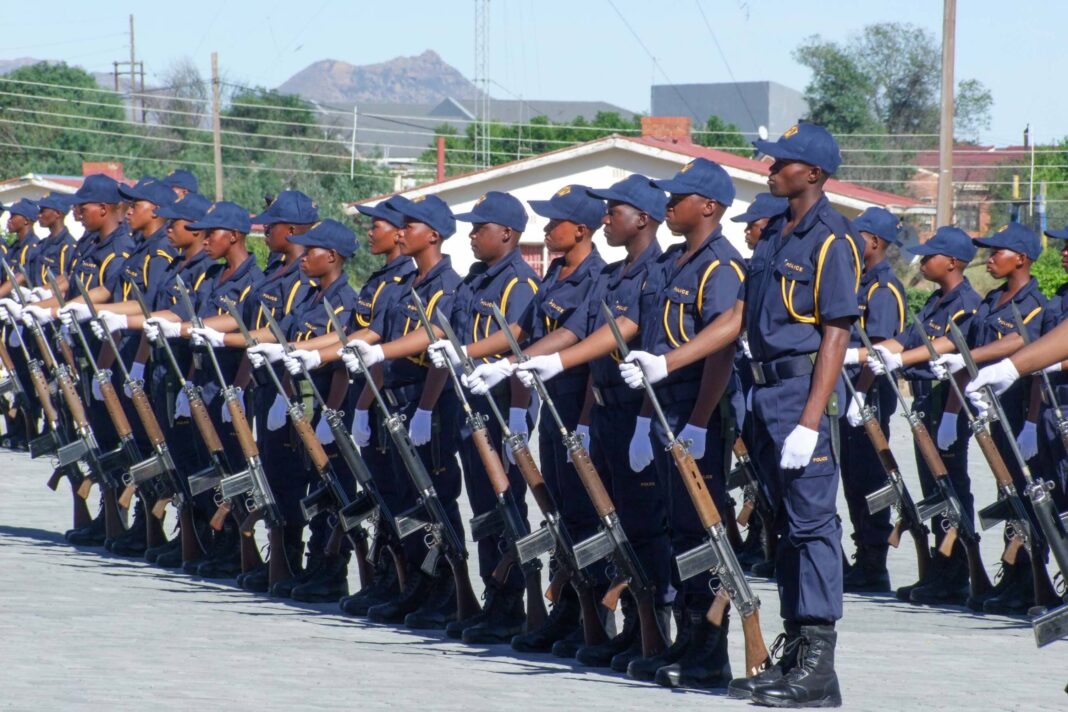
The music reminded me of a notice I recently saw inviting young people between 18 and 30 to apply for police constable positions in the Lesotho Mounted Police Service (LMPS). I want to start there because the notice raises questions that go to the heart of what independence is supposed to mean.
Among other requirements, the notice says applicants must not be members of criminal gangs or banned Blanket (Famo) groups. How will the police determine who a member of Terene or Seakhi is? Does the LMPS have a database of bona fide members? What constitutes membership?
Is it self-identification, association with known members, attendance at particular gatherings, listening to particular music, wearing particular blankets or some intelligence database against which applicants will be checked?
I would genuinely like to know.
Without clear and objective criteria, such a requirement can easily become a tool for arbitrary exclusion. A young person could be denied an opportunity to become a police officer because of who they associate with, the music they listen to or the clothes they wear, without ever having committed a crime.
I am listening to Famo music as I write this. Does that make me a member of a banned group? If I wear a particular blanket by Aranda, sold freely across the country, does that make me a member of a Famo group?
I know people whom I like very much who, every Friday without fail, post short videos from Famo music videos under the hashtags #LabohlanoLaFamo and #LabohlanoLaMakhele. They post music by all artists, including artists who identify with Terene and those who identify with Seakhi, because they regard the music as part of our heritage.
I wonder whether those people are free to apply.
Would their social-media posts be interpreted as evidence of membership? Would celebrating music associated with a particular group make them ineligible to serve in the police? If so, where exactly does cultural appreciation end and group membership begin?
The notice also excludes applicants who have pending criminal cases. Excluding someone who has been convicted is understandable. Excluding someone who has merely been charged is not. The Constitution is clear: “Every person who is charged with a criminal offence shall be presumed to be innocent until he is proved or has pleaded guilty.”
Why does the LMPS exclude people whom the Constitution presumes innocent?
The notice also excludes applicants with writings or tattoos “anywhere on the body”. There may be legitimate reasons for regulating tattoos in a police service. Gang symbols, offensive markings or markings that undermine the professional appearance of an officer could reasonably be regulated.
But a blanket prohibition is different. Consider a young person whose parent died when they were very young and who later has the name of that parent tattooed on their body. Does that make them unsuitable to serve as a police officer? Does the name of a dead mother on someone’s chest make that person less honest, less disciplined or less capable of protecting the public?
Pregnant applicants are also excluded. Only women can be pregnant, so the criterion raises serious questions about discrimination and compliance with Lesotho’s obligations under CEDAW and the Maputo Protocol.
If the legitimate concern is that police training is physically demanding, why not defer commencement of training until an applicant is medically able to participate rather than exclude her from applying?
And how will the police know an applicant is pregnant? By looking at her? Will pregnancy tests be administered, and if so, on what legal basis, with what consent and with what safeguards for dignity and privacy?
I have never seen recruitment criteria that limit fundamental rights this much. The Police Service exists to protect the rights of everyone in Lesotho. It must set an example in respecting them.
This is not the main subject of my opinion, but it is not unrelated. These applicants are the generation I want to write about. In a country where young people graduate into unemployment, a recruitment notice is a rare door to a livelihood. How that door is guarded says a great deal about how the state regards its young citizens at sixty.
Which brings me to Lesotho’s independence.
It began with rice
On April 28, 2025, we gathered in Maseru for what we called a Youth Dialogue on Economic Independence.
At the time, we did not know quite how far that conversation would travel.
The idea had been triggered by something that, on the surface, appeared rather ordinary: reports towards the end of 2024 that Lesotho had received bags of rice from India.
But there was nothing ordinary about the question it raised. How, after almost six decades of independence, could a country still be dependent on food donations from other countries?
Not long afterwards, Donald Trump was inaugurated as President of the United States in January 2025. The new administration subsequently cut some of the foreign assistance provided by the United States, and Lesotho, for obvious reasons, became one of the countries affected.
For us, these developments were not unrelated. They were reminders of a reality that Basotho have lived with for generations: political independence without economic independence remains an incomplete liberation.
We already knew this. The rice donation simply made it visible. The reduction in foreign assistance made it impossible to ignore. So we began asking a more difficult question: if we know that Lesotho is not economically independent, what are we going to do about it?
We believed then, as we believe now, that the solutions will require the younger generation to take responsibility. But we did not believe that young people should pretend to have all the answers. Our grandparents did what they could with what they had during their time. They inherited their own challenges and fought their own battles. The struggle did not end with them.
It continues. Our responsibility is to take the baton from where previous generations left it, learn from what they got right and what they got wrong, and run with it. That was the thinking behind the Youth Dialogue on Economic Independence.
An intergenerational mission
We decided that the April gathering would be a soft launch ahead of a larger dialogue around Africa Day, May 25. We invited Dr Moeketsi Majoro, a former Prime Minister who had also served as Minister of Finance and Minister of Development Planning, among other responsibilities.
On Friday, 23 May 2025, because Africa Day fell on a Sunday, we held the main dialogue with the Speaker of the National Assembly, Mr Tlohang Sekhamane, a former government secretary and former minister of foreign affairs and of finance.
We invited them deliberately. We believe the solutions will come from young people, but an economically independent Lesotho must be an intergenerational mission. Young people need to know where we come from as a nation before they can say where they will take it.
I was reminded of Alan Paton’s South Africa and Her People, in which he recounts a message attributed to Paul Kruger shortly before his death: “Take the best from the past, and build your future on it.”
That principle captured what we were trying to do. The past should not be worshipped. Neither should it be discarded. We must take the best from it and use it as the foundation upon which to build the future.
Then something unexpected happened
After the May dialogue, young people in the districts asked for permission to host similar dialogues of their own. That was when we realised this was bigger than we had imagined. We resolved to hold Youth Dialogues on Economic Independence in every district of Lesotho.
From those conversations, we would develop a Youth Charter on Economic Independence and launch it in October 2026, as part of the commemoration of Lesotho’s 60th anniversary of independence.
There was one obvious problem. We had no money. What we had was determination, time and a conviction that young people should not merely complain about the state of their country but should participate meaningfully in shaping its future.
Finances matter. Anyone who has organised anything knows this. But we decided that lack of money could not be allowed to become an excuse for lack of action. We started in Mohale’s Hoek. Then came Mafeteng, Berea, Leribe and Qacha’s Nek, until we had taken the conversation across all of Lesotho’s districts.
The conversations were different from place to place, but the underlying message was consistent. Young Basotho have ideas and ambitions, and know what is wrong with their country.
More importantly, they have a fairly clear idea of what kind of country they want to inherit, and what kind of country they are prepared to work to build.
In January 2026, the organising team met in Maseru to assess how far we had come and what remained to be done. We agreed that the district dialogues should continue while preparations began for a Youth Assembly in October, where the Charter would be launched. But if this was genuinely going to be an intergenerational project, we needed to do more.
We then decided to invite all living former Prime Ministers of Lesotho and former Deputy Prime Ministers to the October Assembly. We travelled to Leribe to meet Dr Majoro and extend the invitation personally.
We went to former Deputy Prime Minister Kelebone Maope’s home, spoke to him about the project and asked him to help us reach others.
We went to Parliament to extend an invitation to Mr Sekhamane. We were trying to build bridges across generations, political administrations and experiences. With a shoestring budget, it was not easy, but we kept going.
By July, the district dialogues had been completed. In August, we held a bonus dialogue in Maseru, specifically targeting youth groups that are often marginalised and might not ordinarily have participated in the district process.
Everything was coming together.
The Charter, which we also intended to call Agenda 2066, was designed around a simple proposition: what if Basotho today committed themselves to building the Lesotho they want to see when the country celebrates 100 years of independence in 2066?
Forty years is a long time, but it is also the length of a generation.
The young people we spoke to wanted to imagine the country they would like to live in at 100 years of independence and then commit themselves to spending the next four decades building it.
The month before independence
Then, on September 5, everything changed.
A month before the 60th anniversary of independence, I was abducted from my home in Katlehong, Maseru, by armed men. My hands were tied with a cable tie, my mouth was gagged with masking tape, and I was driven away from my home to an unknown location, assaulted and eventually abandoned on a pile of rubbish near a river.
I later learnt that the place was Thaba Bosiu, more than 20 kilometres from my home.
I reported the matter to the police and went into hiding because my abductors had been explicit that if they heard I had spoken about the abduction on radio or social media, they would come back and kill me.
I chose to protect my life. I did so because I value life, and because I have an appointment with Lesotho in 2066.
As I write this, I am still in hiding.
What has happened since my abduction has been almost as painful to watch as the abduction itself.
I have watched the Commissioner of Police, Mr Borotho Matsoso, publicly portray me as uncooperative and as a fugitive. Since then, the public narrative surrounding me has at times made me feel as though I am wanted like Osama bin Laden.
If one listened only to the public statements coming from Lesotho’s authorities, one could easily be forgiven for thinking that I had invented an abduction and disappeared to frustrate the investigation.
That is an extraordinary inversion of what happened.
I am the person who says he was abducted, assaulted, threatened with death and abandoned in the dark. I reported the matter to the police, engaged with investigators and provided information. I have a legitimate interest in knowing what is being done to identify and prosecute the people who abducted me.
Yet somehow, the public conversation has increasingly become about my conduct rather than that of the people who abducted me.
The Minister of Police and Home Affairs, Voeswa Tsheka, has also appeared to follow the line established by the Commissioner, contributing to a narrative in which I am portrayed as somehow responsible for the lack of meaningful progress.
When Prime Minister Sam Matekane spoke to the media on Wednesday, September 30, I listened. I wanted to hear what the government had done to ensure that the people who abducted and assaulted me would be identified, arrested and prosecuted.
Instead, once again, I heard my conduct placed at the centre of the discussion.
There is something profoundly wrong when the victim of a violent crime finds himself having to defend his own credibility while the perpetrators remain at large.
A muted anniversary
I had hoped the Youth Dialogue team would continue the work in my absence. But we have to be honest with ourselves. A team member cannot be abducted and severely assaulted a month before a major national undertaking and expect everyone around that person to continue as though nothing has happened.
The Youth Charter was not launched.
On Sunday, October 4, I watched the independence celebrations on television, from a distance, helpless and heartbroken. The project we had spent so much time preparing for could not happen.
I vividly remember the fortieth anniversary in 2006 and the fiftieth in 2016. They were many times better than this year’s, in scale, public participation and national excitement.
The underwhelming nature of the 60th anniversary celebrations should not simply be dismissed as poor organisation. It should make us uncomfortable.
What happens to a country when its people become increasingly disconnected from national occasions? What happens when patriotism is demanded from citizens who feel that their country has given them very little in return?
It is easy to tell Basotho to love their country, but patriotism cannot survive on speeches alone. For people to feel patriotic, their country must give them reasons to believe that their lives matter.
Hundreds of thousands of Basotho live in poverty and squalor. Many have left for South Africa because they see greater economic opportunity there. Young people graduate into unemployment. Businesses struggle. Public institutions are under pressure.
Then we tell these people to be patriotic, and sometimes we sound completely out of touch.
A country cannot continually ask its people to sacrifice for an idea of Lesotho while failing to create the material conditions that make that idea meaningful.
What economic independence means
Economic independence is therefore not merely an economic question. It is a question of dignity and national confidence.
It asks whether a country can feed its people, create opportunities for its young people, retain its talent, support its businesses and make decisions without being excessively vulnerable to the decisions of others.
The rice donation from India was not the problem. Foreign assistance is not the problem. Countries cooperate, nations receive assistance, and there is no shame in accepting help when help is needed.
The problem is when dependence becomes a permanent condition rather than a temporary bridge to self-reliance.
The United States’ decision to cut assistance was not the problem either. The problem is what it revealed about our vulnerability.
Sixty years after independence, we cannot keep treating economic dependence as somebody else’s problem. It belongs to all of us. Perhaps most importantly, it belongs to the generation that will still be alive in 2066.
Responsibility, not speeches
The Youth Dialogues were never meant to be another conference where people sit in a room, make speeches, take photographs and go home.
They were meant to begin a conversation about responsibility: that of government, business, civil society, communities and, especially, young people.
We cannot demand that young people build Lesotho while excluding them from the decisions that determine its future. But young people also cannot demand a better Lesotho while waiting for someone else to build it for them.
That is why Agenda 2066 matters.
It asks us to think beyond the next election, the next budget, the next political appointment or the next five-year development plan. It asks us to imagine the country we want our grandchildren to inherit and then work backwards.
What must we change today to make that country possible?
What kind of education system do we need? What must we produce? How do we transform agriculture from subsistence into a productive economic sector? How do we build industries that create jobs rather than export our young people? How do we use our water resources responsibly and profitably? How do we create an environment in which Basotho businesses can grow and retain our brightest young people? How do we build institutions that are trusted, and ensure that political power advances the public interest rather than private patronage?
These questions do not belong to one political party. They belong to the nation.
The generation that fought for independence could not have known what Lesotho would look like in 2026, and we cannot know what it will look like in 2066.
But we can decide what we want it to become.
The baton
Our grandparents carried the baton. They ran their race and handed it to us.
We have stumbled. Some of us have fallen. Some of us have been pushed.
But the race is not over.
The answer to our national difficulties cannot be despair. It must be determination, organisation and imagination, and, above all, a willingness to accept responsibility for the country we want.
I still believe Lesotho can become economically independent. I still believe young Basotho can build a country in which they do not have to cross the Mohokare River to find dignity. I still believe the hundredth anniversary of independence can be different from the sixtieth.
But belief alone is not enough.
We need a national project and an intergenerational compact. We need to stop asking only what Lesotho can do for us and start asking what we are prepared to do for Lesotho.
It began as a conversation about bags of rice, became a conversation about foreign aid, then about economic independence, and eventually a national conversation involving young people in every district.
It was supposed to culminate in a Youth Assembly and the launch of Agenda 2066 on the 60th anniversary. That did not happen.
But perhaps the work should not be judged by whether we managed to hold one event, but by whether we have started something that can outlive any one of us.
I hope we have. Lesotho cannot afford another sixty years of simply surviving. We have to start building, and we have forty years to prove that we can.
To those who stood with me
It would be remiss of me to end this long opinion without saying thank you.
Basotho have supported me individually and as groups, organisations and media houses. This overwhelming support has kept me going amid the trials and tribulations of the past weeks.
I have seen the hashtags, #JusticeForBoloetse and #JusticeForKananeloBoloetse, and they fill me with strength. If the sky were a sheet of paper and the waters of the oceans were ink, I still would not be able to express how grateful I am.
Support has also come from beyond our borders, and I am grateful to the regional and international community that has taken notice.
To the friends, colleagues, press freedom and human rights organisations, and partners abroad who have spoken out, thank you.
Lesotho is a member of the African Union (AU), the Southern African Development Community (SADC) and the United Nations (UN), and it has committed itself to the rights those bodies exist to protect.
I respectfully urge them to keep watching, keep asking questions, and support the call for an independent commission of inquiry into the circumstances surrounding what was done to me.
I also want to say something about what all this support means. Boloetse is just one of you: a citizen, a brother, an employee, a member of the Katlehong football team, Team Shampopo.
Justice for him means justice for every Mosotho.
A country in which a citizen can be seized from his home and threatened into silence is a country in which no one is safe.
A country that answers such an act with solidarity, and then insists on accountability, is a country that has not given up on itself.
That solidarity is the best evidence I have that the work I described in this article can continue. The same people who raised their voices for one citizen can raise them for the Lesotho we want in 2066.
Summary
- The music reminded me of a notice I recently saw inviting young people between 18 and 30 to apply for police constable positions in the Lesotho Mounted Police Service (LMPS).
- A young person could be denied an opportunity to become a police officer because of who they associate with, the music they listen to or the clothes they wear, without ever having committed a crime.
- If I wear a particular blanket by Aranda, sold freely across the country, does that make me a member of a Famo group.
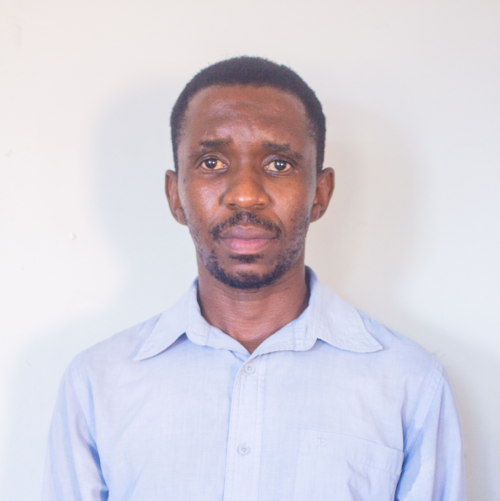
Lesotho activist and journalist who is the Chairperson of the Media Institute of Southern Africa (MISA) Lesotho. He is an International Visitor Leadership Program (IVLP) alumnus.
Boloetse is driven by the need to protect and promote the rights of others, especially the marginalized segment of society. He rose to prominence as an activist in 2018 when he wrote to Lesotho communications Authority (LCA) asking it to order Econet Telecom Lesotho (ETL) and Vodacom Lesotho (VCL) to stop charging expensive out-of-bundle rates for data when customers’ data bundles get depleted.