AfCFTA and WTO rules are complementary, not contradictory, Okonjo-Iweala
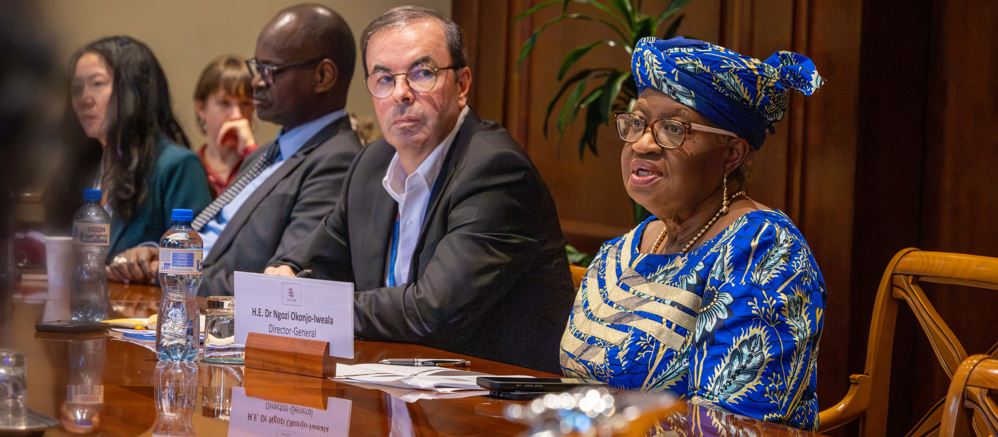
World Trade Organization (WTO) Director-General Dr Ngozi Okonjo-Iweala has dismissed concerns that African countries must choose between the African Continental Free Trade Area (AfCFTA) and the multilateral trading system, maintaining that both frameworks can operate together to strengthen international trade.| Photo: World Trade Organization (WTO).
Co-Owner and Managing Editor of Newsday Media Lesotho. PEPFAR Media champion, Award wining features journalist, an Investigative journalist, REPSSI CAB member. Maseru, Lesotho Joined November 2009.
WTO chief urges African countries to accelerate continental trade integration while defending international trading rules that protect smaller economies.
GENEVA, SWITZERLAND – World Trade Organization (WTO) Director-General Dr Ngozi Okonjo-Iweala has dismissed concerns that African countries must choose between the African Continental Free Trade Area (AfCFTA) and the multilateral trading system, maintaining that both frameworks can operate together to strengthen international trade.
Addressing Journalists participating at the KAS-World Trade Organization (WTO) Media Outreach Programme at the WTO headquarters in Geneva on Tuesday, 27 October 2026, Okonjo-Iweala said African countries could pursue continental economic integration while maintaining or seeking membership of the WTO.
“The WTO and AfCFTA are complementary, not contradictory,” she said.
The Director-General was responding to a question from an Ethiopian journalist about whether the country’s WTO accession process could conflict with its participation in the African continental trade agreement.
“Many AfCFTA protocols are built on WTO rules, and some go further, including gender, youth and digital trade,” she explained.
Okonjo-Iweala stressed the importance of accelerating implementation of the continental agreement, which seeks to strengthen trade between African countries.
“The WTO is already helping individual countries implement AfCFTA protocols, and that’s evidence that the two do not clash,” she said.
Referring specifically to Ethiopia, the Director-General acknowledged that WTO accession required legislative and economic reforms, but maintained that these changes could also benefit participating economies.
“It is not a choice between the WTO and AfCFTA. Both work and both can be a choice,” she stressed.
Her remarks came amid wider discussions about the future of international trade cooperation, regional economic integration and the challenges facing smaller economies in an increasingly uncertain global trading environment.
Okonjo-Iweala also expressed concern about Africa’s limited trade within the continent compared with other regional economic blocs.
“Africa must trade more with itself. Statistics show that intra-African trade is around 20%, compared with around 60% within the European Union.”
She stressed that some of progress bottlenecks included high trading costs and inadequate infrastructure which continued to undermine African economic integration.
“Trade costs in Africa are too high, partly because of bureaucracy and inadequate infrastructure. Addressing these practically identifiable trade barriers can easily help African arrive at the implementation of regional trade agreements.”
Smaller economies need international trading rules
Responding to a separate question from a journalist representing Nepal, Okonjo-Iweala emphasised the importance of a functioning multilateral trading system for countries with limited economic and political influence.
“Smaller economies have the greatest stake in a rules-based multilateral system, and in a purely power-based trading environment they stand to lose most.”
The Director-General encouraged smaller economies to remain active in international trade negotiations and institutional reform processes rather than withdrawing from multilateral cooperation.
She maintained that the existence of common international trading rules was particularly important for countries unable to rely on economic power when negotiating with larger trading partners.
Okonjo-Iweala also defended the continued operation of the WTO’s dispute settlement mechanism, despite difficulties affecting its Appellate Body since 2019.
“It is a myth to say that the WTO dispute settlement system is not functioning at all,” she said.
She explained that WTO committees, consultations and dispute settlement panels continued to provide mechanisms through which members could raise and address trade concerns.
The Director-General also referred to arbitration and mediation, including the Multi-Party Interim Appeal Arbitration Arrangement, as available alternatives for participating members.
“The goal remains a functioning two-tier system, although reforms are proceeding slowly,” she said.
Summary
GENEVA, SWITZERLAND – World Trade Organization (WTO) Director-General Dr Ngozi Okonjo-Iweala has dismissed concerns that African countries must choose between the African Continental Free Trade Area (AfCFTA) and the multilateral trading system, maintaining that both frameworks can operate together to strengthen international trade.
Addressing Journalists participating at the KAS-World Trade Organization (WTO) Media Outreach Programme at the WTO headquarters in Geneva on Tuesday, 27 October 2026, Okonjo-Iweala said African countries could pursue continental economic integration while maintaining or seeking membership of the WTO.
The Director-General was responding to a question from an Ethiopian journalist about whether the country’s WTO accession process could conflict with its participation in the African continental trade agreement.
Co-Owner and Managing Editor of Newsday Media Lesotho. PEPFAR Media champion, Award wining features journalist, an Investigative journalist, REPSSI CAB member. Maseru, Lesotho Joined November 2009.
To ensure optimal experiences, we utilize technologies such as cookies to store and/or access information from your device. Granting consent to these technologies enables us to process data, including browsing habits or unique identifiers on this website. Conversely, not consenting or revoking consent may negatively impact specific features and functionalities.
Functional
Always active
The technical storage or access is strictly necessary for the legitimate purpose of enabling the use of a specific service explicitly requested by the subscriber or user, or for the sole purpose of carrying out the transmission of a communication over an electronic communications network.
Preferences
The technical storage or access is necessary for the legitimate purpose of storing preferences that are not requested by the subscriber or user.
Statistics
The technical storage or access that is used exclusively for statistical purposes.The technical storage or access that is used exclusively for anonymous statistical purposes. Without a subpoena, voluntary compliance on the part of your Internet Service Provider, or additional records from a third party, information stored or retrieved for this purpose alone cannot usually be used to identify you.
Marketing
The technical storage or access is required to create user profiles to send advertising, or to track the user on a website or across several websites for similar marketing purposes.