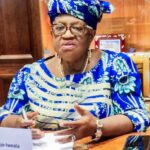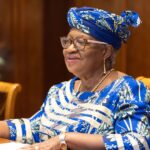

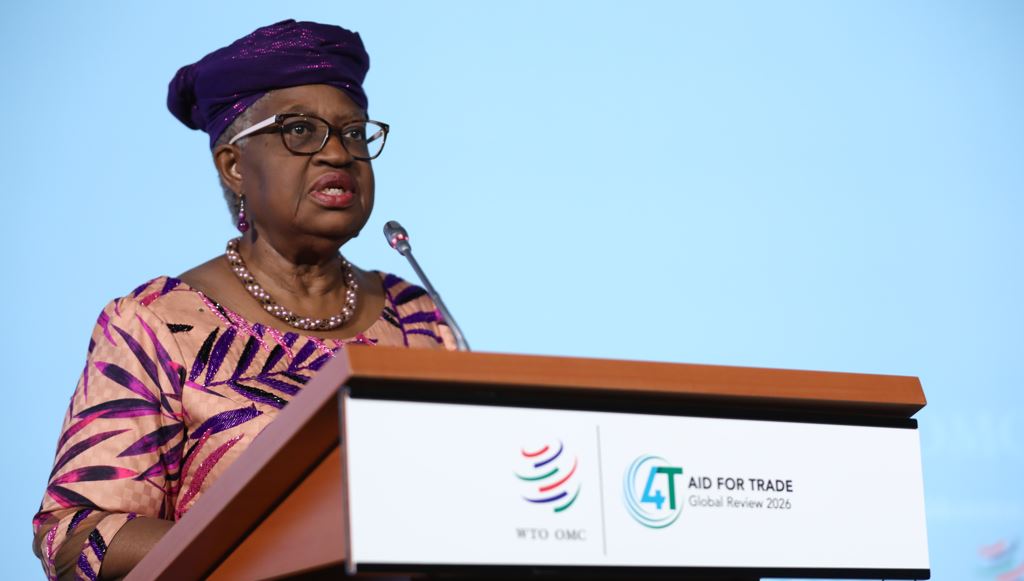
GENEVA, SWITZERLAND — The world’s least-developed countries have nearly tripled the value of their merchandise exports over the past two decades. Yet their share of global goods trade remains at about 1%, prompting World Trade Organisation (WTO) Director-General Dr Ngozi Okonjo-Iweala to call for a new approach to international trade assistance that prioritises productive investment, value addition and economic reforms.
Opening the 10th Global Review of Aid for Trade in Geneva last Thursday, 29 October, Okonjo-Iweala said the international community must examine why substantial investments in trading capacity have not translated into greater global market shares for Africa and the world’s least-developed countries (LDCs).
The remarks accompanied the launch of a joint WTO and Organisation for Economic Co-operation and Development (OECD) report, Two Decades of Trade and Development Partnerships: Trends and Impact of the Aid for Trade Initiative, which assesses the results of approximately USD795 billion disbursed in grants and concessional loans between 2006 and 2024.
“The new edition of our joint biennial report, which we are launching today, identifies roughly $795 billion in Aid for Trade spending over the past two decades. The key question is ‘what has this spending achieved’?” Okonjo-Iweala said.
According to the report, merchandise exports from least-developed countries increased from approximately US$95 billion in 2006 to USD277 billion in 2024, while their commercial services exports rose from USD9.5 billion to USD47 billion.
Despite these increases, LDCs still accounted for only around 1% of global merchandise exports and 0.5% of services exports.
Africa’s share of global merchandise exports also remained at about 3%, while its services exports accounted for around 2%.
By comparison, developing economies collectively increased their share of global merchandise exports from 38% to 48% during the same period, while their share of commercial services exports grew from 25% to 33%.
Okonjo-Iweala acknowledged the improvements recorded through Aid for Trade but said the limited gains in global market share among poorer economies demonstrated the need for further changes.
“Could we have done better? Certainly. Is there a long way to go and plenty of challenges? Absolutely,” she said.
“Nevertheless, despite significant Aid for Trade inflows, the shares of African countries and LDCs in global trade remained stuck around 3% and 1% respectively, though at least they kept pace with global trade growth.”
She said the findings required renewed attention to how international trade assistance could produce greater results for poorer economies.
Okonjo-Iweala said the next phase of Aid for Trade must place greater emphasis on domestic economic reforms and addressing barriers within countries that prevent businesses from producing higher-value goods and services.
She explained the initiative was established after the international community recognised that access to global markets did not automatically translate into economic benefits for countries lacking the capacity to trade.
“In launching the Aid for Trade initiative, the international community recognised that trade opportunities matter to the extent that economies have the capacity to seize them,” she said.
The report identifies productive capacity as a major area of Aid for Trade financing, accounting for about 41% of disbursements in 2024, compared with 56% directed toward economic infrastructure.
According to the report, productive-capacity support covers activities intended to strengthen businesses and economic sectors’ ability to produce goods and services for domestic and international markets.
Okonjo-Iweala said future assistance must go further in helping countries strengthen their production and manufacturing capabilities.
“Beneficiary countries need further support with domestic reforms and behind-the-border issues that can unleash value addition to their goods and services and move them increasingly up the production and manufacturing ladder. This is how they can measurably increase their shares of global trade.”
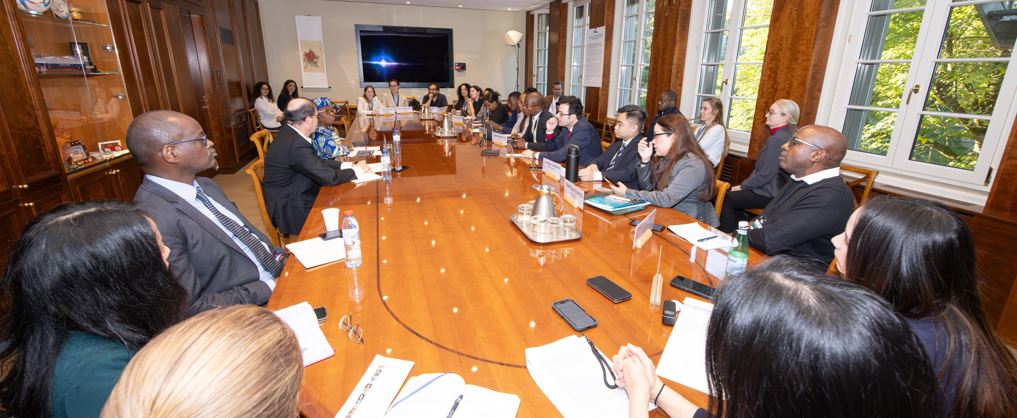
The report documents differing export outcomes among developing economies, with aggregate gains in merchandise and services trade contrasting with LDCs’ persistently low global market shares.
It also identifies support for productive capacity, services infrastructure, trade policy and regulatory reform as being associated with higher manufacturing and digital services exports.
Despite the limited changes in the global export shares of poorer economies, Okonjo-Iweala highlighted several projects demonstrating the benefits of Aid for Trade.
“At the Zambia–Botswana border, the two governments worked with the Japan International Cooperation Agency and the African Development Bank to construct a bridge across the Zambezi River and establish a one-stop border post. The improvements reduced clearance times from approximately one week to as little as 16 hours.
“In the Pacific, Australian financing supported an undersea communications cable connecting 18 countries to the internet, strengthening connectivity in a region where geographical distances create difficulties for international trade.”
Okonjo-Iweala also cited China’s support for the Lao People’s Democratic Republic with disease-control laboratories and monitoring stations, enabling dozens of agricultural products to meet sanitary and phytosanitary requirements for export to China.
“In Ghana, support from the United Kingdom has strengthened quality infrastructure, helping businesses compete in regional and international markets,” she continued.
She further highlighted technical assistance provided to Caribbean Community countries to update their harmonised tariff schedules, as well as evidence from the Inter-American Development Bank indicating that each dollar invested in export promotion agencies in Latin America increased exports by USD40.
“Twenty years on, we can point to important gains in terms of new infrastructure, modernised customs systems, policy reforms, and improved trade performance, not to mention the greater voice and technical expertise economies of all sizes now exert within the WTO,” she said.
The report identifies trade facilitation and regulatory reform among the areas where development assistance has produced measurable improvements.
According to Okonjo-Iweala, support for implementing the WTO Trade Facilitation Agreement has helped reduce trade costs by almost 5% worldwide on average.
The agreement focuses on improving customs procedures, simplifying the movement of goods across borders and increasing transparency in international trade.
Although trade policy and regulatory support accounted for less than 2.7% of Aid for Trade disbursements in 2024, the report identifies positive results from reforms that improve the conditions under which businesses trade.
Okonjo-Iweala said econometric analysis also found that assistance directed towards productive capacity, services infrastructure and regulatory reform was associated with increased manufacturing and digital services exports.
The report further documents improvements in developing countries’ participation in WTO processes through technical assistance and institutional capacity building.
Between 2006 and 2026, more than 178,000 officials benefited from WTO training and technical assistance programmes.
Okonjo-Iweala said the need to change the Aid for Trade model had become more pressing as traditional development assistance declined.
“Looking ahead, the Aid for Trade paradigm needs to evolve, and not just because official development assistance fell by 23% in 2025,” she said.
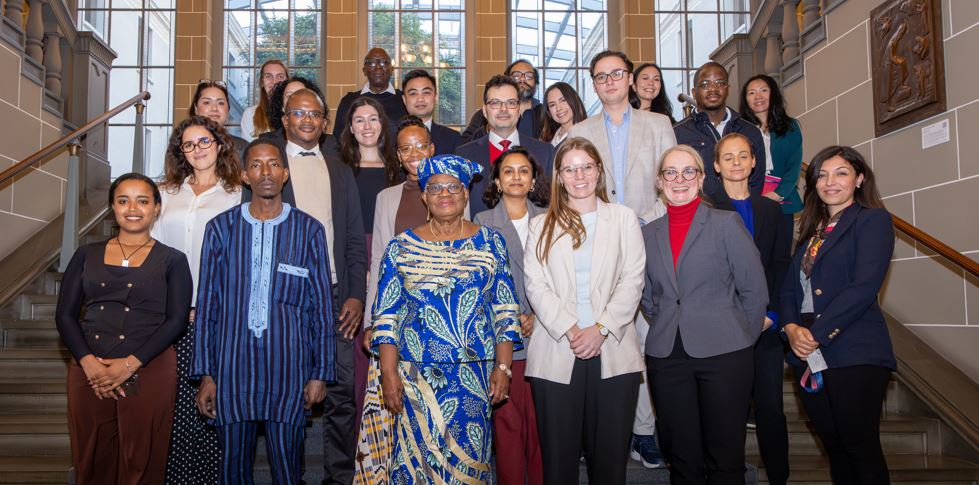
According to the joint report, Aid for Trade disbursements reached approximately USD51 billion in 2024, supported partly by increased financing from multilateral development banks.
However, bilateral Aid for Trade disbursements could fall by about 22% between 2024 and 2026 if current financing patterns continue.
The report also identifies a significant disparity in how private finance is distributed through official interventions in trade-related sectors.
Of the USD68 billion mobilised in 2024, middle-income countries attracted about 74%, while least-developed countries received only 6%.
Okonjo-Iweala said the future of trade development cooperation must reflect changes in international investment and economic relationships.
“Today, technology, ideas and capital do not always follow North-South lines. Developing countries seeking sustained trade success are looking for partnerships that bring together governments, development banks, businesses, other investors, philanthropies and local actors.”
The Director-General said the changing international environment required a shift from traditional Aid for Trade assistance to broader partnerships that can support investment, production and international commerce.
“The shift is from Aid for Trade to aiding trade, with gains shared among all participants in the global economy,” she said.
She added that the approach depended on an effective international trading system.
“But let me say to all the trade negotiators in this room that this vision depends on strong, open, and predictable trade anchored in a reformed and updated WTO rulebook.”
Okonjo-Iweala said the WTO Secretariat was working with international institutions to strengthen trade-related financing and help developing countries participate in expanding services and digital markets.
These efforts include cooperation with the International Finance Corporation and other development banks to expand trade finance and supply-chain finance, as well as work with the World Bank to support countries seeking to benefit from services and digital trade.
She also highlighted the International Trade Centre, the Enhanced Integrated Framework, the Standards and Trade Development Facility and the Partenariat pour le Coton as examples of partnerships bringing different institutions together to address trade development needs.
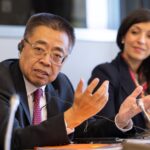
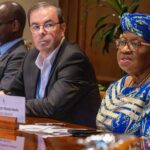
The Global Review brought together WTO members, development institutions, businesses, and other stakeholders to examine the initiative’s achievements and future direction, and DG Okonjo-Iweala urged participants to identify ways to combine resources and strengthen partnerships to increase the impact of international trade assistance.
“In every WTO member, a farmer is ready to reach a new market. A small firm is ready to move up the value chain. A young person is ready to build a business. A female entrepreneur is poised to create jobs,” she said.
“Let’s help them get there.”
Summary
- Yet their share of global goods trade remains at about 1%, prompting World Trade Organisation (WTO) Director-General Dr Ngozi Okonjo-Iweala to call for a new approach to international trade assistance that prioritises productive investment, value addition and economic reforms.
- Opening the 10th Global Review of Aid for Trade in Geneva last Thursday, 29 October, Okonjo-Iweala said the international community must examine why substantial investments in trading capacity have not translated into greater global market shares for Africa and the world’s least-developed countries (LDCs).
- “Nevertheless, despite significant Aid for Trade inflows, the shares of African countries and LDCs in global trade remained stuck around 3% and 1% respectively, though at least they kept pace with global trade growth.

Co-Owner and Managing Editor of Newsday Media Lesotho. PEPFAR Media champion, Award wining features journalist, an Investigative journalist, REPSSI CAB member. Maseru, Lesotho Joined November 2009.