

The Bureau of Statistics (BOS) has moved the release of the 2026 Population and Housing Census preliminary results to November.
This follows the lapse of the August deadline announced by government, and BOS still cannot say on which day in November the figures will come out.
Contacted this week, BOS public relations officer Neo Mokatsa confirmed that the results are now expected in November but could not give a date. She also could not say why the original timeline was missed.
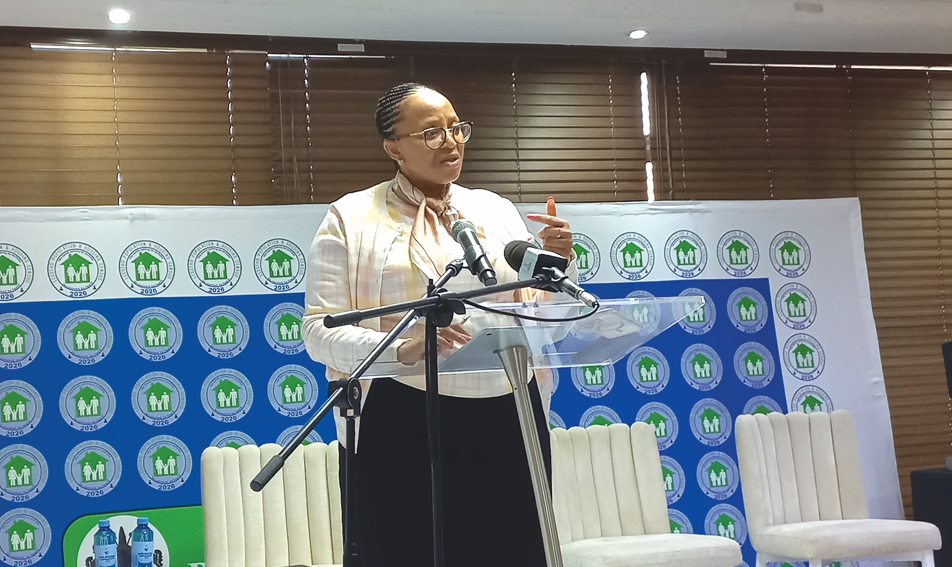
In June, Minister of Finance and Development Planning Dr Retšelisitsoe Matlanyane told the 2026 Population and Housing Census Stakeholders Forum that preliminary results would be shared with the nation in early August.
The minister said the extended data collection period to 30 May did not compromise the credibility or reliability of the final results. August has come and gone, and it is now the end of October.
Fieldwork for enumerators began in mid-April. The original plan was for results about four months after the count began. If the November target holds, the wait will be about six months, with no official explanation.
This also follows a pattern of slippage. By international standards a census enumeration is expected to take about two weeks.
In May, a Botha-Buthe district statistician warned the exercise would run past the planned two weeks because tablets were being shared among enumerators. The data collection deadline was later extended to 30 May.
The silence from BOS is feeding concern about the credibility of the numbers. A census is only as trusted as its process is transparent, and the longer the figures stay out of view, the more room there is for doubt. Several issues have already put the exercise under scrutiny.
The census came under parliamentary scrutiny over allegations that the ruling Revolution for Prosperity (RFP) party unlawfully hired its supporters, leading some observers to label it an “RFP census”.
Separately, the Lesotho National Federation of Organisations of the Disabled has warned that persons with disabilities were not adequately included in key stages, and that this could reproduce inaccuracies in national planning.
In June, the minister reported that 135% of households had been reached. That figure, above 100%, has not been publicly explained. She also reported 12% of households vacant, 7% long-absent and refusals at 0.1%, and BOS has said researchers would follow up on refusals.
BOS Director ‘Malehloa Molato, who is now suspended, said in June that validation and structural edits were under way. Dissemination was to run across all districts from 13 to 30 October. With results still unpublished, those district sessions have not taken place as planned.
The Statistics Act of 2001 places the census under the oversight of the Minister of Finance and Development Planning. The last censuses recorded 1,876,633 people in 2006 and 2,007,201 in 2016. Those figures are the benchmark for planning, budgeting and service delivery, which makes the latest count important.
The delay comes amid long-running complaints from some field staff about unpaid remuneration. In May, census workers downed tools over unpaid wages and allowances, saying they would not resume until all outstanding payments, including wages and not just allowances, were made in full.
The BOS director had apologised and promised the first batch of payments before 29 May, noting that about 8,000 assistant supervisors, enumerators and support staff were recruited.
By June, Newsday reported that about 600 enumerators had still not received their April allowances, and that enumerators protested at a BOS stakeholders’ dialogue, with some alleging their allowances had been miscalculated.
In August, the Ministry of Finance and Development Planning admitted responsibility for the delays, with Principal Secretary Nthoateng Lebona apologising and saying extra accountants and HR staff from other ministries had been deployed to fast-track outstanding payments.
This publication understands that there are enumerators who have not been paid in full to date.
Summary
- In June, Minister of Finance and Development Planning Dr Retšelisitsoe Matlanyane told the 2026 Population and Housing Census Stakeholders Forum that preliminary results would be shared with the nation in early August.
- A census is only as trusted as its process is transparent, and the longer the figures stay out of view, the more room there is for doubt.
- Separately, the Lesotho National Federation of Organisations of the Disabled has warned that persons with disabilities were not adequately included in key stages, and that this could reproduce inaccuracies in national planning.
Thoboloko Ntšonyane is a dedicated journalist who has contributed to various publications. He reports on accountability, human rights, exposes corruption and wrong doing by those in power. He reports have exposed corruption, abuse of power, fraud, misconduct and negligence. He subscribes to evidence-based reporting. He reports on governance, parliament, courts, climate change, human rights, sexual and reproductive health rights (SRHR), health, business and agriculture. He gives a voice to the marginalised while also demanding accountability. His work inspires change, triggers dialogue and also promote transparency in a society.