
The Minister of Finance and Development Planning, Dr Retšelisitsoe Matlanyane, has announced that preliminary results of the 2026 National Population and Housing Census will be released in August.
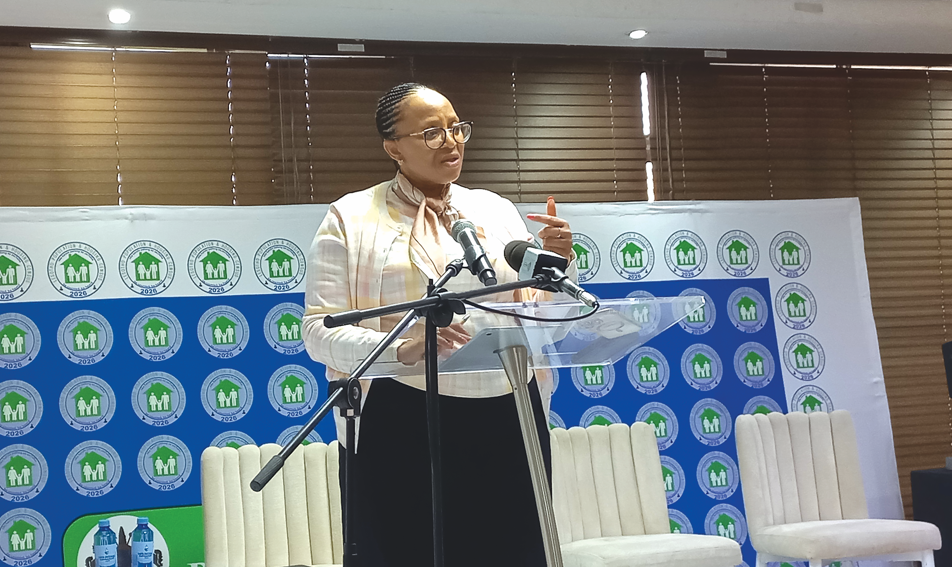
Dr Matlanyane made the announcement during this week’s 2026 Population and Housing Census Stakeholders Forum, held under the theme “The Role of Population Data in Planning, Development and Service Delivery”. The forum brought together government ministries, development partners, the international community, civil society organisations and the media.
The Minister described the census as a critical national undertaking that provides a comprehensive snapshot of the country’s demographics, living conditions and development needs.
“This exercise is very important not only for us but for the continent as well,” Dr Matlanyane said. “It is one of the most important statistical exercises undertaken by any country. It tells us who we are as a nation – how many we are, where we live, and what our living conditions are – so that we can plan effectively for development.”
Lesotho has conducted censuses since the colonial era, with the first recorded in 1936. Post-independence decennial censuses have been managed by the Bureau of Statistics (BOS). According to the Statistics Act of 2001, the Minister of Finance and Development Planning oversees the census process. Previous modern censuses were held in 1966, 1976, 1986, 1996, 2006 and 2016.
Census progress and challenges
The Minister reported strong overall coverage, with 135 percent of targeted households reached. Vacant households accounted for 12 percent, while seven percent of households were absent for extended periods. Refusals were minimal at 0.1 percent.
Field teams will follow up to understand the reasons behind the refusals.
BOS Director ‘Malehloa Molato highlighted some community resistance encountered during data collection. Some residents declined to participate, citing government failure to improve living conditions and address their challenges, while others expressed dissatisfaction with policy implementation.
Despite these challenges, Dr Matlanyane described the census as a success. For the first time, Lesotho conducted a fully digital census, marking a significant milestone in the country’s data management systems.
The United Nations Population Fund (UNFPA) provided key support, including tablets that enabled electronic data capture. UNFPA Representative John Kennedy Mosoti expressed satisfaction with the level of support rendered to the exercise.
Population trends
Lesotho’s population has shown steady growth. The 2006 census recorded 1,876,633 people, rising to 2,007,201 in 2016. Preliminary 2026 results are expected to confirm continued growth. The BOS Director noted that the counting exercise surpassed targets by more than 0.3 percent.
In the first week of June, BOS staff conducted a “move-up” exercise to complete call-backs and retrieve tablets from enumerators across all districts. Data retrieval is scheduled to begin in the second week of June.
Molato said the BOS is currently undertaking validation and structural edits ahead of the August preliminary results release. Following that, the bureau will produce thematic tables, conduct analysis and prepare reports. Dissemination of preliminary results to districts is planned for 13 to 30 October 2026.
She noted that, in line with the Statistics Act, only 10 percent of the data will be released for public and research use initially. Fully disaggregated data will not be made public as it constitutes personal information.
All final census reports and datasets are expected to be available in March 2027.
UN support and significance
UN Resident Coordinator Taija Kontinen-Sharp described the census as a major milestone in Lesotho’s development journey and a demonstration of the country’s commitment to evidence-based planning.
“The Population and Housing Census is among the most important investments a nation can make in its future,” she said. “It is far more than a statistical exercise – it is a national endeavour that provides a comprehensive picture of who we are as a people.”
Kontinen-Sharp emphasised that reliable population data is essential for informed decision-making in education, health, housing, social protection, infrastructure and economic development. She said the data would help address inequalities and ensure no one is left behind, in line with the 2030 Agenda for Sustainable Development.
The United Nations reaffirmed its commitment to supporting Lesotho’s development aspirations.
“A nation that counts its people demonstrates that it values its future,” Kontinen-Sharp added.
The census data will guide government resource allocation and planning for services and infrastructure across the country.
Summary
- The Minister described the census as a critical national undertaking that provides a comprehensive snapshot of the country’s demographics, living conditions and development needs.
- UN Resident Coordinator Taija Kontinen-Sharp described the census as a major milestone in Lesotho’s development journey and a demonstration of the country’s commitment to evidence-based planning.
- “It is far more than a statistical exercise – it is a national endeavour that provides a comprehensive picture of who we are as a people.

Welcome to Newsday Media – Your Trusted Source for News and Insights in Lesotho!
At Newsday Media, we are passionate about delivering accurate, timely, and engaging news and multimedia content to our diverse audience. Founded with the vision of revolutionizing the media landscape in Lesotho, we have grown into a leading hybrid media company that blends traditional journalism with innovative digital platforms.
Our mission is simple: to inform, inspire, and empower our readers by providing comprehensive coverage of local and global events, current affairs, and cultural happenings. Whether you’re looking for breaking news, in-depth analysis, or captivating storytelling, Newsday Media is your go-to destination for all things news-related.
With a dedicated team of journalists, editors, and multimedia experts, we are committed to upholding the highest standards of journalistic integrity and professionalism. We pride ourselves on delivering content that not only informs but also sparks conversation, fosters understanding, and drives positive change in our society.
From our flagship newspaper to our dynamic digital platforms, we offer a wide range of multimedia content to cater to the diverse interests and preferences of our audience. Whether you prefer to stay informed through print, online articles, videos, or podcasts, Newsday Media has something for everyone.
We believe in the power of storytelling to connect people, bridge divides, and inspire action. That’s why we’re dedicated to providing a platform for voices from all walks of life, championing diversity, inclusion, and authenticity in everything we do.
Thank you for visiting Newsday Media. We invite you to explore our website, engage with our content, and join us on our journey to inform, inspire, and empower our community. Together, let’s shape the future of media in Lesotho.