
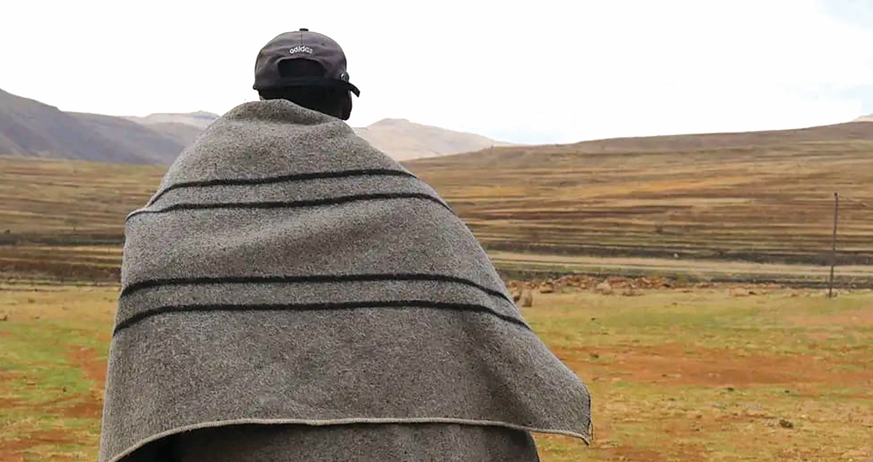
The wind up there in the mountains of Thaba Tseka cuts like a blade.
It finds every gap in your blanket, every crack in the stone wall of the hut, and reminds you that you are alone with animals that do not care whether you live or die.
That is the life of a herdboy in a hard-to-reach place. Days bleed into nights. You count sheep instead of friends.
And if you are carrying HIV in your blood, the loneliness can turn lethal.
One young man’s experience lays bare these challenges. A recent agriculture graduate from the Lesotho Agriculture College (LAC) with ambitions to start his own farm, he prefers to remain anonymous to protect his privacy.
In October 2024, he celebrated his graduation, full of hope. By January 2025, that pride had collapsed into the familiar reality facing many young Basotho, no job, no income, and the slow burn of despair.
He had to leave his family and head to Maseru in search of work, hoping for a shop job, anything to get started.
“I told my mother I could not afford to stay at home without money,” he recalled.
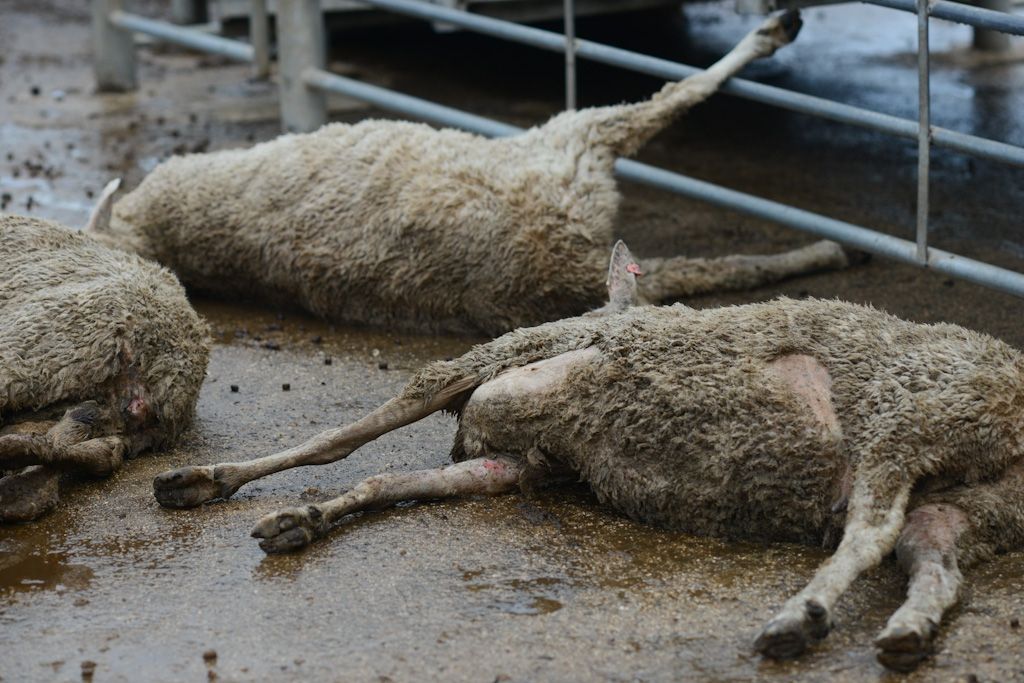
After weeks of fruitless job hunting in the city, he spotted a Facebook post advertising a herdboy position in Thaba-Tseka. Desperate for income to fund his future, he accepted the role and relocated to a remote cattle post to manage a flock of 146 sheep.
The job provided steady pay, but a serious health crisis soon emerged. The young man is HIV-positive and relies on antiretroviral therapy (ART). When he left home abruptly, he failed to obtain a transfer letter from his previous clinic to continue treatment seamlessly.
By June 2025, his medication supply ran out. He informed his employer, who took possession of his medical booklet and promised to collect the drugs on his behalf. However, the boss explicitly forbade him from leaving the post to visit the clinic himself, citing the risk of losing sheep without supervision.
For seven to eight months, he went without life-saving treatment. Physically, he felt stable for much of that time, but the psychological toll was immense.
“I was worried this thing was damaging me slowly, and it would only show when I wouldn’t even be able to move a finger,” he said.
“On the other hand, my fear was that I would be shouted at when I reached the health facility to start taking medication again.”
This fear of judgment from healthcare workers is widespread. Many patients, including herdboys, avoid clinics after missing doses due to stigma or scolding, even when circumstances like distance or lack of transport are to blame.
“Before I became a herdboy, I would spend a week without medication because I had no transport, and when I finally went, I would be shouted at regardless of my explanation,” he added.
The combination of an unsympathetic employer, who prioritised livestock over employee well-being, and systemic fears of reprimand kept him from care for nearly a year.
He eventually quit the job.
Now back within reach of health services, the young graduate is speaking out, not just about his own ordeal, but about the thousands of herdboys scattered across Lesotho’s mountains, living beyond the practical reach of the systems meant to protect them.
He believes healthcare must adapt to reality on the ground. Clinics, he said, should actively follow up on missed refills instead of waiting for patients to return in shame.
Health workers should be supported to reach cattle posts, on horseback if necessary, at least once every three months. Most of all, he said, care must replace criticism.
“Counselling brings people back to treatment,” he said. “Shouting pushes them away.”
Despite anxiety about restarting ART and potential mistreatment at the clinic, he is determined to prioritise his health. “I need the courage to prioritise my health no matter the challenge or disgrace,” he said.
He vowed never to return to herding, citing employers’ disregard for workers’ welfare, and is refocusing on his agricultural education to build a business closer to accessible services.
This incident was not merely a personal hardship. It involved potential legal violations.
Lesotho’s Constitution (1993, as amended) under Section 7 guarantees freedom of movement, entitling every person to move freely throughout the country and reside where they choose. No employer can lawfully restrict an employee’s access to healthcare by preventing them from leaving a worksite.
Withholding the medical booklet and denying time off for treatment may also contravene protections against forced labour under Section 9.
The recently enacted Labour Act of 2024 consolidates labour rights, promoting fair practices and worker welfare, while the Occupational Safety and Health Act requires employers to maintain a healthy work environment, obligations that include not obstructing access to essential medical care.
Lesotho’s “Test and Treat” HIV strategy commits the health system to initiating treatment immediately upon diagnosis and supporting lifelong adherence. As a SADC member, the country is bound by the SADC Protocol on Health (1999), whose objectives in Article 3 include promoting and coordinating activities to improve health, with emphasis on equitable access for vulnerable groups in remote areas.
The Lesotho National Farmers’ Union (LENAFU) has said that such treatment of herdboys is unacceptable.
“It is not right for the livestock owner to deny the herdboy life-saving medication by preventing them from going to health facilities,” said Executive Director Khotso Lepheana.
Lepheana noted, however, that employment relationships should be clear from the outset. “It is the responsibility of the herder to disclose all relevant information, including health issues, during discussions on terms and conditions of work.”
For its members, LENAFU offers mediation, and where that fails, support in referring cases to the police.
Broader efforts are underway to bridge the gap between kraals and clinics. Help Lesotho’s Herd Boy Program, a six-month initiative in districts like Thaba-Tseka, delivers peer-led health education and psychosocial support to address the mental and physical strains of mountain isolation.
The Lesotho Nutrition and Health System Strengthening Project (LNHSSP), backed by the World Bank, has formed Herd Boy Clubs where peer educators bring health and nutrition information directly to herding sites.
Mobile clinics from organisations like SolidarMed and the Lesotho Planned Parenthood Association (LPPA) reach remote villages in areas such as Botha-Bothe and Mokhotlong, offering HIV testing, treatment refills, and other services.
In the most inaccessible regions, the Lesotho Flying Doctor Service deploys medical teams via small aircraft to dirt airstrips every few weeks for vaccines, medications, and consultations.
These interventions matter, but they are not yet enough.
Summary
- Desperate for income to fund his future, he accepted the role and relocated to a remote cattle post to manage a flock of 146 sheep.
- “Before I became a herdboy, I would spend a week without medication because I had no transport, and when I finally went, I would be shouted at regardless of my explanation,” he added.
- Now back within reach of health services, the young graduate is speaking out, not just about his own ordeal, but about the thousands of herdboys scattered across Lesotho’s mountains, living beyond the practical reach of the systems meant to protect them.
Ntsoaki Motaung is an award-winning health journalist from Lesotho, specializing in community health stories with a focus on sexual and reproductive health and rights, as well as HIV. She has contributed to platforms like “Be in the KNOW,” highlighting issues such as the exclusion of people with disabilities from HIV prevention efforts in Lesotho.
In addition to her journalism, Ntsoaki serves as the Country Coordinator for the Regional Media Action Plan Support Network (REMAPSEN). She is also a 2023 CPHIA Journalism Fellow.