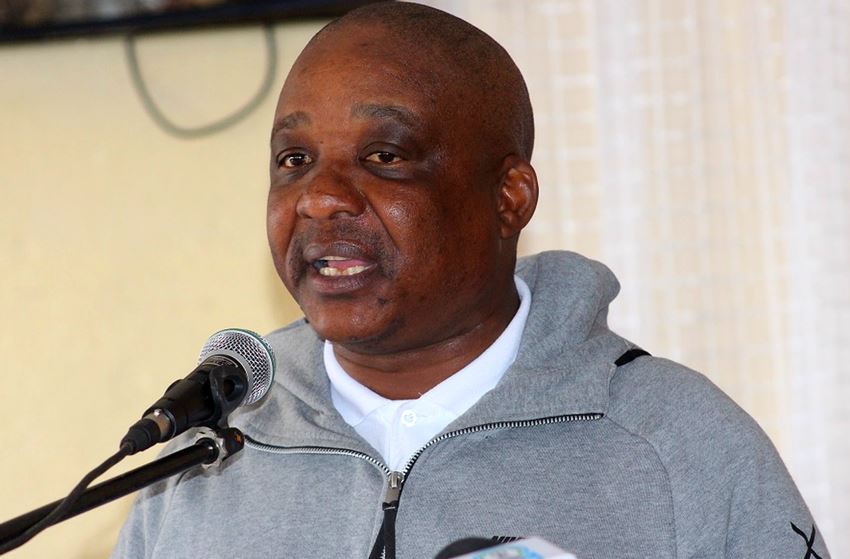
In a development that could significantly affect former Minister Temeki Tšolo, the Court of Appeal this week sharply questioned the handling of a High Court ruling that imposed a permanent stay of prosecution in a high-profile corruption case against him.
The Appeal Court judges, including Chief Justice Sakoane Sakoane, poked holes in the High Court judgment and grilled lawyers from both the Directorate on Corruption and Economic Offences (DCEO) and the defence during proceedings this week.
In August last year, High Court Judge Tšeliso Mokoko ordered a permanent stay of the corruption case, citing the DCEO’s repeated lack of readiness to proceed with the trial.
Judge Mokoko criticised the anti-corruption body for failing to prosecute the matter on two separate occasions – the week starting 21 October 2024 and the week starting 18 August 2025. He noted that the prosecution had all the necessary resources at its disposal yet failed to secure witnesses or properly inform the court of its difficulties.
The judge was particularly scathing about the conduct of lead prosecutor Advocate Jay Naidoo SC, pointing out that the South African-based senior counsel was in Lesotho the previous Thursday but failed to notify the court or appear for the scheduled hearings.
The court also highlighted that Advocate Naidoo had not subpoenaed key witnesses for the hearing set for 18 to 22 August 2025.
Delivering the ruling, Judge Mokoko said the prosecution could not be allowed to drag the accused through prolonged court proceedings, causing him unnecessary time and expense, without a valid justification.
“The court finds that the Crown failed to prosecute the matter on two occasions… The Crown had all resources at its disposal,” Judge Mokoko ruled at the time.
The DCEO has since petitioned the Court of Appeal to review and set aside the High Court’s permanent stay, arguing that the ruling was erroneous.
During this week’s hearing, Chief Justice Sakoane Sakoane questioned the validity of using the absence of witnesses as a reason to stay a case permanently.
“It is not a good reason for a judge to say he cannot proceed with a case because the witnesses are not present. You deal with the witness who is there; there might be good reasons why others are not coming,” the Chief Justice remarked.
He added that courts ought to be slow in granting permanent stays of prosecution, emphasising the need for matters to be dealt with on their merits.
The case centres on allegations that in 2018, while serving as a minister in former Prime Minister Motsoahae Thabane’s administration, Tšolo signed a controversial supply contract on behalf of the Government of Lesotho with German-based company Fraser Solar GMBH without Cabinet approval.
The contract, valued at approximately M700 million, involved the supply of 350,000 solar lanterns, 40,000 solar water heating units (to replace electric geysers), and 1.5 million LED lights.
The government eventually rejected the deal and opted instead for the Chinese-funded solar power project at Ramarothole in Mafeteng district. Phase I of that project, which generates about 30 megawatts, was commissioned in 2023.
Fraser Solar is reportedly demanding around €50 million (approximately M1 billion) in compensation from the Lesotho government for alleged breach of contract.
Tšolo faces several charges, including fraud, forgery, obstruction of justice, and acting on superior orders.
In the Appeal Court this week, Advocate Jay Naidoo SC explained that he was in Lesotho on the relevant dates but had not been briefed on the Tšolo matter at the time, as the DCEO had just appointed a new Director-General. He said he was only instructed to handle other DCEO cases.
DCEO lawyer Advocate Mojalefa Shakhane told the court that he and defence counsel Advocate Molefi Masoabi had agreed on a postponement. However, Advocate Masoabi distanced himself from that claim, stating that while Advocate Shakhane had suggested it, he advised that a formal application should be made to the court.
The High Court had stressed that any postponement must be properly justified, noting that agreements between the Crown and defence lawyers are not binding on the court.
Section 278 of the Speedy Court Trials Act, 2002, was also referenced, which requires trials to proceed speedily and mandates that lawyers engaged in a matter must be present in court unless the court is informed otherwise.
The Court of Appeal is expected to deliver its judgment on May 15, 2026. The ruling will be crucial in determining whether the corruption case against former minister, Tšolo, can proceed or remains permanently stayed.
Following the High Court ruling last year, the DCEO’s Public Relations Officer, ‘Matlhokomelo Senoko, said the Directorate was “not satisfied” with the decision and would exhaust all legal avenues to challenge it.
Summary
- In a development that could significantly affect former Minister Temeki Tšolo, the Court of Appeal this week sharply questioned the handling of a High Court ruling that imposed a permanent stay of prosecution in a high-profile corruption case against him.
- The judge was particularly scathing about the conduct of lead prosecutor Advocate Jay Naidoo SC, pointing out that the South African-based senior counsel was in Lesotho the previous Thursday but failed to notify the court or appear for the scheduled hearings.
- In the Appeal Court this week, Advocate Jay Naidoo SC explained that he was in Lesotho on the relevant dates but had not been briefed on the Tšolo matter at the time, as the DCEO had just appointed a new Director-General.
Thoboloko Ntšonyane is a dedicated journalist who has contributed to various publications. He focuses on parliament, climate change, human rights, sexual and reproductive health rights (SRHR), health, business and court reports. His work inspires change, triggers dialogue and also promote transparency in a society.