

In every village, a chief is among the first people to be called when a dispute breaks out. They keep law and order and settle quarrels. Yet when death visits a chief’s own home, many struggle to give their loved ones a decent farewell.
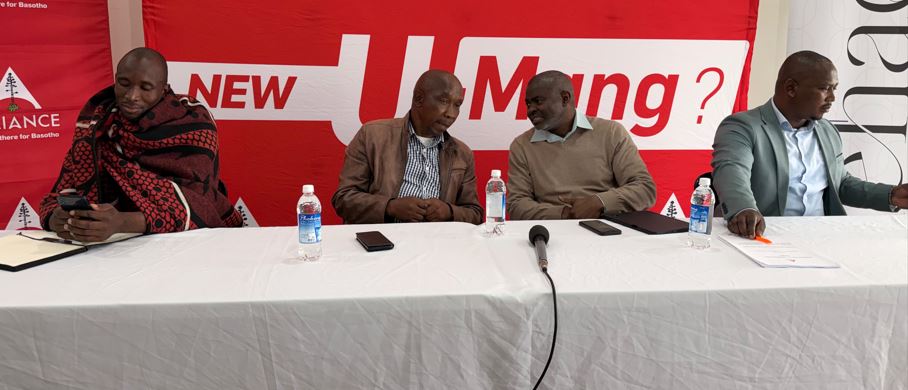
This week, Alliance Insurance moved to change that. On Wednesday it signed a memorandum of understanding (MoU) with the national association of chiefs, Mokhatlo Oa Marena A Lesotho.
The partnership begins with a funeral policy designed exclusively for chiefs. It is meant to grow into legal insurance and a retirement plan. It also brings the company close to 4,000 new clients.
Chiefs are not a small group. Lesotho has about 22 Principal Chiefs, while area and local chiefs are estimated at around 4,000. Their work is guided by the Chieftainship Act of 1968 and the customary laws of Lerotholi among other statutes.
But the office comes with a gap. Chiefs are not government servants. They draw allowances from public funds, yet they are not formally treated as public servants. As a result, they are not enrolled in government pension schemes.
The state does not provide them with legal counsel either, even though they deal with legal matters daily. After many years, allowances have improved lately.
In August 2024, the Ministry of Local Government agreed to raise chiefs’ allowances by up to 100 percent. But an allowance is not a salary, and it does not come with a pension or legal protection.
The first problem the agreement with Alliance Insurance tackles is the cost of burying a loved one. Mohapinyane Taole the Chief Financial Officer at Alliance said the cost of funerals keeps rising. Too often, a chief’s household must sell property or fall into debt to give a family member a respectable burial.
Taole said the agreement is about trust and about lifting a heavy financial load from chiefs’ families. He said it will have worked when widows are not crushed by funeral bills, orphans are well looked after and parents receive a dignified send-off.
Kekeletso Moshoeshoe said Alliance has dealt with chiefs for a long time and came to see the difficulties they face. He said the company noticed that chiefs often lose property to pay for funerals. They also keep working well into old age because there is no retirement provision for them.
Because they fall outside the public pension system, nothing is waiting for them when they step down.
Their work also exposes them to legal risk. Chiefs carry out duties of a legal nature and can face consequences that call for a lawyer, but they have no representation provided. Moshoeshoe added that chiefs also lack some of the key equipment needed for their daily work.
For this reason, he said, Alliance decided to partner with the association and offer affordable products designed around chiefs’ needs.
The funeral policy for all chiefs comes first. Families can choose a cash payout from Alliance or a funeral service from Lehae Funeral Services. They can also take a mix of both.
There are two cover levels. A policy that pays out M50,000 costs about M89 a month. A policy that pays out M40,000 costs around M50 a month.
The partnership will not stop at funerals. Alliance says it will build an affordable legal insurance policy for chiefs as the agreement develops. It will also work with chiefs on a retirement solution through its new Hola product, which is built around stokvels, the savings groups many Basotho already use. Savings and investment plans are also on the table.
The association’s secretary general, Morena Leloko Mohalenyana, welcomed the deal. He said improving the welfare of chiefs is part of the association’s mandate, and he thanked Alliance for standing with chiefs in their struggles. He said he is confident the partnership will improve the wellbeing of traditional leaders.
He agreed that chiefs are not well prepared for the legal problems that come with their office. When they are sued, he said, they must pay legal costs out of their own pockets, which leaves their households struggling.
Whether the partnership delivers will be seen over time. But for chiefs who have spent a lifetime keeping the peace in their villages, the promise is simple. They want to be able to bury their own with dignity and to look forward to a retirement that does not depend on their families’ savings.
Summary
- In every village, a chief is among the first people to be called when a dispute breaks out.
- But an allowance is not a salary, and it does not come with a pension or legal protection.
- He said improving the welfare of chiefs is part of the association’s mandate, and he thanked Alliance for standing with chiefs in their struggles.

Authored by our expert team of writers and editors, with thorough research.