
The House of Georges Malelu is continuing its rise as one of Africa’s most daring voices in sustainable luxury, unveiling a bold collection made entirely from recycled materials at Port Harcourt Fashion Week in Nigeria.
In partnership with Sechaba Milling Co., the Lesotho-born designer presented a couture piece that not only pushed creative boundaries but also sparked important conversations around environmental responsibility, cultural preservation, and innovation in African fashion.
George Malelu is no stranger to the global stage. Born in Lesotho and raised between two countries, he carved out a name for himself as one of Africa’s accomplished luxury fashion designers.
His international acclaim skyrocketed when he and his late creative partner, Quiteria Kekana, designed a show-stopping gown for global superstar Beyoncé during her performance at the 2018 Global Citizen Festival in South Africa.
The pair was already a powerhouse name in luxury fashion, but the moment cemented their place among the continent’s most influential couture talents, demonstrating Africa’s ability to create fashion at world-class standards.
Today, Malelu continues to build on that legacy with bold, culturally infused and sustainability-driven design work that challenges conventional definitions of luxury.
Using unconventional materials is not a trend, but rather a creative identity shaped early in his life.
“I have always been fascinated by using unconventional materials in my designs. In college, it started out of necessity because I could not afford expensive fabrics. But I soon realised it worked so well with my designs since I enjoyed being crafty and innovative. Recycling and transforming what is considered waste into something beautiful has always been part of my aesthetic,” Malelu said.
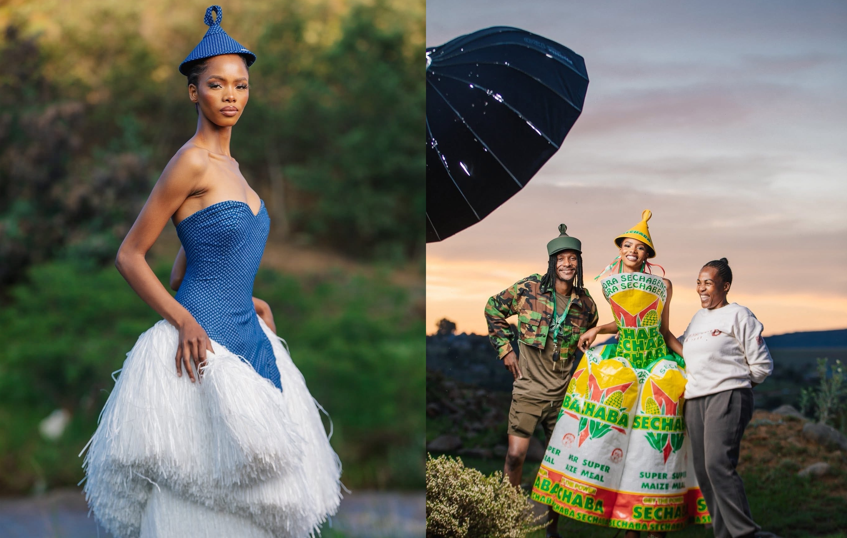
The showstopper of his Nigeria showcase, a sculptural dress made from Sechaba Milling maize meal bags, drew admiration across the continent.
“I would describe the Sechaba Milling dress as a celebration of how sustainability can meet elegance. I used maize meal bags to create a modern silhouette that could easily pass as a cocktail or wedding dress.” Malelu explained.
His work is also deeply rooted in African heritage.
“In our cultures, garments traditionally came from animal skins, plants, and natural sources. Sustainability is in our DNA; we have been recycling long before it had a name.”
His new collection, Pitiki, reflects this philosophy, using maize meal bags to reinterpret the iconic Thethana skirt, a traditional piece historically created from repurposed materials.
“Unconventional materials can absolutely be luxury if executed well. The difference lies in the finishing and embellishment.”
The partnership with Sechaba Milling Co. came after Malelu followed their recycling-themed designer competition online.
“I liked the story behind it and was already on the same page about recycling,” he said. “But the backlash around the judging took attention away from their message. I wanted to flip the script back to what they were trying to achieve.”
After a meeting facilitated by Patrick Motšoene, the collaboration officially took shape.
“They not only sponsored part of my trip to Nigeria but also provided tonnes of maize meal bags that made the entire collection possible,” he said.
Malelu hopes the partnership can spark a broader impact.
“I hope this collaboration inspires pride in our local resources and shows how fashion can uplift communities. “It’s about bridging industry with culture,” Malelu said.
Working under extreme time pressure, Malelu and his team produced the centrepiece dress in just 24 hours.
“What went through my mind was simple: I needed to create a masterpiece. As a household name working with their bags, I knew I had to surpass what had been seen before,” said Malelu.
Malelu highlighted that during this process, team synergy was crucial.
“Teamwork is dreamwork because we each bring different expertise,” noted Malelu. “I developed the concept, others were on the machines, and some cut motifs from the bags.”
Showcasing in Nigeria brought a sense of pride and homecoming.
“It felt like taking a piece of home to another country, and seeing it appreciated was beautiful,” Malelu said.
“Once I explained the garment, the audience connected with it.”
Despite delays that affected his planned Facebook Live broadcast, the designer remained grateful for the platform.
“I believe it was well received, but by the time I showcased, people were tired, and some were starting to leave.”
Malelu hopes his journey inspires the next generation. “I hope young creatives play a part in waste reduction and environmental responsibility,” Malelu said.
While he refrains from revealing upcoming collaborations, Malelu hints at promising developments.
“Sechaba Milling and the House of Georges Malelu have started a powerful conversation. There are exciting projects ahead,” he shared.
Despite personal and business challenges that temporarily dimmed his creative flame, he is firmly back on course. And has since decided to come back home from South Africa.
“I came back home to reconnect with my roots,” he said. “Now I’m ready to translate that reconnection into my designs and take my brand back into the world.”
Grounded by faith and purpose, Malelu’s vision for his legacy is clear.
“I want to leave a legacy that says no matter where you come from, it is possible to conquer the world with your gift.”
Summary
- The House of Georges Malelu is continuing its rise as one of Africa’s most daring voices in sustainable luxury, unveiling a bold collection made entirely from recycled materials at Port Harcourt Fashion Week in Nigeria.
- The pair was already a powerhouse name in luxury fashion, but the moment cemented their place among the continent’s most influential couture talents, demonstrating Africa’s ability to create fashion at world-class standards.
- I used maize meal bags to create a modern silhouette that could easily pass as a cocktail or wedding dress.

A Professional Communications practitioner with a wealth of expertise in marketing, public speaking, communication and media relations. I believe in learning everyday and improving one’s personal and professional capabilities.
* A former journalist and radio host who is passionate about media and it’s impact on society.