African policymakers, development partners, and child advocates gathered in Maseru this week for a high-level engagement that blended policy debate with deeply personal testimony, issuing a clear call that Water, Sanitation and Hygiene (WASH) must be treated as a non-negotiable human right for every child on the continent.
The side event, held during the 47th Ordinary Session of the African Committee of Experts on the Rights and Welfare of the Child (ACERWC), came at a critical moment.
With the African Union (AU) designating 2026 as the year of “Assuring Sustainable Water Availability,” attention is turning to the millions of children still living without access to safe drinking water or adequate sanitation.
The human face of the crisis
The event opened with a sobering account from James Chifwelu Nkemba, Country Director for World Vision International Lesotho, who illustrated the link between water access and child protection.
Nkemba recounted a case in which a mother left her home to collect water from a distant, unprotected source, leaving her children alone. During her absence, one child was abducted and later found dead.
“When we talk about safety and security in relation to water, it can sound abstract,” Nkemba said. “But this is a real case where a child’s life was lost because water was not accessible nearby. Girls and women face abuse while trying to meet this basic need.”
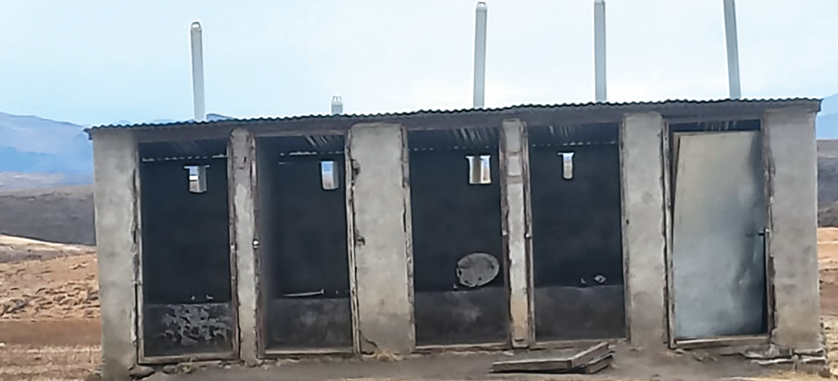
In Lesotho, access to clean water is estimated at around 80 percent, while fewer than half of the population has access to adequate sanitation. Across Africa, the situation is more severe, with roughly half the population lacking safe drinking water.
A rights-based approach
Wael Abdel-Razek of the ACERWC Secretariat argued that WASH has long been treated as a discretionary development issue rather than a legal obligation. He linked the absence of water and sanitation services to violations of children’s rights under the African Charter on the Rights and Welfare of the Child.
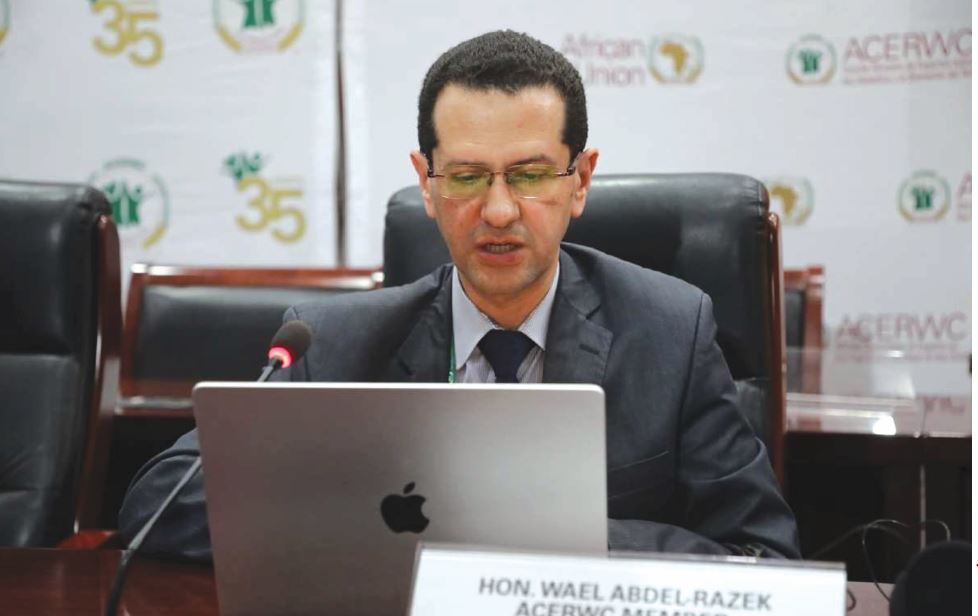
“How can member states better integrate WASH into child rights frameworks?” he asked, noting that the lack of these services undermines rights to health, education, nutrition and protection.
He called for minimum standards to guarantee the availability, accessibility, quality, safety and affordability of water. He also stressed the need for schools and health facilities to provide adequate privacy for girls, particularly to support menstrual health and hygiene.
Identifying policy gaps
Fanese Nketsi, Project Coordinator for World Vision International, highlighted weaknesses in current governance systems. He noted that national strategies tend to prioritise water supply infrastructure while neglecting sanitation.
“If sanitation is compromised, children will still be affected,” Nketsi said. “Open defecation contaminates water sources, creating a cycle of infection.”
He added that while hygiene policies introduced during the COVID-19 pandemic helped reduce the spread of diseases such as tuberculosis, momentum has since declined. Nketsi urged governments to adopt inclusive policies that consider people with disabilities, who are often excluded in infrastructure planning.
Government response
Representing the Ministry of Natural Resources, Nkopane Masheane, outlined Lesotho’s response. He acknowledged that existing legislation is outdated and confirmed that the 2008 Water Act is currently under review.
“We are incorporating issues of climate change and water security,” he said.
Masheane also pointed to newly introduced WASH in Schools guidelines aimed at improving infrastructure across all levels of education.
A key reform under consideration is the Water and Sanitation Services Bill, which seeks to formalise community water committees into regulated service providers with legal authority.
“Accountability must be mutual,” Masheane said. “Government must be accountable, but communities must also take responsibility for maintaining these resources.”
The role of partnerships
UNICEF WASH Specialist Hanchul Kim emphasised that the scale of the challenge requires coordinated partnerships. He cited the Metsi-a-Lesotho Rural WASH Project as a model initiative.
The $17 million project, funded by the European Union and UNICEF, is a five-year programme targeting 200 communities and 125 schools. In addition to infrastructure development, it promotes decentralised management by empowering local councils to oversee and maintain water systems through coordinated inter-ministerial structures.
Children’s voices
The event concluded with contributions from child representatives. Liekolo Montši reminded policymakers that children must be included in decisions that affect them.
“Government must treat water, sanitation and hygiene as basic rights, not a luxury,” she said. “Children can identify unsafe areas and failing facilities if they are given the opportunity to be heard.”
Summary
- African policymakers, development partners, and child advocates gathered in Maseru this week for a high-level engagement that blended policy debate with deeply personal testimony, issuing a clear call that Water, Sanitation and Hygiene (WASH) must be treated as a non-negotiable human right for every child on the continent.
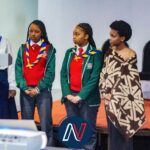
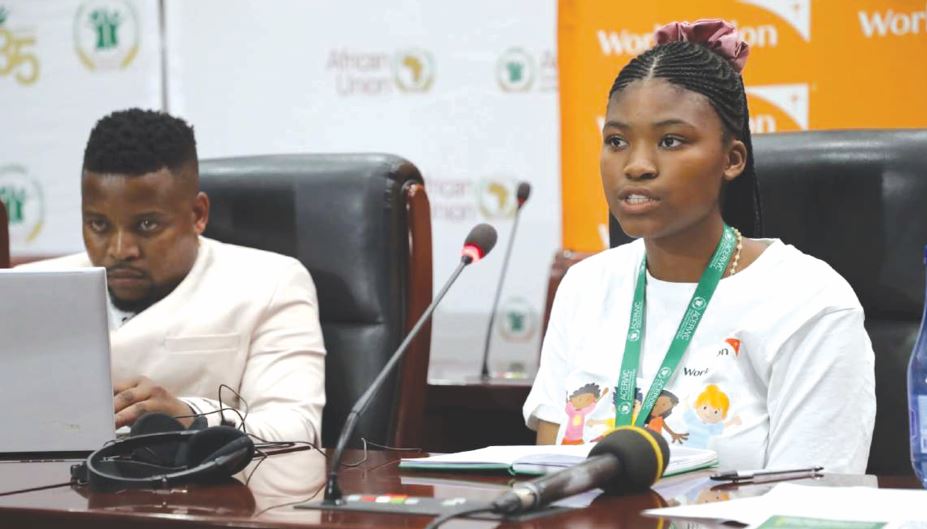
- Liekolo Montši, a child representative from Lesotho, addresses a high-level panel during the 47th Ordinary Session of the African Committee of Experts on the Rights and Welfare of the Child (ACERWC).
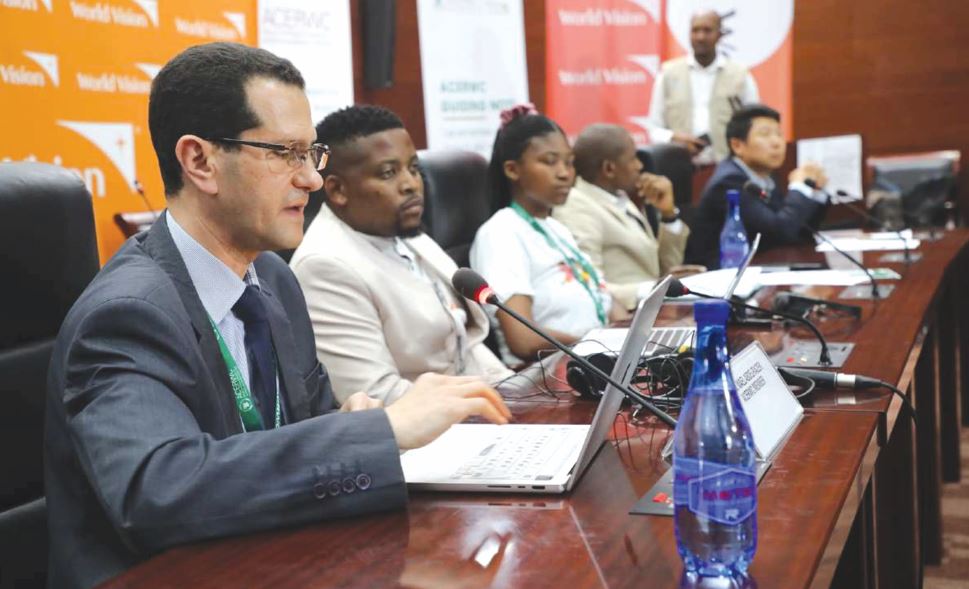
- Wael Abdel-Razek, a member of the African Committee of Experts on the Rights and Welfare of the Child (ACERWC), presents a keynote address during a high-level side event in Maseru.
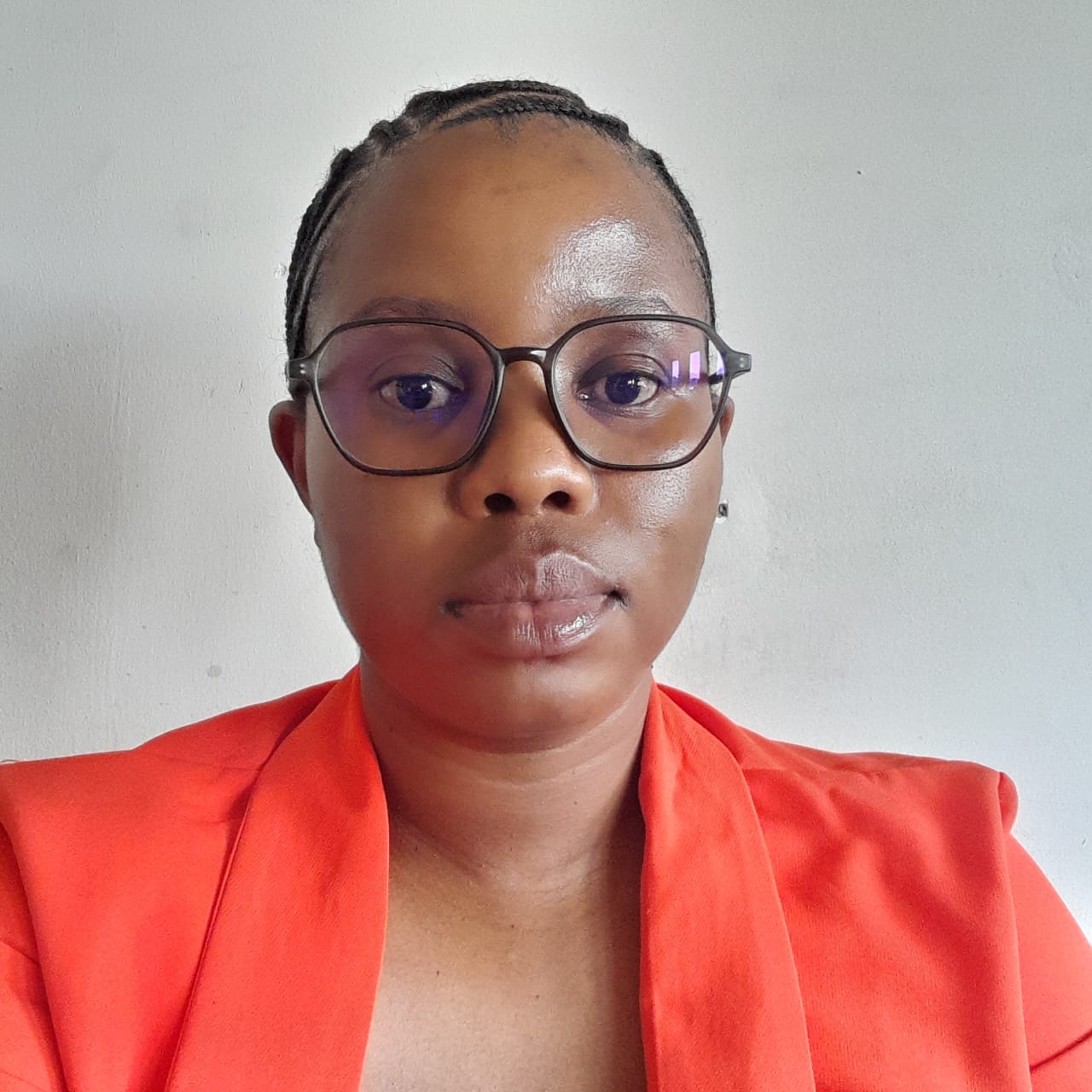
Ntsoaki Motaung is an award-winning health journalist from Lesotho, specializing in community health stories with a focus on sexual and reproductive health and rights, as well as HIV. She has contributed to platforms like “Be in the KNOW,” highlighting issues such as the exclusion of people with disabilities from HIV prevention efforts in Lesotho.
In addition to her journalism, Ntsoaki serves as the Country Coordinator for the Regional Media Action Plan Support Network (REMAPSEN). She is also a 2023 CPHIA Journalism Fellow.