

By Kananelo Boloetse and Bereng Mpaki
Lesotho’s government has given little clarity on why it has stalled and rolled back on projects intended to ensure more of the country’s diamond wealth is captured and retained domestically.
For much of the last decade, since the adoption of the Minerals and Mining Policy in 2015, the government’s official position has been to upend the traditional model of getting royalties from companies extracting and exporting raw diamonds. The policy sought to ensure that diamond mining spins off into sustainable socio-economic development domestically.
To achieve this, the policy proposed that local cutting, polishing, valuation, and trading industries be established in the country.
In practical terms, the government proposed to construct a number of facilities.
Firstly, it proposed to construct a diamond centre. This was envisaged as a centralised facility for handling diamonds domestically, including valuation and pricing, sorting and certification, and potentially also cutting and polishing. This would, in principle, have ensured that more of the value of Lesotho’s diamond wealth was retained in the country.
The construction of a geosciences lab was also planned for. This was to be a technical and scientific facility which could analyse the country’s natural resources. It would have had the ability to test geological samples, support geological research and mineral exploration, and save costs by reducing the country’s reliance on foreign labs and consultants.
A period of progress
For a brief period between 2021 and 2022, the Lesotho government, under Prime Minister Moeketsi Majoro, made tangible moves to finally construct these facilities. Sites were inspected, budgets discussed, and commitments made to establish a diamond centre and a geoscience laboratory.
In January 2021, Mining Minister Serialong Qoo pledged to deliver the promised diamond centre within the year.
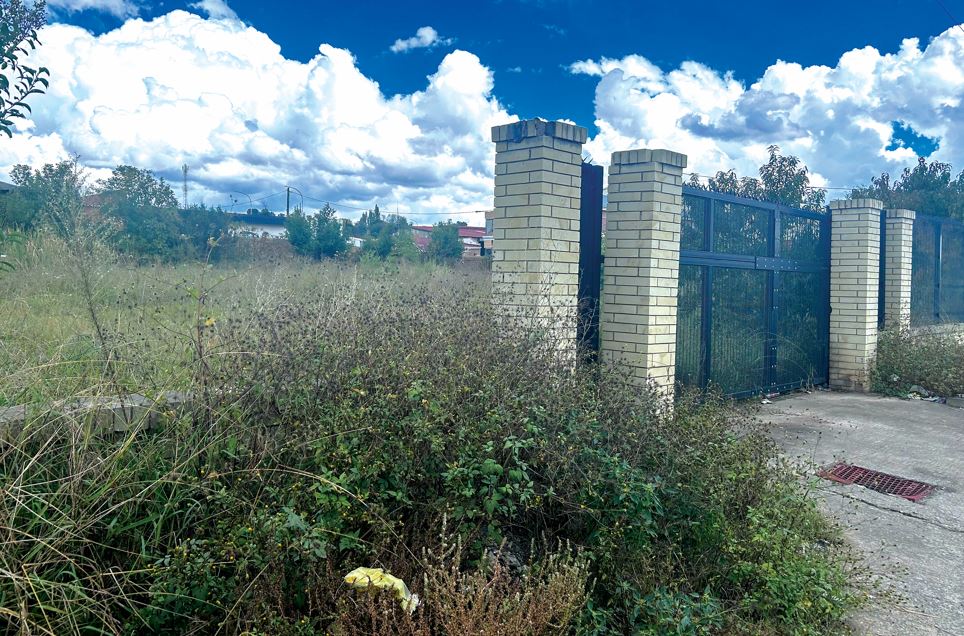
In February 2022, Qoo inspected the proposed site, at an industrial area in Maseru, for a geoscience laboratory. He said that the design phase, costed at M2 million, was at an advanced stage and that construction was imminent pending final utility quotations.
Accompanying the minister at the inspection, Ngakane Ngakane, Lesotho’s Director of Geosciences, confirmed that approval for the lab had already been granted in 2016. Its construction had been delayed by bureaucracy and political instability, he said. Plans included a reported M84 million allocation for construction.
These developments suggested the policy and promised facilities were finally moving toward implementation. Then progress stalled, as Prime Minister Ntsokoane Matekane took office after the October 2022 elections.
As at 2026, more than a decade after the policy’s adoption and years after Qoo’s promise of imminent construction, Lesotho still has no diamond cutting or polishing industry, no geoscience laboratory, and no diamond centre.
Perplexing stall
Former minister Qoo said, during a recent interview at his home in Mokhotlong, that the plans had been at an advanced stage in 2022 but were never carried forward. He attributed the halt to a lack of political will of his successors in the Matekane government.
This stall stands in contrast to other projects under the Matekane administration, such as upgrades to central Maseru, which demonstrate the government’s capacity to execute infrastructure projects when prioritised.
Current Natural Resources Minister Mohlomi Moleko has shifted focus away from domestic beneficiation, emphasising diversification, branding, and regional approaches. He has suggested Lesotho’s diamond output may be too small to sustain local processing—marking a departure from the 2015 policy’s vision.
When he was asked about local beneficiation during an interview at the Mining Indaba 2025 in Cape Town, South Africa, he said: “With us, it is a bit difficult in the sense that our volumes are too small. We have high-quality stones, but the volumes are too small. I think we do five percent of what Botswana does.
“So, it becomes difficult, if we have four mines, to now start putting in laws which say a certain percentage of the production from these four mines should go for local beneficiation, because we need volumes even to set up those value chains.
“My feeling is that the only way it can be done is in collaboration with other countries. For instance, if Botswana, South Africa, and Lesotho were to say, we are harmonising our laws, aligning them to say that we beneficiate regionally.”
He suggested that Botswana, for example, could serve as an auction centre for the region’s diamonds.
Efforts to get a comment from Moleko before publishing this story were unsuccessful. The Commissioner of Mines, Pheello Tjatja, said he was on two weeks’ leave and could not respond to the questions sent to him.
A decade of broken promises
The Matekane administration’s quiet retreat from implementing key promises of the 2015 Minerals and Mining Policy is but the latest in a decade-long failure by successive governments.
On 22 May 2015, then Minister of Finance Mamphono Khaketla said in her budget speech that the final draft Minerals and Mining Policy was about to be tabled before the Cabinet for approval. It was adopted later that year.
In Khaketla’s budget speech in 2016, she gave parliament a glimpse of what implementation might look like. Her proposed M39.9 million budget for the Ministry of Mining included proposed amounts of M3.2 million for geochemical mapping, M4.5 million towards the construction of a geoscience laboratory, and of M5 million was proposed for a diamond centre.
“These efforts will enhance government revenue collection, as well as create employment in the future. A sum of M5 million is proposed for establishing a diamond centre. This facility will enable the ministry to value diamonds before they leave the country. It will also be utilised to introduce beneficiation in the diamond industry,” she said.
In 2026, nothing tangible has come from these promises. Lesotho still ships nearly all its high-quality diamonds, famous for exceptional size and price per carat, from mines like Letšeng in rough form to hubs such as Antwerp and Dubai. The country pockets royalties and taxes, but the lion’s share of value addition, jobs, and industrial spin-offs goes elsewhere.
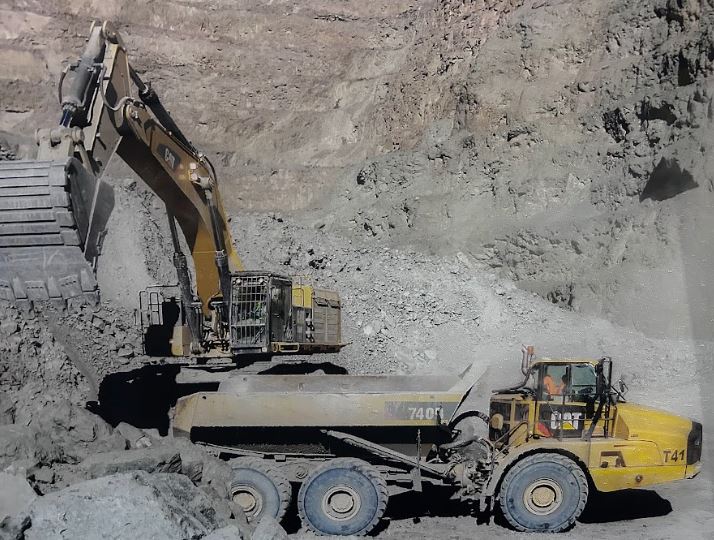
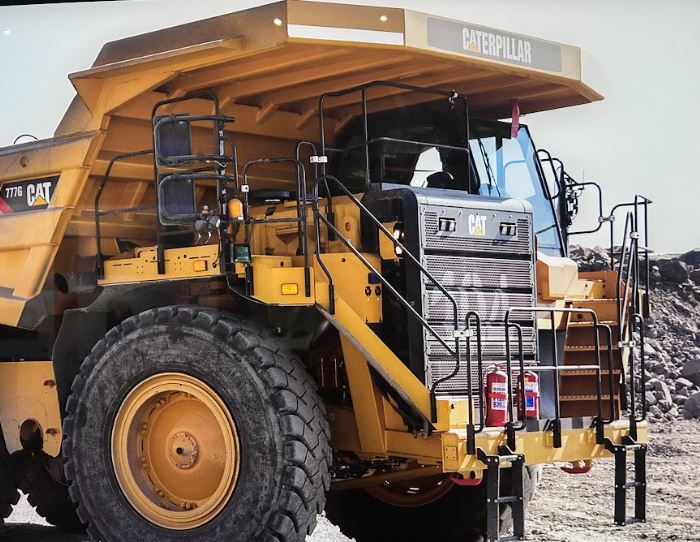
excavator loading kimberlite ore into a CAT 740B articulated haul truck at Letšeng
Diamond Mine in Mokhotlong, Lesotho. This heavy-duty mining operation in one of the
world’s highest diamond mines showcases the large-scale equipment used to extract the valuable ore that makes Lesotho a significant player in the global diamond industry.
A missed opportunity in contrast to Botswana’s success
Lebohang Thotanyana, former Minister of Mining, believes Lesotho missed a historic opportunity to transform its mineral economy.
“The policy was meant to remove the mineral curse of having a rich country in minerals but having poor people. Its lack of implementation is a missed opportunity to say the least,” Thotanyana said, during an interview at his home in Berea in February.
He was Minister of Mining between 2015 and 2017 when Khaketla was minister of finance. He noted that the policy drew inspiration from the Africa Mining Vision, a continental strategy encouraging African countries to process minerals locally before export.
According to Thotanyana, Lesotho could have become a continental leader in beneficiation. Instead, other countries moved faster.
Lesotho stands in contrast to countries like Botswana, which committed to diamond beneficiation as early as the 2000s. The Diamond Trading Company Botswana, a 50/50 joint venture between the government and De Beers, was established in 2006. By 2013, De Beers had moved all its international trading activity, for Botswana operations, from London to Gaborone.
Botswana also continued to sharpen its legislative edge during the same period that Lesotho dithered. In 2015, as Lesotho adopted its policy, Botswana’s parliament was debating a motion calling for comprehensive beneficiation legislation.
By 2017, Botswana amended its Precious and Semi-Precious Stones Act to give the government first option to buy diamonds of exceptional size or quality, a move explicitly motivated by a desire to maximise the value of the country’s most precious diamonds domestically.
In 2022, Botswana adopted a new Minerals Policy explicitly aimed at “value addition activities along the value chain and effective participation by citizens”.
The economic consequences of Lesotho not following suit are profound. Take, for instance, the iconic Lesotho Promise diamond extracted in 2006. It was sold for about US$12 million; its polished value soared past US$50 million. Extrapolating from such examples, it is likely that Lesotho has forfeited hundreds of millions of dollars in potential revenue, with negative knock-on effects on employment and downstream industries, over the years.
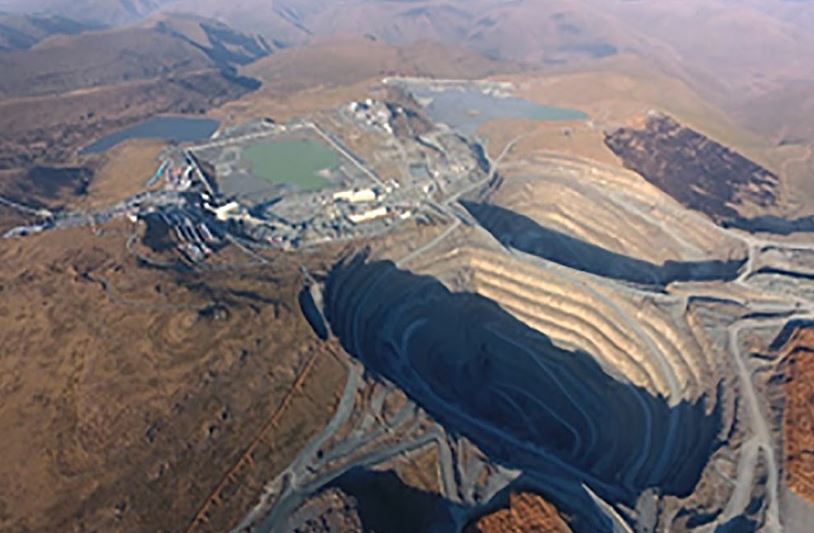
sustain Lesotho’s position as a leading producer of high-quality diamonds.
Political instability caused implementation stall
Political instability bears much of the blame for the country’s failure to implement the 2015 policy. Coalition governments have collapsed repeatedly since 2012 and derailed continuity on multi-year infrastructure projects.
“With all the plans we had in the works, there was a government change mid-term, and this means all the plans fell away when the new government took office, as they had a different idea of running the state affairs,” Thotanyana, Lesotho’s Minister of Mining from 2015 to 2017, said.
In 2017, a motion of no confidence toppled the Mosisili-led government and Thotanyana lost his job. Snap elections ushered in a new coalition led by Prime Minister Thomas Thabane, with Moeketsi Majoro as Minister of Finance. On paper, the mining policy survived the transition.
In his maiden budget speech that year, Majoro said that the Ministry of Mining was “spearheading the construction of a geoscience laboratory to diversify mineral extraction and attract investment.”
Over the next two years, Majoro would repeatedly assure parliament that progress was underway.
But the words were not matched by action.
The extent to which the old status quo remained untouched can be seen in the wording of lease renewals between the government and some of Lesotho’s largest diamond mines. In October 2019, the lease of Letšeng Diamonds was renewed for ten years. This lease agreement showed that the government’s royalty regime remained fully tied to rough exports, with no provisions to incentivise or mandate local processing.
In 2023, the pattern repeated at Liqhobong diamond mine. Its lease was renewed for another ten years in November 2023, again under unchanged conditions.
The missing framework
Experts point to another critical reason for the failure of the 2015 Minerals and Mining Policy: the absence of a supporting legal and regulatory framework.
Mabusela Mabohla, a small-scale miner and outspoken advocate for beneficiation in Lesotho, said that the mining policy would have seen better progress had there been a supporting legal and regulatory framework to anchor it.
A Minerals and Mining Bill was drafted in 2017, he said, but never passed into law.
“In order to turn the policy aspirations into reality, we needed to enact supporting legal and regulatory framework, so as to crystallise the national vision on how to exploit our mineral resources more equitably,” he said, during a recent interview.
What Basotho lost
The contrast with Botswana grows starker by the year. By 2023, employment in Botswana’s diamond cutting and polishing sector had surged to over 4,200 people, up from 2,200 just a year earlier.
In August 2025, President Duma Boko visited Stargems Botswana, a diamond cutting and polishing company that has trained over 1,100 Batswana, with 76 percent local employment and a P380 million investment in local facilities. Botswana is now pursuing an “aggressive drive for mineral beneficiation” as a central pillar of its economic transformation.
Lesotho, by contrast, has nothing to show for a decade of promises. No cutting and polishing industry. No geoscience laboratory. No diamond centre. No jobs.
The Minerals and Mining Policy of 2015 remains a dead letter, a document of ambition without implementation, of vision without follow-through. And as successive governments come and go, the diamonds keep flowing out, and the opportunities keep flowing with them.
- This report has been produced by the Southern Africa Accountability Journalism Project (SA | AJP), an initiative of the Henry Nxumalo Foundation with the financial assistance of the European Union. It can under no circumstances be regarded as reflecting the position of the European Union.
Summary
- Lesotho’s government has given little clarity on why it has stalled and rolled back on projects intended to ensure more of the country’s diamond wealth is captured and retained domestically.
- For much of the last decade, since the adoption of the Minerals and Mining Policy in 2015, the government’s official position has been to upend the traditional model of getting royalties from companies extracting and exporting raw diamonds.
- As at 2026, more than a decade after the policy’s adoption and years after Qoo’s promise of imminent construction, Lesotho still has no diamond cutting or polishing industry, no geoscience laboratory, and no diamond centre.

Welcome to Newsday Media – Your Trusted Source for News and Insights in Lesotho!
At Newsday Media, we are passionate about delivering accurate, timely, and engaging news and multimedia content to our diverse audience. Founded with the vision of revolutionizing the media landscape in Lesotho, we have grown into a leading hybrid media company that blends traditional journalism with innovative digital platforms.
Our mission is simple: to inform, inspire, and empower our readers by providing comprehensive coverage of local and global events, current affairs, and cultural happenings. Whether you’re looking for breaking news, in-depth analysis, or captivating storytelling, Newsday Media is your go-to destination for all things news-related.
With a dedicated team of journalists, editors, and multimedia experts, we are committed to upholding the highest standards of journalistic integrity and professionalism. We pride ourselves on delivering content that not only informs but also sparks conversation, fosters understanding, and drives positive change in our society.
From our flagship newspaper to our dynamic digital platforms, we offer a wide range of multimedia content to cater to the diverse interests and preferences of our audience. Whether you prefer to stay informed through print, online articles, videos, or podcasts, Newsday Media has something for everyone.
We believe in the power of storytelling to connect people, bridge divides, and inspire action. That’s why we’re dedicated to providing a platform for voices from all walks of life, championing diversity, inclusion, and authenticity in everything we do.
Thank you for visiting Newsday Media. We invite you to explore our website, engage with our content, and join us on our journey to inform, inspire, and empower our community. Together, let’s shape the future of media in Lesotho.