
… Africa ready for football’s biggest stage
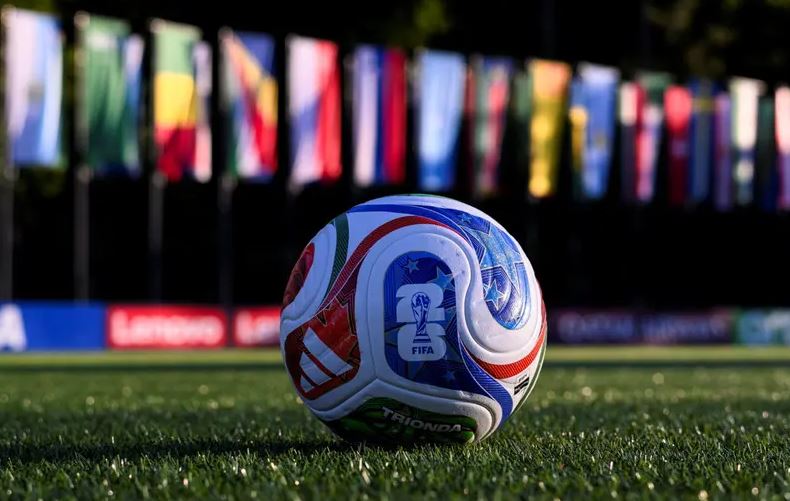
The countdown to the FIFA World Cup 2026 has entered its final stretch, with the tournament set to kick off in just six days in North America.
For Africa, this is more than a football festival. It is a platform to showcase the continent’s rising influence and competitiveness, with a record 10 nations preparing to compete in the expanded showpiece.
The 2026 edition, co-hosted by the United States, Canada and Mexico, will be the largest in history. For the first time, 48 teams will participate, up from 32, offering greater opportunities across confederations.
Africa stands as one of the biggest beneficiaries, qualifying a historic 10 sides: Morocco, Senegal, Algeria, Tunisia, Egypt, Côte d’Ivoire, Ghana, Cape Verde, South Africa and DR Congo. Nine booked their spots directly, while DR Congo secured the final berth via the intercontinental play-offs.
The new format gives African teams their strongest chance yet to advance deep. Competition will unfold in 12 groups of four, with the top two from each group and the eight best third-placed teams progressing to the Round of 32.
South Africa returns to the global stage
For fans across Southern Africa, Bafana Bafana’s return is among the most exciting narratives.
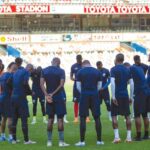
South Africa will appear at the World Cup for the first time since hosting in 2010. After years of qualification heartache, the team has reclaimed its place among the elite.
Under Belgian coach Hugo Broos, Bafana have rebuilt steadily, blending seasoned internationals with promising talent from the domestic league. A significant core hails from Mamelodi Sundowns and Orlando Pirates, whose strong performances in African club competitions have boosted national confidence.
Drawn in Group A with hosts Mexico, South Korea and the Czech Republic, South Africa face a tough opener but will eye progress in the expanded format, which offers more routes for third-placed teams. Mexico are favourites to top the group, yet Bafana believe they can compete.
Captain Ronwen Williams will provide leadership in goal, while striker Lyle Foster carries attacking hopes and veteran midfielder Themba Zwane adds vital experience. The goal: reach the knockout stages for the first time.
Morocco leads Africa’s charge
Morocco enter as one of the continent’s strongest contenders. Their run to the 2022 semi-finals, the first by an African nation, changed global perceptions. The Atlas Lions dominated qualification and arrive with genuine title ambitions and a formidable defence.
Senegal, Egypt, Algeria and Côte d’Ivoire are also expected to push deep, while Cape Verde’s debut highlights the depth and rising standard of African football. The islanders’ qualification is one of the tournament’s most inspiring underdog tales.
Inspiration for Lesotho
Though Lesotho will not feature, the Mountain Kingdom’s football community will follow events closely. Likuena came close in a tough qualifying group that included South Africa and Nigeria. While the dream is deferred, Bafana’s success offers powerful motivation for football development in the region.
The tournament also presents opportunities for Southern African players to catch the eye of scouts, earn moves abroad and raise the profile of local leagues.
Argentina defends its crown
Argentina head into the tournament as defending champions after their dramatic 2022 victory over France in Qatar. They will chase back-to-back titles, a rare feat in World Cup history.
New rules to shape the tournament
As teams finalise preparations, football’s lawmakers have introduced changes aimed at improving discipline, curbing time-wasting and enhancing match flow.
The International Football Association Board (IFAB) has approved stricter sanctions for misconduct. Players covering their mouths during confrontations or walking off the pitch in protest risk immediate red cards. Teams abandoning matches will forfeit automatically.
VAR’s role expands significantly. Officials can now review wrongly awarded second yellow cards, mistaken identity cases and incorrect corner-kick decisions.
To reduce delays, referees will use visible five-second countdowns for throw-ins and goal-kicks. Substituted players must leave the field within 10 seconds.
These measures should deliver a faster, more disciplined and entertaining spectacle for the 48-team tournament.
Looking beyond 2026
The FIFA World Cup 2026 opens on 11 June and concludes with the final on 19 July.
Attention is already shifting to 2030, awarded to a joint Morocco-Spain-Portugal bid, with centenary commemorative matches planned in Uruguay, Argentina and Paraguay.
With record African representation, more matches and new rules, this promises to be a landmark edition. For the continent, the aim is clear: move from participation to contending for the ultimate prize.
For South Africa, and by extension the region, the mission is to honour the 2010 legacy and prove Bafana Bafana belong among the world’s best.
Summary
- The countdown to the FIFA World Cup 2026 has entered its final stretch, with the tournament set to kick off in just six days in North America.
- It is a platform to showcase the continent’s rising influence and competitiveness, with a record 10 nations preparing to compete in the expanded showpiece.
- Drawn in Group A with hosts Mexico, South Korea and the Czech Republic, South Africa face a tough opener but will eye progress in the expanded format, which offers more routes for third-placed teams.

Senior journalist and communications professional with extensive experience in general news reporting, specializing in business and sports journalism. Skilled in public speaking, media relations, and strategic communication, with a proven ability to deliver accurate, engaging, and impactful stories.
A strong team player who thrives in collaborative environments and adapts effectively to diverse working conditions. Passionate about continuous learning, professional growth, and enhancing communication practices to meet evolving industry demands.