
…MPs push for tighter oversight
Lesotho spent M1.2 billion on social assistance in the last financial year, yet Members of Parliament (MPs) say the impact remains uneven and delivery systems need urgent strengthening.
Nearly a billion Maloti, more than 70 percent of the Ministry of Gender, Youth and Social Development’s budget, goes to old-age pensions of M1,000 a month for citizens aged 70 and above.
Child grants reach about 38,000 households with quarterly payments of M750 to M1 050. Public assistance supports roughly 16,500 beneficiaries at M250 per household, the Orphaned and Vulnerable Children bursary covers 38,000 students, and the disability grant reaches 5,000 people at M1,050 quarterly.
About 9 percent of the ministry’s budget is allocated to children’s programmes.
These figures formed the backdrop to a UNICEF-convened dialogue with the Public Accounts Committee, the Social Cluster Portfolio Committee and parliamentary staff in Leribe on Thursday. Participants stressed that parliamentary oversight must improve to close coverage gaps, eliminate payments to ineligible households, and ensure timely, transparent and dignified delivery.
Lesotho’s social assistance architecture has evolved over decades. Public Assistance, the oldest scheme, began in 1976 to support the most destitute. The Orphaned and Vulnerable Children bursary was introduced in 2000 to keep secondary-school children in education. The universal Old Age Pension was launched in 2004 to raise living standards and reduce poverty among the elderly. It has been fully financed by the government from the outset.
The Child Grants Programme started as a pilot in 2009 with European Union funding and UNICEF technical support, aiming to improve the living standards of orphans and vulnerable children, reduce malnutrition, boost health outcomes and increase school enrolment. The government later assumed full financing and scaled it nationally.
The first National Social Protection Strategy (2014/15–2018/19), launched in 2015, set a vision of “a decent and dignified quality of life for all Basotho, free from poverty and hunger.” It introduced a life-cycle approach. The current NSPS II (2021–2031) builds on that foundation, seeking to expand core programmes, improve coordination, strengthen shock-responsiveness and harmonise delivery systems, including the National Information System for Social Assistance (NISSA).
Despite these investments, challenges persist. Data show 77 percent of children aged 0–23 months are stunted. Officials warned that forecasted El Niño effects will hit poor households hardest. Transfer values have not kept pace with inflation, and fragmented information systems mean ministries often operate in isolation.
Social Cluster Portfolio Committee Chairperson Mokhothu Makhalanyane said social assistance is a moral and constitutional duty, not charity. “A promise on paper is not enough. That promise must be felt in the pocket on time, with dignity,” he said. He questioned the tangible impact of the M1.2 billion spent and called for a single integrated data system, wider use of mobile and bank payments, and an end to beneficiaries travelling long distances at high cost to collect grants. “Efficiency is integrity in action. How do we digitise integrity? … Lesotho is a caring nation. Botho is our part. Let no child sleep hungry because they did not receive their assistance.”
Acting UNICEF Country Representative Dr Bob Muchabaiwa noted that Lesotho is unusual in the region because its core programmes are financed almost entirely from the national budget. He welcomed the NISSA upgrade but said cash values remain too low and shock-response financing too unpredictable. He urged MPs to secure adequate 2027/28 budget allocations for NISSA and the Management Information System for Social Assistance, scrutinise expenditure, collect citizen feedback and prioritise children, youth, persons with disabilities and vulnerable households. At minimum, transfers should cover a basic food basket.
Ministry officials said the country is midway through NSPS II. Core programmes are government-funded, with technical support from UNICEF, the European Union and the World Bank.
Maseru District Manager and Senior Social Welfare Officer Takatso Shale appealed for parliamentary support to harmonise grant values across programmes.
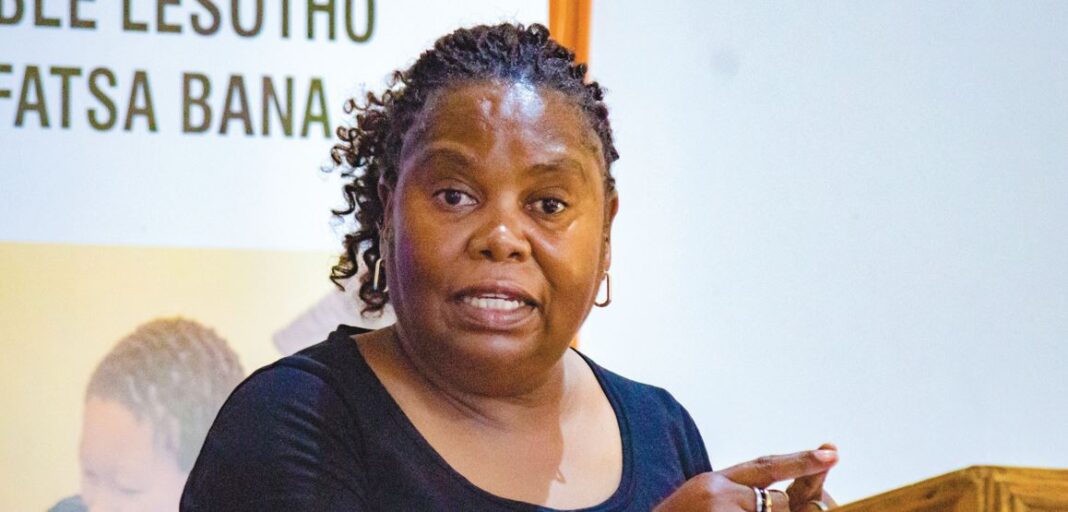
UN Resident Coordinator Taija Kontinen-Sharp described social protection as an investment in human capital that advances Sustainable Development Goals on poverty, health and inequality. She called on MPs to expedite the Children’s Bill, advance digitisation and mobilise domestic resources as external budgets shrink.
PAC member Dr Tšeliso Moroke and Social Cluster member Remaketse Sehlabaka expressed frustration that the same problems have been raised for years with limited progress. PAC Chairperson ‘Machabane Lemphane-Letsie suggested removing the Ministry of Social Development from direct payment of grants could resolve many operational difficulties.
Impact, she said, must be visible on the ground, not merely discussed.
Summary
- Nearly a billion Maloti, more than 70 percent of the Ministry of Gender, Youth and Social Development’s budget, goes to old-age pensions of M1,000 a month for citizens aged 70 and above.
- The Child Grants Programme started as a pilot in 2009 with European Union funding and UNICEF technical support, aiming to improve the living standards of orphans and vulnerable children, reduce malnutrition, boost health outcomes and increase school enrolment.
- 2 billion spent and called for a single integrated data system, wider use of mobile and bank payments, and an end to beneficiaries travelling long distances at high cost to collect grants.
Thoboloko Ntšonyane is a dedicated journalist who has contributed to various publications. He reports on accountability, human rights, exposes corruption and wrong doing by those in power. He reports have exposed corruption, abuse of power, fraud, misconduct and negligence. He subscribes to evidence-based reporting. He reports on governance, parliament, courts, climate change, human rights, sexual and reproductive health rights (SRHR), health, business and agriculture. He gives a voice to the marginalised while also demanding accountability. His work inspires change, triggers dialogue and also promote transparency in a society.