

…As a first patient and his mother lead Lesotho’s historic HIV fight
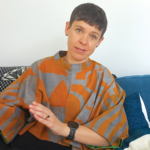
The story of Lesotho’s extraordinary progress in combating HIV/AIDS can be told in many ways. But perhaps nothing captures it more powerfully than the journey of ’Mamokoena Malaka and her son.
What began in anguish and uncertainty for their family has evolved into a symbol of resilience and national transformation. On World AIDS Day 2025, their story stood at the heart of celebrations, illustrating how far the country has travelled in its four-decade struggle against the epidemic.
Malaka’s son was the very first patient attended to at the Baylor College of Medicine Children’s Foundation–Lesotho when it opened in 2005. After losing her husband, Malaka sought help for herself and her child.
“I went there because I had just lost my husband,” she said. “I had to step up and do everything to ensure we lived a healthy life.” Her resolve was especially critical as her son followed four children who had passed away.
A year later, Malaka herself became Baylor’s first adult patient. By the end of 2006, she had joined the organisation as a staff member.
Overcoming the darkness of stigma
Their early years with HIV were marked by fear, hostility, and intense stigma. Malaka recalled that HIV was spoken about in dehumanising terms, including names like Phamokate and Koatsi-ea-bosollahlapi. She said her openness about her status caused neighbours to avoid her, mistakenly believing they could contract the virus through casual contact.
Support from her family became her anchor. Even today, they remain astonished at her son’s good health. “They still cannot believe he lives with HIV because he was never sick, he was always stable and healthy,” she said.
Treatment was initially overwhelming. At just five years old, her son had to take large volumes of medicine daily, multiple syrups requiring at least 50 ml each. “It was too much for a child that young,” she said. She successfully advocated for a switch to seven pills, though that too was difficult.
Malaka herself endured a severe health crisis soon after starting treatment, suffering for more than six months while battling HIV-2. Doctors eventually halted her medication entirely, an unexpected decision that led to a dramatic and medically confusing recovery. Several blood tests were needed before clinicians accepted the improvement.
This experience shaped her future role. In 2009, she began ensuring that every patient at Baylor understood their medication, the importance of adherence, and possible side effects, knowledge she had gained the hard way.
One of her most painful moments came later, when her son asked how he had contracted HIV. “I told him the truth,” she said. “I apologised and explained that I didn’t know my status. That’s why, when I found out, I took him to the health facility.”
Today, her son is 25, a graduate, and a Chartered Accountant. “I want him to be an example that people living with HIV are able,” she said proudly. She now encourages young people to take their treatment consistently, reminding them that “the difficult times are over, patients now take only one pill.”
A youth advocate’s testimony: Reaching for dreams
Malaka’s story found a powerful parallel in that of Rakhantša Lehloibi, a young person who has lived with HIV since March 2008. For him, World AIDS Day offered a moment of deep reflection.
“I remember they used to say I would soon be gone, but I am still alive, and I will continue to live,” Rakhantša said with quiet defiance. He recalled the grim predictions that people living with HIV would not survive beyond ten years. With 2028 now on the horizon, he will soon mark two decades with the virus.
Like Malaka’s son, he shattered every bleak forecast. “I was told I would not reach my dreams, but I am a graduate now and a proud youth in the fight against HIV in this country,” he said. His remarkable journey has earned international recognition, featuring in publications beyond Lesotho, including in Zimbabwe, where his story won first place for its impact.
Lehloibi admitted that adhering to his medication was initially difficult, a challenge he eventually overcame with support from Malaka. He too moved from a demanding regimen of five pills a day to just a single pill.
“I am living proof that if you take your treatment consistently, you will live a healthy life. HIV will not stop you from reaching your dreams,” he said.
Royal call to action: King Letsie III on a war not yet won
The commemorations were anchored by the address of His Majesty King Letsie III, who acknowledged the nation’s journey, “a journey marked by both victories and setbacks.” The theme, “Overcoming Disruptions, Transforming the AIDS Response,” resonated deeply with the country’s four-decade-long fight.
The King celebrated Lesotho’s remarkable resilience and highlighted a historic achievement, Lesotho has not only achieved but surpassed the UNAIDS 95-95-95 targets set for 2024.
Lesotho’s Historic HIV/AIDS Statistics are 97 percent of people living with HIV know their status, 97 percent of those diagnosed are receiving antiretroviral therapy (ART) and 99 percent of those on treatment are virally suppressed.
“This remarkable achievement is a testament to the power of concerted effort and unity,” the King proclaimed.
However, the tone remained one of vigilance. The King stressed that the success must be fiercely guarded, with no room for complacency.
“I must emphasise that the war is not yet won,” he stated, arguing that true victory will only be realised when every person living with HIV is receiving treatment, all citizens know their HIV status and new infections are eradicated.
The King also announced a major step forward in prevention, the expected introduction next year of Lenacarpathy, a newly tested pre-exposure prophylaxis (PrEP).
This long-acting, highly effective drug is seen as a crucial tool for curbing new infections and strengthening the country’s response.
He concluded with a reminder to address the persistent stigma and discrimination that still acts as a barrier to people seeking help and support.
UN lauds Lesotho’s global leadership and courage
Pepukai Chikukwa, the United Nations (UN) Country Director, echoed the King’s sentiment, reminding the assembly that “AIDS is not over” globally, with nearly 41 million people living with HIV and 1.3 million new infections in 2024 alone.
She praised Lesotho’s exceptional leadership, recalling his first visit in 2017 to witness the country’s bold move to embrace the World Health Organization (WHO) recommendation for immediate initiation of ART for all who test positive, regardless of CD4 count.
“Lesotho was the first country in sub-Saharan Africa to adopt these guidelines,” she stated. “The health system went to the people.”
Chikukwa highlighted Lesotho’s place among only seven countries worldwide to reach all the 95-95-95 targets, noting the crucial detail that 93% of the 260,000 people living with HIV are virally suppressed. This high rate means the majority are able to live full, productive lives, increasing life expectancy and dramatically reducing the chance of transmission.
She pointed to a staggering statistic that places Lesotho as a global leader, New infections have fallen by 83 percent since 2010, compared to the global reduction of only 40 percent.
“Lesotho is at the top in terms of reducing new infections since 2010,” she asserted. “For so many years, it has always been, Lesotho is the first in the negative sense. So I think now, when we talk first in the positive sense, it is worth celebrating.”
To anchor the impressive achievements cited by King Letsie III and the UN Country Director, it is crucial to mention the national blueprint that guides these efforts.
Lesotho’s fight is currently governed by the National Strategic Plan for HIV, TB and STIs (NSP) 2023–2028. This is a multi-sectoral framework designed to confront all three epidemics as public health threats.
The overarching goal of the NSP and the national response is to eliminate the HIV/AIDS epidemic as a public health threat by 2030. This aligns with the global Sustainable Development Goals (SDGs).
The plan is explicitly described as “The People’s NSP,” emphasising that all efforts must be people- and communities-centred. This directly supports the powerful community stories of ‘Mamokoena Malaka and Rakhantša Lehloebi.
Summary
- “They still cannot believe he lives with HIV because he was never sick, he was always stable and healthy,” she said.
- “I remember they used to say I would soon be gone, but I am still alive, and I will continue to live,” Rakhantša said with quiet defiance.
- “I was told I would not reach my dreams, but I am a graduate now and a proud youth in the fight against HIV in this country,” he said.
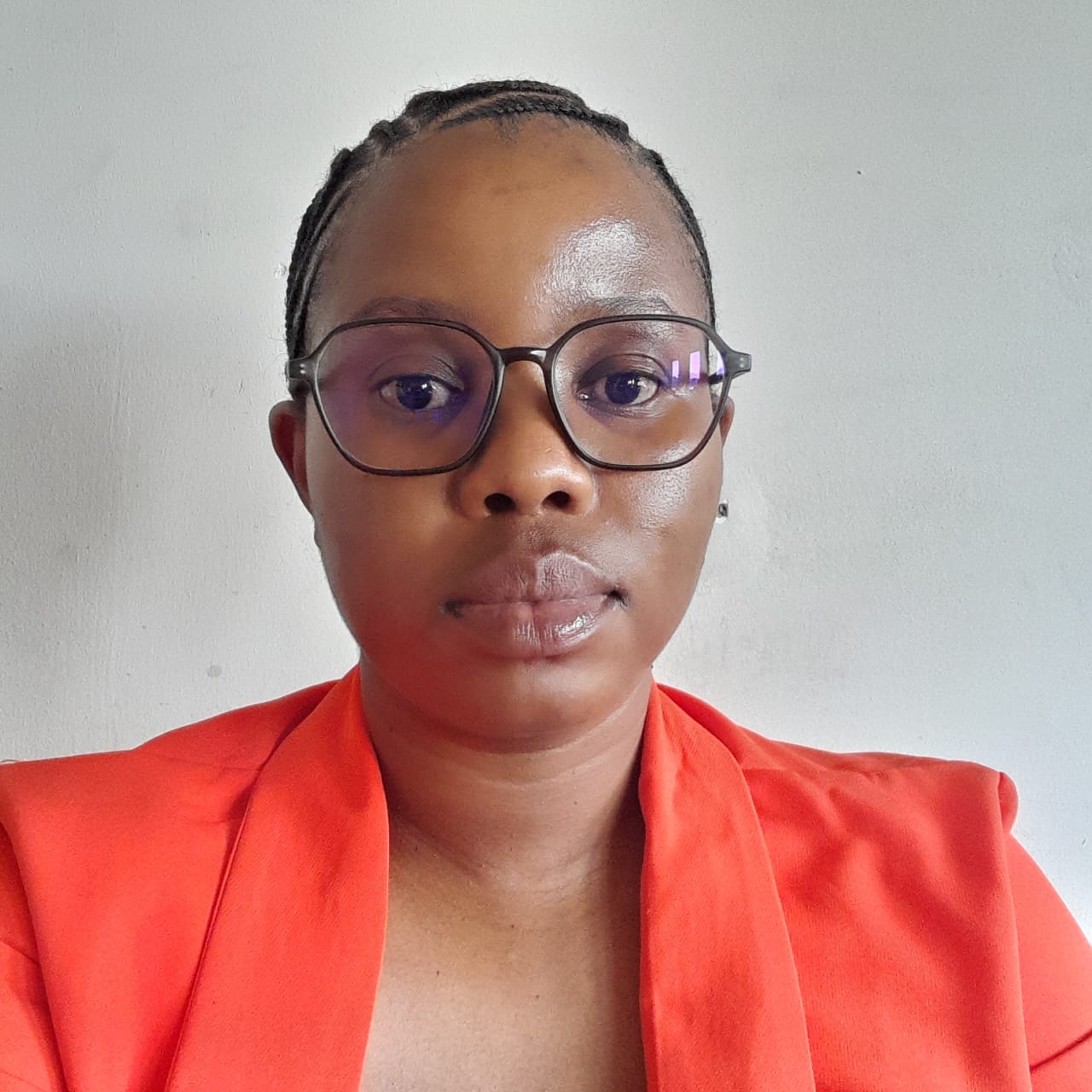
Ntsoaki Motaung is an award-winning health journalist from Lesotho, specializing in community health stories with a focus on sexual and reproductive health and rights, as well as HIV. She has contributed to platforms like “Be in the KNOW,” highlighting issues such as the exclusion of people with disabilities from HIV prevention efforts in Lesotho.
In addition to her journalism, Ntsoaki serves as the Country Coordinator for the Regional Media Action Plan Support Network (REMAPSEN). She is also a 2023 CPHIA Journalism Fellow.