Authored by our expert team of writers and editors, with thorough research.
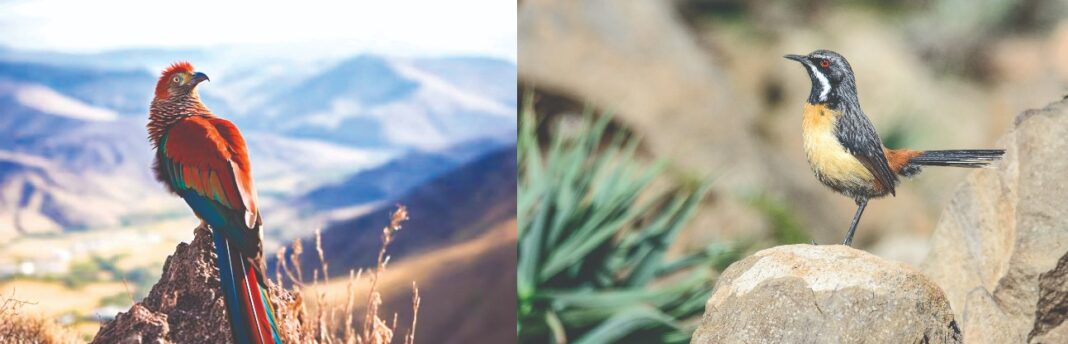
The Lesotho Highlands Development Authority (LHDA) will coordinate Lesotho’s participation in a major regional bird monitoring exercise under the Southern African Bird Atlas Project 2 (SABAP2), scheduled to take place from today to Monday, February 9, 2026.
The four-day campaign will bring together birdwatchers, conservationists, and citizen scientists across southern Africa to collect critical data on bird populations, movements, and habitat use.
In a statement, LHDA said its role in hosting and coordinating the Lesotho Highlands leg of the campaign reflects its commitment to environmental stewardship within the Lesotho Highlands Water Project (LHWP) footprint.
“The Authority’s participation reflects our ongoing commitment to environmental management, biodiversity protection, and sustainable development in the Lesotho Highlands,” LHDA said.
SABAP2, launched in 2007, is one of the region’s most extensive long-term biodiversity monitoring initiatives. It builds on the original Southern African Bird Atlas Project and covers South Africa, Lesotho, and Eswatini. Trained volunteers record bird sightings within standardised grid squares, generating detailed and continuously updated data on species distribution and long-term environmental change.
According to LHDA, the February 2026 campaign will focus on a wide range of environments, including urban areas, rural settlements, wetlands, and mountainous terrain, with particular emphasis on Lesotho’s high-altitude ecosystems.
“These highland environments are ecologically fragile but critically important for biodiversity, water security, and rural livelihoods,” the Authority said.
LHDA noted that fieldwork in the Lesotho Highlands will be aligned with existing environmental management and conservation programmes implemented under the LHWP.
“This integration ensures that bird atlas data contributes directly to evidence-based environmental planning and sustainable resource management,” the statement read.
The campaign comes at a time when bird populations across southern Africa are undergoing rapid change due to climate change, habitat loss, and increasing human pressures.
“Species that were once considered common are declining in some areas, while others are expanding into new ranges,” LHDA said. “Without up-to-date field data, conservation planning risks being based on outdated or incomplete information.”
Organisers expect hundreds of observers to take part during the four days, generating thousands of new records that will help fill critical data gaps and strengthen regional conservation science.
LHDA emphasised that birds are widely recognised as indicators of ecosystem health and that SABAP2 data plays a key role in shaping conservation priorities and public policy.
“For Lesotho, where mountain ecosystems underpin regional water systems and socio-economic resilience, the atlas provides essential evidence to balance development needs with long-term environmental sustainability,” the Authority said.
By the end of the campaign on 9 February 2026, all new observations will be incorporated into the SABAP2 database.
“Each record represents a meaningful contribution by ordinary citizens to extraordinary scientific work,” LHDA said. “The story of birds is inseparable from the story of the landscapes we depend on and the choices we make to protect them.”
Participation in the Lesotho Highlands campaign is open to birding enthusiasts and citizen scientists interested in contributing to regional biodiversity conservation efforts.
Summary
The Lesotho Highlands Development Authority (LHDA) will coordinate Lesotho’s participation in a major regional bird monitoring exercise under the Southern African Bird Atlas Project 2 (SABAP2), scheduled to take place from today to Monday, February 9, 2026.
In a statement, LHDA said its role in hosting and coordinating the Lesotho Highlands leg of the campaign reflects its commitment to environmental stewardship within the Lesotho Highlands Water Project (LHWP) footprint.
Participation in the Lesotho Highlands campaign is open to birding enthusiasts and citizen scientists interested in contributing to regional biodiversity conservation efforts.
To ensure optimal experiences, we utilize technologies such as cookies to store and/or access information from your device. Granting consent to these technologies enables us to process data, including browsing habits or unique identifiers on this website. Conversely, not consenting or revoking consent may negatively impact specific features and functionalities.
Functional
Always active
The technical storage or access is strictly necessary for the legitimate purpose of enabling the use of a specific service explicitly requested by the subscriber or user, or for the sole purpose of carrying out the transmission of a communication over an electronic communications network.
Preferences
The technical storage or access is necessary for the legitimate purpose of storing preferences that are not requested by the subscriber or user.
Statistics
The technical storage or access that is used exclusively for statistical purposes.The technical storage or access that is used exclusively for anonymous statistical purposes. Without a subpoena, voluntary compliance on the part of your Internet Service Provider, or additional records from a third party, information stored or retrieved for this purpose alone cannot usually be used to identify you.
Marketing
The technical storage or access is required to create user profiles to send advertising, or to track the user on a website or across several websites for similar marketing purposes.