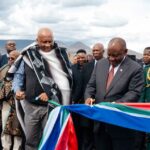

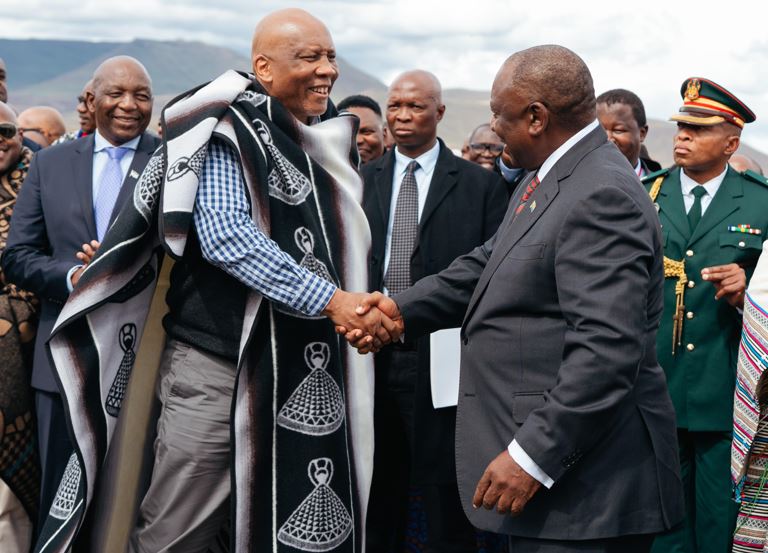
In a significant gesture of neighbourly solidarity, South African President Cyril Ramaphosa announced a R30 million humanitarian assistance package to support Lesotho’s national response to HIV and tuberculosis (TB) during the official inauguration of the Senqu Bridge.
The funding, drawn from South Africa’s African Renaissance Fund, aims to help sustain critical health services in the Kingdom as traditional international donors scale back support.
Ramaphosa made the announcement this week while joining His Majesty King Letsie III and Prime Minister Samuel Matekane at the high-altitude event in Mokhotlong.
“This will help Lesotho to strengthen its national response to HIV and tuberculosis in the context of dwindling levels of international humanitarian assistance,” Ramaphosa stated, describing the contribution as a reaffirmation of deepening bilateral cooperation.
Lesotho continues to grapple with one of the world’s highest burdens of HIV and TB. Adult HIV prevalence stands at approximately 17–18.5 percent (with higher rates among women), while TB incidence remains among the highest globally at around 664 cases per 100,000 people, with nearly 50 percent of TB cases co-infected with HIV.
The country has made notable progress toward the UNAIDS 95-95-95 targets through strong domestic leadership, community health workers, and differentiated service delivery models, achieving high treatment coverage and viral suppression rates.
New HIV infections have dropped significantly over the years. However, challenges persist due to Lesotho’s rugged mountainous terrain, which complicates access in remote areas like Mokhotlong, as well as socio-economic factors including poverty and labour migration to South Africa.
Recent sharp reductions in external funding, particularly from major partners like the United States through PEPFAR, have created gaps. These cuts have affected supply chains, community outreach, and overall health system sustainability, prompting Lesotho to accelerate its HIV and TB Sustainability Roadmap for greater self-reliance.
The R30 million from South Africa is expected to provide targeted support for prevention, treatment, and care services, helping to prevent disruptions that could reverse hard-won gains.
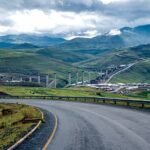
The announcement came during the co-launch of the Senqu Bridge, the longest in Lesotho at approximately 825 metres and a flagship component of Phase II of the Lesotho Highlands Water Project (LHWP).
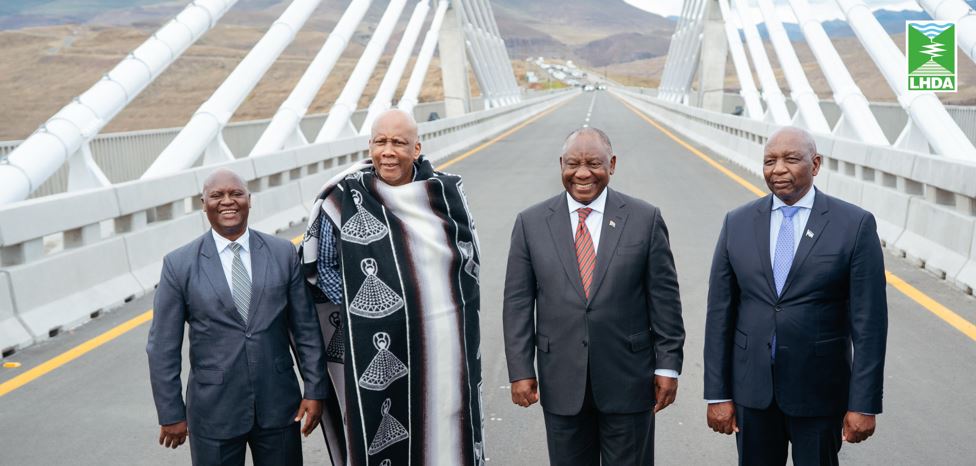
The bridge enhances connectivity in the Senqu River Valley, improves access to remote mountainous communities, and supports the broader LHWP goals of water transfer to South Africa while generating hydropower and economic opportunities for Lesotho.
For many Basotho, the project and this new infrastructure represent more than engineering. They embody the deep interdependence between the two nations.
Lesotho, a landlocked enclave entirely surrounded by South Africa, relies on such cooperation for trade, employment, including migrant labour), and shared development. The bridge will ease movement, potentially aiding health service delivery in hard-to-reach districts.
Ramaphosa highlighted the bridge as a powerful symbol of growing economic and social ties, underscoring that South Africa views itself as a responsible partner committed to ensuring Lesotho’s health progress does not stall.
Lesotho, like many developing nations, has faced declining traditional foreign aid in recent years, exacerbated by global shifts including budget constraints and policy changes among major donors. This has placed greater pressure on domestic resources and regional mechanisms for support.
The African Renaissance Fund contribution reflects Pan-African principles of mutual support, particularly valuable in southern Africa where cross-border health issues, like migrant workers managing HIV treatment between Lesotho and South African facilities, are common.
Local health authorities and civil society have long advocated for sustainable, integrated responses that combine HIV/TB services with broader primary healthcare strengthening.
Summary
- In a significant gesture of neighbourly solidarity, South African President Cyril Ramaphosa announced a R30 million humanitarian assistance package to support Lesotho’s national response to HIV and tuberculosis (TB) during the official inauguration of the Senqu Bridge.
- “This will help Lesotho to strengthen its national response to HIV and tuberculosis in the context of dwindling levels of international humanitarian assistance,” Ramaphosa stated, describing the contribution as a reaffirmation of deepening bilateral cooperation.
- The announcement came during the co-launch of the Senqu Bridge, the longest in Lesotho at approximately 825 metres and a flagship component of Phase II of the Lesotho Highlands Water Project (LHWP).
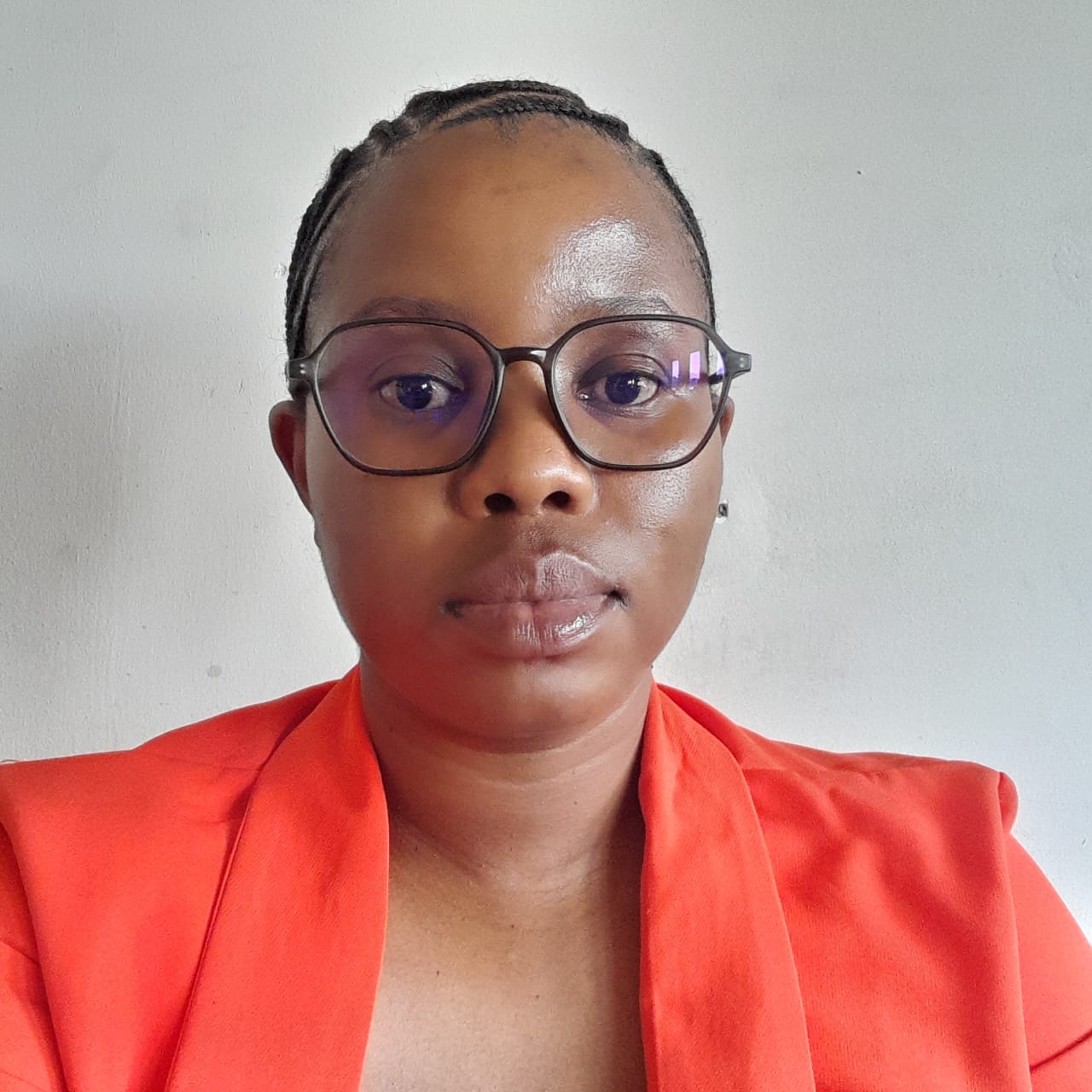
Ntsoaki Motaung is an award-winning health journalist from Lesotho, specializing in community health stories with a focus on sexual and reproductive health and rights, as well as HIV. She has contributed to platforms like “Be in the KNOW,” highlighting issues such as the exclusion of people with disabilities from HIV prevention efforts in Lesotho.
In addition to her journalism, Ntsoaki serves as the Country Coordinator for the Regional Media Action Plan Support Network (REMAPSEN). She is also a 2023 CPHIA Journalism Fellow.