
- Tightens safety partnership with police
- New strategy targets better roads, stronger institutions and safer highways
Seabata Mahao and Mamello Rakotsoane
The Roads Directorate has reaffirmed its commitment to upgrading Lesotho’s national road network and strengthening road safety, as it consults stakeholders on a new five-year strategic plan and deepens cooperation with the Lesotho Mounted Police Service (LMPS).
At a stakeholder consultation meeting held this week at Lancers Inn, the directorate unveiled its draft 2026–2031 strategy, which prioritises stronger legal and policy frameworks, improved operational efficiency and enhanced staff capacity.
The plan aims to improve 80 percent of the road network to good and fair condition by 2031, strengthen technical project execution by 80 percent, and boost environmental and socio-economic sustainability.
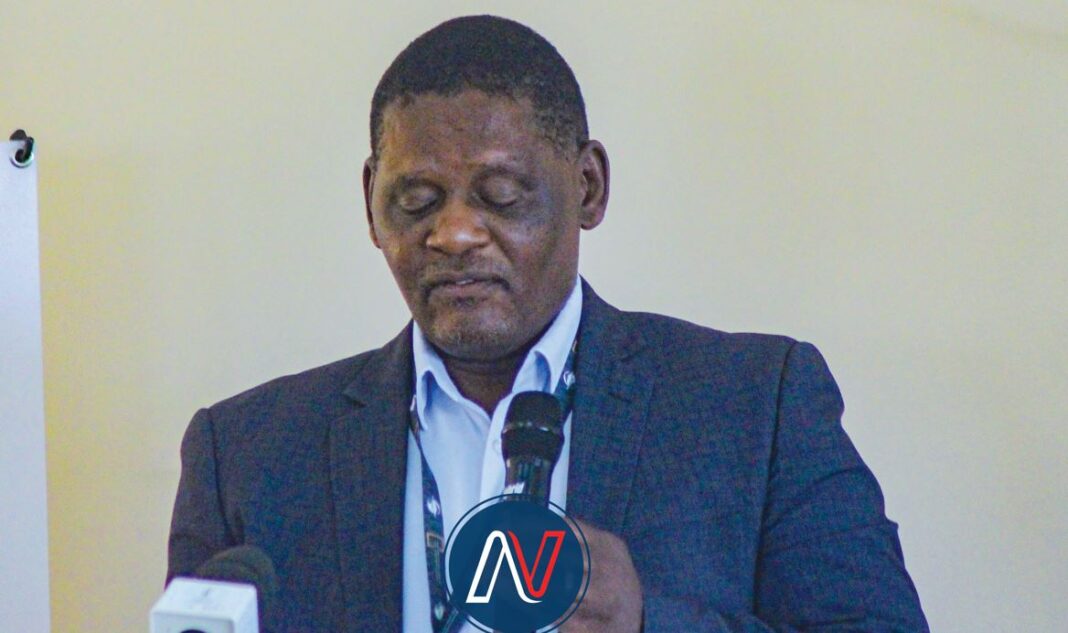
Speaking at the meeting, Roads Directorate Director General Teboho Mokhoane said the current strategic plan (2022–2026), which includes a one-year extension, was an outcome-based strategy anchored on four perspectives: stakeholder, financial, internal business processes and people.
Under the stakeholder perspective, Mokhoane said the directorate had completed more than 200 kilometres of paved roads across the country, including the Mpit–Sehlabathebe, Marakabei–Monontsa, Moshoeshoe I, Koffi Annan, Masianokeng–St Michaels–Roma and ’Malesaoana–Botha-Bothe roads.
“We now have more than 1 600 functional streetlights in Maseru CBD, Mafeteng township, Motsekuoa, Thaba-Tseka, Teyateyaneng and Botha-Bothe,” Mokhoane said.
He added that the directorate introduced an emergency response programme using a force account system, re-gravelled more than 250 kilometres of gravel roads, rebuilt bridges across the Tsoaing, Koro-Koro and Lijabatho rivers, including Ha Jimisi, completed the Road Reserve Roll-out Programme and constructed over 30 rural footbridges.
According to Mokhoane, more than 150 contracts for consulting services, construction, rehabilitation and maintenance have been awarded, with a combined value exceeding M4 billion.
On the financial front, he said the directorate’s capital budget had improved significantly over the past three years, rising from M300 million to M1.7 billion from government funding, and from M110 million to M300 million from the Road Fund. In addition, the directorate secured USD120 million (about M1.9 billion) in International Development Association financing for the upgrading of the Thaba-Tseka–Katse Road and the Moshoeshoe I International Airport runway and ground lighting.
From an internal business process perspective, Mokhoane said several policies and strategies were reviewed and approved by the board to strengthen governance and operational efficiency. On the people perspective, the directorate implemented a Performance Management System, strengthened capacity building, enforced discipline and compliance, attracted skilled personnel and introduced a Graduate Development Programme, particularly in Civil Engineering.
“We also completed organisational and salary restructuring and, most importantly, rebranded our institution,” he said. “While we have recorded notable successes under the current strategy, which concludes at the end of this financial year, challenges remain, including delayed payments to consultants and contractors and some implementation gaps.”
Mokhoane said the new strategic plan introduces measurable objectives across six strategic areas, including revenue diversification and streamlined procurement. “We will leverage technology and performance management systems to ensure the strategy is not only visionary but practical and implementable. The Roads Directorate is the custodian of 5 919.14 kilometres of the national road network,” he said.
He explained that of this network, 1 992.48 kilometres are paved, 2 813.7 kilometres are gravel, while more than 1 000 kilometres remain earth roads and tracks.
“These roads are not merely lines on a map. They connect districts, urban centres and border posts, facilitate trade and sustain our economy. Roads are critical enablers of socio-economic development, regional integration and national resilience,” Mokhoane said.
He noted that the 2026–2031 strategy responds to challenges such as ageing infrastructure, climate-related disruptions and limited budgets, and aligns with the Extended National Strategic Development Plan II, the SADC Protocol on Transport and Meteorology, and the African Union Agenda 2063, while also supporting Sustainable Development Goal 9 on resilient infrastructure.
However, he cautioned that the Lesotho Road Management System indicates the country requires about M3 billion per year over the next decade to restore and preserve the road network.
Also addressing the meeting, Roads Directorate’s Monitoring and Evaluation Specialist Moeketsi Matia said the consultations were intended to shape the implementation phase by aligning priorities with national development objectives and sectoral goals.
“We wanted to clarify expectations for the next five years, validate priorities, align the strategy with stakeholder expectations and strengthen cross-functional collaboration,” Matia said.
One of the participants, Thesele Mokoma from Pemahn Consulting, welcomed the consultation but stressed that effective implementation would be crucial. “This was a good initiative because it brought together many stakeholders, but without strong enforcement mechanisms, implementation will remain a challenge,” Mokoma said. “Such meetings should be held regularly to allow stakeholders to provide input and to review achievements and challenges. There must also be a clear communication strategy.” He further emphasised the importance of maintenance programmes, warning that neglecting maintenance leads to higher long-term costs, and noted that the Roads Directorate Act of 2010 mandates the directorate to build capacity among local contractors.
In a related development, the Roads Directorate and the Lesotho Mounted Police Service (LMPS) have signed a Memorandum of Understanding aimed at strengthening cooperation on key issues affecting the country’s road network.
The Commissioner of Police Advocate Borotho Matsoso welcomed the initiative, emphasising the need for policy reviews, stronger enforcement and public education.
He said the partnership marks a significant advancement in efforts to enhance road safety and infrastructure management, laying the groundwork for coordinated action, better information sharing and a stronger culture of accountability among road users.
On his part, Mokhoane described the partnership as a significant step towards improving road safety, pointing to challenges such as vandalism, reckless driving and encroachment of road reserves.
Summary
- The Roads Directorate has reaffirmed its commitment to upgrading Lesotho’s national road network and strengthening road safety, as it consults stakeholders on a new five-year strategic plan and deepens cooperation with the Lesotho Mounted Police Service (LMPS).
- He added that the directorate introduced an emergency response programme using a force account system, re-gravelled more than 250 kilometres of gravel roads, rebuilt bridges across the Tsoaing, Koro-Koro and Lijabatho rivers, including Ha Jimisi, completed the Road Reserve Roll-out Programme and constructed over 30 rural footbridges.
- He noted that the 2026–2031 strategy responds to challenges such as ageing infrastructure, climate-related disruptions and limited budgets, and aligns with the Extended National Strategic Development Plan II, the SADC Protocol on Transport and Meteorology, and the African Union Agenda 2063, while also supporting Sustainable Development Goal 9 on resilient infrastructure.

Your Trusted Source for News and Insights in Lesotho!
At Newsday Media, we are passionate about delivering accurate, timely, and engaging news and multimedia content to our diverse audience. Founded with the vision of revolutionizing the media landscape in Lesotho, we have grown into a leading hybrid media company that blends traditional journalism with innovative digital platforms.