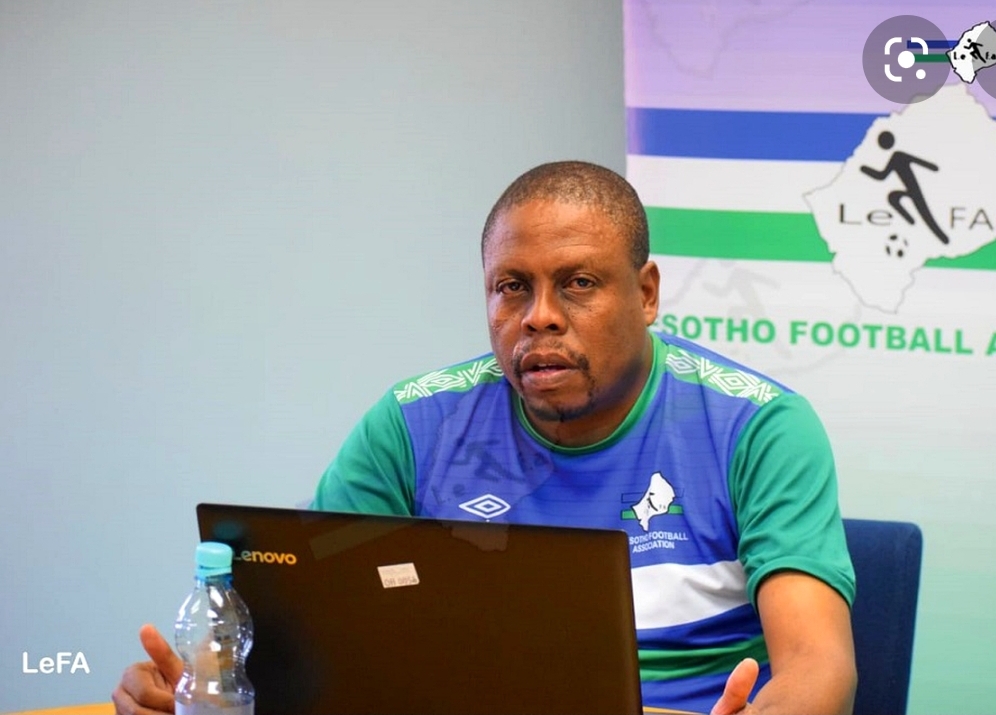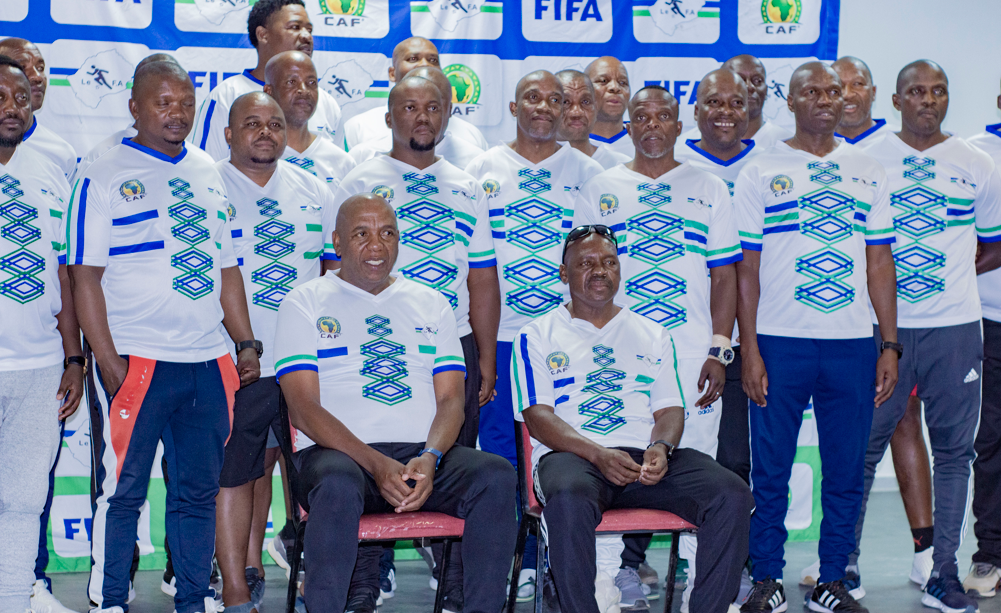
A critical shortage of qualified football coaches in Lesotho has once again been thrust into the spotlight following the official launch of the CAF A Diploma coaching course hosted by the Lesotho Football Association (LeFA) at Bambatha Tšita Sports Arena this week.
Speaking at the opening ceremony, South Africa-based instructor Serame Letswaka said Lesotho’s struggles to keep pace with more advanced footballing nations can be traced directly to the limited number of trained coaches operating from the grassroots level upwards.
While a comprehensive assessment of the country’s amateur coaching structures is still being compiled, preliminary indicators point to Lesotho lagging significantly behind.
Letswaka addressed the 23 coaches enrolled in the programme, one of the most advanced coaching courses available on the continent. Of the cohort, 19 trainees are Basotho, while four come from neighbouring countries.
The course, only the third of its kind to be delivered in Lesotho, will run intermittently in four phases until May 2026.
“We have to find out how many coaches we have in this country, and we will come back next year to release a full report on the state of amateur football in Lesotho,” Letswaka said.
“But the numbers we see are scaring us, suggesting that if we really want to do justice to the development of football, we must do more to develop our coaches.”
He highlighted the enormous influence that qualified coaches have on player development, drawing comparisons between structured European systems and the fragmented approaches seen in parts of Africa.
Citing global studies, Letswaka noted that countries such as Spain have benefited from the deliberate long-term investments in technical development.
“European countries are far ahead of us. For instance, a study that was conducted in 2011 revealed that in Spain, the ratio of coaches to players is 1:23. In comparison, the ratio in South Africa is such that one coach has to train 3000 kids! Spain is not at the top by default, but because of the deliberate actions it took to advance its football.”
He stressed that Lesotho must be prepared to produce an “over surplus” of coaches if it is to meaningfully improve its player-to-coach ratio, which is widely regarded as one of the key foundations for sustainable football progress.
“We really have to make sure that if we have to have an over surplus of coaches, so be it. We can reduce the ratio of coaches to players in Lesotho through such initiatives as this one of developing the coaches. This is key; it is the most important thing that we must do because we have talented kids but do not have enough coaches.”
Letswaka also expressed concern over the reluctance of former players to pursue formal coaching qualifications, often under the false assumption that their playing experience alone is sufficient preparation for coaching responsibilities.
“The mentality to say ‘I played football and therefore cannot take the course’ does not work. The former players still need to get equipped with the emerging changes within the game.”
Also attending the training was Helman Mkhalele, assistant coach of South Africa’s senior national team, Bafana Bafana. Mkhalele commended LeFA for prioritising technical development by hosting high-level coaching courses, saying such efforts are essential for building a competitive football culture.
However, he warned that coaching development alone will not elevate Lesotho’s football standards unless it is supported by parallel investment in infrastructure.
Lesotho currently lacks a CAF- or FIFA-certified stadium, forcing national teams and clubs to host official international and continental matches in South Africa.
Mkhalele told Newsday Sports that bridging this infrastructural gap is essential if Lesotho is serious about competing at the highest levels of African football.
“The authorities must continue developing coaches, and also acquire other necessary basic resources, particularly improving the football facilities. I do not doubt that they can compete against the best in the world. More initiatives like this need to happen more often since developing coaches is very key, and a good starting point for developing football.”
He added that African football often suffers not from a lack of planning, but from ineffective execution; an issue Lesotho must guard against.
“Implementation is key because in most African countries we have beautiful plans, but the problem usually lies in implementation, and if they can do that, I have no doubt that Lesotho can and will be a strong footballing nation,” Mkhalele said.
Summary
- A critical shortage of qualified football coaches in Lesotho has once again been thrust into the spotlight following the official launch of the CAF A Diploma coaching course hosted by the Lesotho Football Association (LeFA) at Bambatha Tšita Sports Arena this week.
- “We have to find out how many coaches we have in this country, and we will come back next year to release a full report on the state of amateur football in Lesotho,” Letswaka said.
- He stressed that Lesotho must be prepared to produce an “over surplus” of coaches if it is to meaningfully improve its player-to-coach ratio, which is widely regarded as one of the key foundations for sustainable football progress.

Authored by our expert team of writers and editors, with thorough research.