Authored by our expert team of writers and editors, with thorough research.
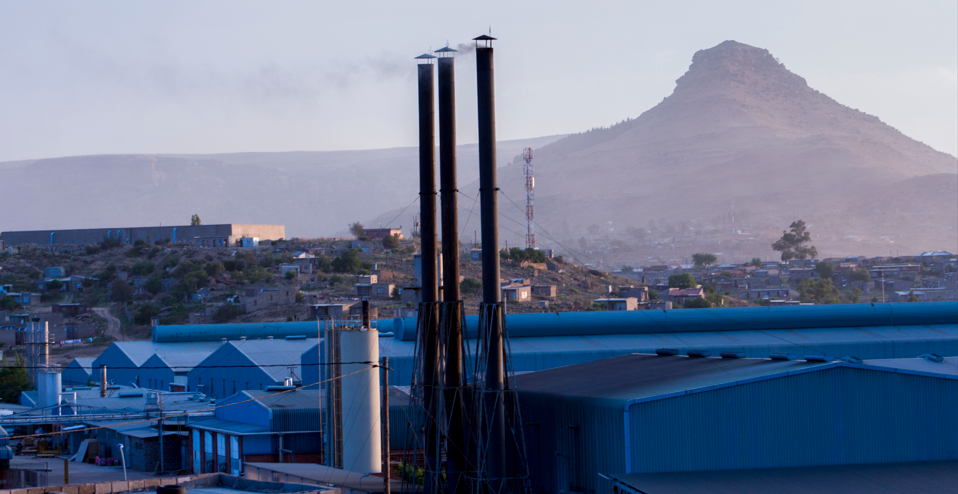
The textile sector in Lesotho is facing a deepening crisis after steep tariffs imposed by the United States triggered factory closures, mass layoffs and widespread economic distress among garment workers, according to the Business and Human Rights Resource Centre (BHRRC).
BHRRC is an international non-profit NGO headquartered in the United Kingdom, with offices in places like New York, Berlin, and Bogotá.
Founded in 2002, it is one of the world’s leading independent sources on corporate human rights impacts. It tracks allegations of abuse and positive practices involving over 10,000 companies across more than 180 countries.
It maintains what it describes as the most comprehensive public database of its kind.
In an analysis titled “US tariffs trigger gendered supply chain shock on Lesotho garment industries,” the organisation said the tariffs introduced by Donald Trump in April 2025 as part of a “reciprocal” trade policy have produced a “serious human cost” for workers in Lesotho’s largest private sector industry.
“The US imposition of steep tariffs on imports from Lesotho… has triggered a severe crisis for Lesotho garment workers — devastating the mountain kingdom’s textile sector, its largest private employer and a lifeline for tens of thousands of women,” the centre said.
The tariffs were initially set at 50 percent, the highest globally at the time, before negotiations reduced them to 15 percent. However, the centre said the rate still remains higher than the 10 percent tariffs faced by textile producers in Kenya, Eswatini and Ethiopia.
“Even after negotiations reduced the rate to 15 per cent… buyer uncertainty, order cancellations and hesitation over AGOA’s future led to widespread disruptions,” the organisation said.
The uncertainty surrounding the future of the African Growth and Opportunity Act (AGOA), which expired in September before being extended by only one year to 2026, has further worsened the situation.
The centre said factories have closed, downsized or moved operations to other countries with lower tariffs, leaving thousands of workers without income or prospects.
“The wave of closures has left Lesotho garment workers with little recourse and no safety net,” the report stated.
Among the hardest hit factories is Ever Unison Garments, which previously employed more than 2,000 workers but has reopened with only about 200 employees while shifting production to Kenya and Eswatini.
Other closures have also wiped out thousands of jobs. Tai Yuan Garments closed, affecting about 1,500 workers, while TZICC Clothing Manufacturers shut down, leaving 700 workers without jobs.
Precious Garments, which employed about 4,000 workers producing for global brands including Reebok, Mayor and Fish, has also laid off all its workers amid buyer reluctance linked to the short-term AGOA renewal.
The organisation said the impact has been particularly severe for women workers.
“For women workers, the fallout is particularly acute, as retrenched workers queue daily at factory gates from 7 am, hoping for sporadic shifts while some turn to informal jobs like laundry or street vending,” the report said.
It added that the job losses are pushing households into distress.
“Some workers are struggling to pay for food, school fees, housing or basics, worsening food insecurity and increasing reliance on subsistence farming or remittances.”
The report described the situation as a “gendered supply chain shock”, noting that women face limited employment alternatives in Lesotho’s largely patriarchal economy.
The Independent Democratic Union of Lesotho (IDUL), an affiliate of IndustriALL Global Union, according to the report, has warned that the situation could deteriorate further.
The union said tens of thousands of jobs are at risk, potentially up to 40,000, if the conditions persist in export-oriented garment operations.
It added that many workers are already facing reduced working hours, partial wages, in some cases as low as one-third of normal pay, as well as “no work, no pay” policies and unpaid leave.
Summary
The textile sector in Lesotho is facing a deepening crisis after steep tariffs imposed by the United States triggered factory closures, mass layoffs and widespread economic distress among garment workers, according to the Business and Human Rights Resource Centre (BHRRC).
In an analysis titled “US tariffs trigger gendered supply chain shock on Lesotho garment industries,” the organisation said the tariffs introduced by Donald Trump in April 2025 as part of a “reciprocal” trade policy have produced a “serious human cost” for workers in Lesotho’s largest private sector industry.
“The US imposition of steep tariffs on imports from Lesotho… has triggered a severe crisis for Lesotho garment workers — devastating the mountain kingdom’s textile sector, its largest private employer and a lifeline for tens of thousands of women,” the centre said.
To ensure optimal experiences, we utilize technologies such as cookies to store and/or access information from your device. Granting consent to these technologies enables us to process data, including browsing habits or unique identifiers on this website. Conversely, not consenting or revoking consent may negatively impact specific features and functionalities.
Functional
Always active
The technical storage or access is strictly necessary for the legitimate purpose of enabling the use of a specific service explicitly requested by the subscriber or user, or for the sole purpose of carrying out the transmission of a communication over an electronic communications network.
Preferences
The technical storage or access is necessary for the legitimate purpose of storing preferences that are not requested by the subscriber or user.
Statistics
The technical storage or access that is used exclusively for statistical purposes.The technical storage or access that is used exclusively for anonymous statistical purposes. Without a subpoena, voluntary compliance on the part of your Internet Service Provider, or additional records from a third party, information stored or retrieved for this purpose alone cannot usually be used to identify you.
Marketing
The technical storage or access is required to create user profiles to send advertising, or to track the user on a website or across several websites for similar marketing purposes.