
… Five other retailers look away
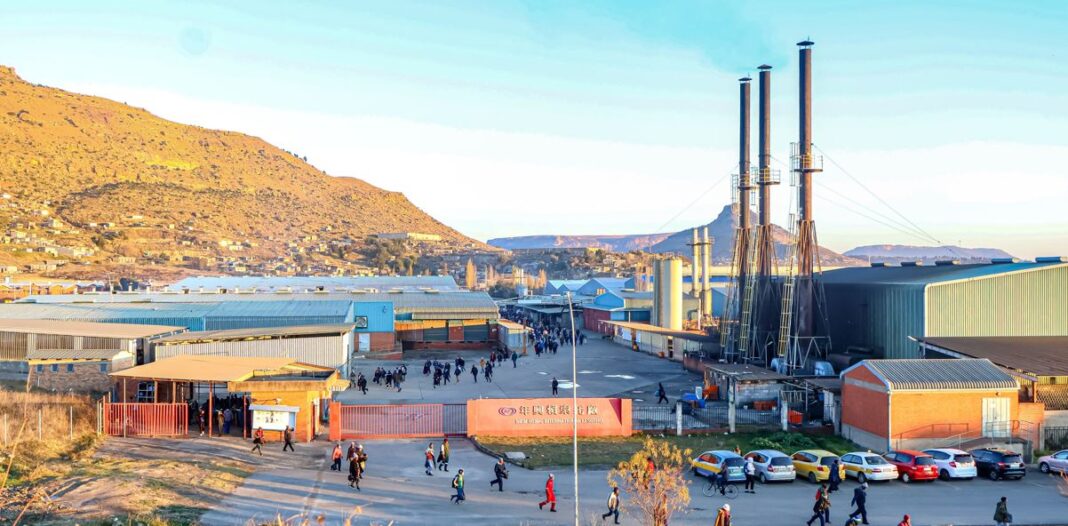
While thousands of Lesotho garment workers face mass retrenchment and factory closures amid the African Growth and Opportunity Act (AGOA) chaos, five out of six major American retailers allegedly sourcing from the affected plants could not be bothered to respond, according to the Business and Human Rights Centre (BHRC).
Only JCPenney offered a polished corporate statement that acknowledged the suffering, without committing to do anything meaningful about it.
BHRC, formerly and still widely known as the Business & Human Rights Resource Centre (BHRRC), is an international non-profit/non-governmental organization focused on corporate accountability and human rights.
Founded in 2002, it tracks the human rights impacts, positive and negative, of over 10,000 companies across more than 180 countries. This includes allegations of abuses, company responses, policies, lawsuits, and benchmarks.
The Centre is known for its neutral, fact-based tracking while strongly advocating for greater corporate transparency and remedy for victims
In March 2026, reports emerged that garment workers in Lesotho were being retrenched en masse and facing factory closures, allegedly due to buyer reluctance amid uncertainty over the continuation of AGOA, which grants garments duty-free access to the United States market.
BHRC then invited five brands allegedly sourcing from affected factories to respond. Only JCPenney, which is allegedly linked to TZICC, provided a response.
Perry Ellis, allegedly sourcing from Maseru-E; Authentic Brands, allegedly sourcing from Precious Garments for its Reebok brand; Fabletics, allegedly sourcing from Hippo Knitting; and retailers Costco and Walmart, all allegedly linked to TZICC, did not respond to the Centre’s inquiries.
In a letter dated June 30, 2026, JCPenney Senior Manager for Responsible Sourcing and Sustainability Katy Evans acknowledged the impact of sourcing changes on workers but did not commit to reversing the decisions.
“We appreciate the concerns raised regarding sourcing changes affecting workers at TZICC in Lesotho and recognize the impact that shifts in production can have on workers, their families, and the surrounding community,” Evans wrote.
However, the company stopped short of committing to reverse or alter its sourcing decisions, stating only that it “recognises the importance of responsible purchasing practices and continued dialogue among brands, suppliers, worker representatives, civil society organizations, and policymakers.”
JCPenney reaffirmed its commitment to internationally recognised labour standards through its Code of Conduct, which it says sets clear expectations for suppliers. The company said it monitors compliance and engages with suppliers to encourage responsible purchasing practices.
“When concerns are identified, we seek to understand the circumstances, engage constructively with relevant stakeholders where appropriate, and respond in accordance with our policies and the information available,” Evans said.
The letter also voiced strong support for the African Growth and Opportunity Act (AGOA), saying the trade agreement “supports economic opportunity and resilient manufacturing communities” in Africa.
JCPenney did not directly address questions about whether the sourcing changes would be reversed or what steps it was taking to mitigate the impact on affected workers at TZICC.
Lesotho’s textile, primarily garment/apparel, industry is the country’s largest private-sector employer and a cornerstone of its export economy, though it remains highly vulnerable to external shocks.
The modern textile industry took off in the early 2000s thanks to the AGOA, a U.S. trade program signed in 2000 that granted duty-free and quota-free access to the U.S. market for eligible sub-Saharan African countries.
This preference, combined with Lesotho’s relatively cheap and skilled labour, largely female workforce, political stability relative to some neighbours, and eligibility for “third-country fabric” rules, allowing imports of fabric from Asia, transformed the sector.
Factories, mostly foreign-owned, from Taiwan, China, and South Africa, sprang up in industrial zones, producing jeans, t-shirts, and other apparel mainly for U.S. brands.
At its peak, the sector employed over 50,000 workers and drove rapid growth in manufacturing exports. It has consistently accounted for a large share of manufactured exports and a significant portion of the Gross Domestic Product (GDP) and foreign exchange earnings.
The industry is overwhelmingly export-oriented, with the U.S. as the dominant market for years, followed by South Africa.
AGOA has been central to the industry’s success but also its fragility.
The program lapsed in September 2025, triggering sharp declines in orders, combined with new U.S. tariffs, initially high, later adjusted. A short-term renewal was passed in early 2026, extending AGOA until December 31, 2026, providing temporary relief and some stabilisation, but only about a year of certainty.
This has slowed contractions and allowed some production to resume, yet uncertainty persists.
According to the Central Bank of Lesotho (CBL)’s 2025 Financial Stability Report, more than 40 percent of jobs in Lesotho’s textile sector were lost in 2025 due to U.S. tariffs and weak global demand.
This hit the country’s largest private-sector employer hard, leading to a decline in export revenues and exposing the lack of market diversification.
The report noted that these external shocks dampened demand, weakened business performance, and increased credit risks for banks as textile firms struggled with debt servicing.
Non-performing loans rose across manufacturing and related sectors. While the short AGOA renewal has offered some breathing room, the Central Bank highlighted broader structural vulnerabilities, including concentrated credit risks and reliance on narrow export markets.
Summary
- While thousands of Lesotho garment workers face mass retrenchment and factory closures amid the African Growth and Opportunity Act (AGOA) chaos, five out of six major American retailers allegedly sourcing from the affected plants could not be bothered to respond, according to the Business and Human Rights Centre (BHRC).
- In a letter dated June 30, 2026, JCPenney Senior Manager for Responsible Sourcing and Sustainability Katy Evans acknowledged the impact of sourcing changes on workers but did not commit to reversing the decisions.
- “We appreciate the concerns raised regarding sourcing changes affecting workers at TZICC in Lesotho and recognize the impact that shifts in production can have on workers, their families, and the surrounding community,” Evans wrote.
Lesotho activist and journalist who is the Chairperson of the Media Institute of Southern Africa (MISA) Lesotho. He is an International Visitor Leadership Program (IVLP) alumnus.
Boloetse is driven by the need to protect and promote the rights of others, especially the marginalized segment of society. He rose to prominence as an activist in 2018 when he wrote to Lesotho communications Authority (LCA) asking it to order Econet Telecom Lesotho (ETL) and Vodacom Lesotho (VCL) to stop charging expensive out-of-bundle rates for data when customers’ data bundles get depleted.