Nkopane Mathibeli
A year before he died and only a month before India became independent, Gandhi, a staunch advocate of non-violence, was at last cornered into making this very surprising admission. In one of his forever frank talks about episodes of his life, he tells of a statement from one of his confidants, a man he had mentored and who was both a reputable Sanskrit scholar and Hindu high priest (Hathibhai Shastri); “I remember him telling me that non-violence was only to be regarded as an ideal because it is not realisable in this world”. This, he says, made him realise that though Shastri loved him dearly, he regarded him as a deluded fool. Ghandi thereafter admitted that his own advocacy for non-violence was not out of conviction or foolishness, but the lack of means to manufacture nuclear weapons. With the means mobilised after independence, India began its nuclear weapons programme in 1967. Today, it is the sixth of only nine nuclear powers in the world with a total of 180 nuclear warheads. Seven years after its first nuclear weapon test (1974), the then Pakistani Prime Minister, Zulfikar Ali Bhutto, was inspired to say: “We will go hungry, we will even eat grass, but we will get an atom bomb of our own. We have no other choice”. Today, Pakistan has 10 nuclear warheads fewer than India. The rest of the nuclear powers by the size of their arsenal are Russia (5,459); USA (5,177); China (600); France (290); United Kingdom (225); Israel (90), and North Korea (50).
Why talk of nuclear weapons?
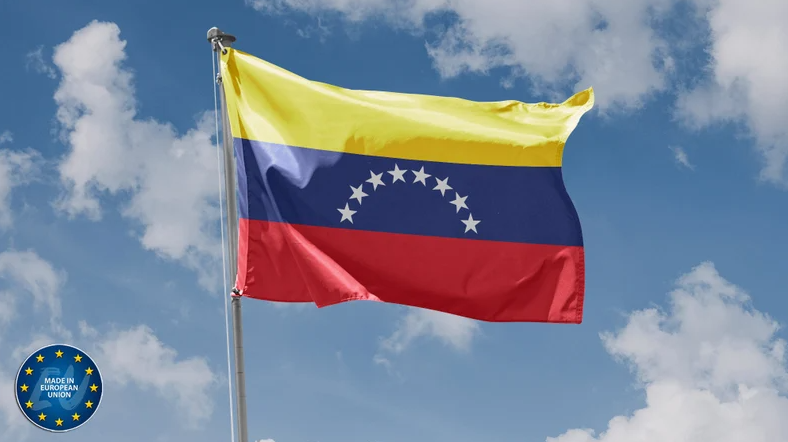
My reason for the foregoing account about Ghandi, Hathibhai Shastri, Zulfikar Ali Bhutto and nuclear weapons is simple. It is to lay the foundation for a point of view that, since the unrestrained access to Venezuelan oil is the primary reason for its fall into the hands of the White House (not drug peddling), the primary factor that emboldened the USA to act as it did is that Venezuela is not armed with nuclear weapons. It therefore goes without saying that, inasmuch as South Africa’s global political posture is correct, it is vulnerable to a similar fate because, just like Venezuela, it is without nuclear weapons. This is an old and cold truth of the geopolitical order. More so because since Russia’s Special Military Operation (SMO) into Ukraine (24 February 2022), the world is seemingly in a second phase of the Cold War; itself an unforgiving circuit of realpolitik, which in turn single-handedly intensified the race towards stockpiling nuclear weapons. Just as Bismarck described the turbulent times of state formation in Germany as times in which “the great questions of the day are not settled by speeches and majority decisions but by iron and blood,” so is the barefaced period marked by the abduction of President Maduro by Trump. Unfortunately, South Africa is not in a state to protect and promote its position, hence why, contrary to this unwritten rule of realpolitik, it attempted a loud-mouthed but spectacularly futile intervention on behalf of the Palestinians through the ICJ. It has now settled for condemnation through a press release on behalf of the people of Venezuela. But what is South Africa’s position, and why is it correct?
The S in BRICS
BRICS is the single most potent front against the global economic and political domination of the USA; nothing more, nothing less. This dominance of the USA is facilitated by its most successful creation, the global system of political and economic governance – the United Nations system. This domination is specifically facilitated by the UN’s specialised agencies (the IMF and the World Bank), effectively making the USA the global centre of economic and, thereby, political power. When this front (BRIC) was conceptualised as part of a purely economic analysis for an academic paper by Jim O’Neill in 2001, South Africa was not factored in. This was six years before Brazil, Russia, India and China even thought or began talks on this potentially mighty entity. However, only a year after it was formally established, South Africa was invited to be a full member in December 2010. This explains why BRIC became BRICS. That invitation alone speaks to the strategic importance of South Africa to the long game of countering the USA’s abuse of its seemingly limitless power. By virtue of joining BRICS, South Africa boldly proclaimed its opposition to the global tyranny of the USA and fearlessly asserted its discretion in determining its global alliances. On this background, it is important to note that the primary purpose of BRICS has never been to destroy the USA but to counter its entitlement as the self-appointed economic and political policeman of the world. This was a correct move to make, and South Africa was equally correct to position itself as an African voice in such a bloc. To highlight how the USA forced the hand of these countries in this regard, it is equally important to outline the selfish origins of its bad attitude that BRICS was established to counter.
USA and the Grand Area
For many years after its independence from Britain, the USA was just an ordinary country (in no way a global power) trying to find its place in the world through legitimate commerce. It, of course, did engage in a few wars with other countries, but none had imperial intentions. Many were fought either to protect its merchant ships or commercial interests. It is therefore safe to say that in its early years, it religiously subscribed to and was vocal about the principle of non-interference. In his inaugural address, its 3rd president (Thomas Jefferson: 1801 – 1809) set the tone by stating that the USA only seeks “Peace, commerce, and honest friendship with all nations—entangling alliances with none”. A much refined version of this foreign policy position, which also happens to be the most violated, was stated by the 6th president (Quincy Adams: 1825 – 1829) when he said, “The United States does not go around the world looking for monsters to destroy; she is a well-wisher of freedom and independence to all”.
This principle was first violated by the 26th president (Theodore Roosevelt: 1901 – 1909). Just as Trump plans to take over the oil wells of Venezuela so that China does not do so, he took over the customs houses of the Dominican Republic to safeguard them from a British takeover. It was, however, during the presidency of his cousin (Franklin D. Roosevelt: 1933 – 1945) that a concept which completely divorced the USA from the principle of non-interference was born. They called it the grand area, and it was the outcome of the intercourse of corporate and political interests led by a think tank called the Council on Foreign Relations (CFR). According to the thinking in the CFR, the grand area is the geographical area across the globe necessary for the productive functioning of the economy of the USA. It includes the United Kingdom, the British Commonwealth, the British Empire, the Dutch East Indies, China, and Japan. From then on, the USA has done all in its might to control this area, and South Africa is part of it.
Porous, Defenceless & Vulnerable
Unfortunately, South Africa is currently a mess in a constant downward spiral. For a start, the state of illegal immigration paints a very grim picture of how porous its land borders are. Secondly, the allegations made by KZN police commissioner of the country’s crime intelligence, the police, the judiciary and political class being controlled for the benefit of a drug cartel show a country completely defenceless against its own domestically born and bred criminals. Worst of all, barely two months ago, the Chief of the South African Navy (Vice Admiral Monde Lobese) publicly condemned the government’s chronic and seemingly systemic underfunding of the South African National Defence Force (SANDF). He also described this underfunding as unpatriotic by demonstrating how it disables the army, navy and air force to be in a state of readiness. This effectively makes SANDF too compromised to protect the country from external threats. Just as was the case with Venezuela, the biggest element in this background of South Africa’s vulnerability despite holding a correct global posture is that it also does not have nuclear weapons. Fortunately for it, it still has about 600kg of Highly Enriched Uranium (HEU) from its apartheid era nuclear weapons programme; enough to make a couple of nuclear warheads. In the current state of geopolitics, where the great questions of the day are not settled by speeches and majority decisions but by iron and blood, it is no longer a question of whether to proceed in that direction but how quickly that must happen. Or is there any other choice?
Summary
- In one of his forever frank talks about episodes of his life, he tells of a statement from one of his confidants, a man he had mentored and who was both a reputable Sanskrit scholar and Hindu high priest (Hathibhai Shastri); “I remember him telling me that non-violence was only to be regarded as an ideal because it is not realisable in this world”.
- It is to lay the foundation for a point of view that, since the unrestrained access to Venezuelan oil is the primary reason for its fall into the hands of the White House (not drug peddling), the primary factor that emboldened the USA to act as it did is that Venezuela is not armed with nuclear weapons.
- Unfortunately, South Africa is not in a state to protect and promote its position, hence why, contrary to this unwritten rule of realpolitik, it attempted a loud-mouthed but spectacularly futile intervention on behalf of the Palestinians through the ICJ.

Your Trusted Source for News and Insights in Lesotho!
At Newsday Media, we are passionate about delivering accurate, timely, and engaging news and multimedia content to our diverse audience. Founded with the vision of revolutionizing the media landscape in Lesotho, we have grown into a leading hybrid media company that blends traditional journalism with innovative digital platforms.