

Weak performance in the manufacturing and mining sectors continues to cast a long shadow over Lesotho’s economic prospects.
Economic activity slowed down in the third quarter of 2025 and is expected to remain subdued over the medium term, according to a statement made by the Central Bank of Lesotho (CBL)’s Monetary Policy Committee (MPC) during a media briefing earlier this week.
The apex bank did not, however, specify the exact contraction rate.
The economic downturn reflects lingering external shocks, among them, the global fallout from the COVID-19 pandemic; uncertainty over the renewal of the African Growth and Opportunity Act (AGOA) by the United States; and a weakening global demand for diamonds, exacerbated by a rise in lab-grown alternatives.
The combined effect has forced many manufacturing and mining firms to scale back operations, triggering widespread job losses in Lesotho.
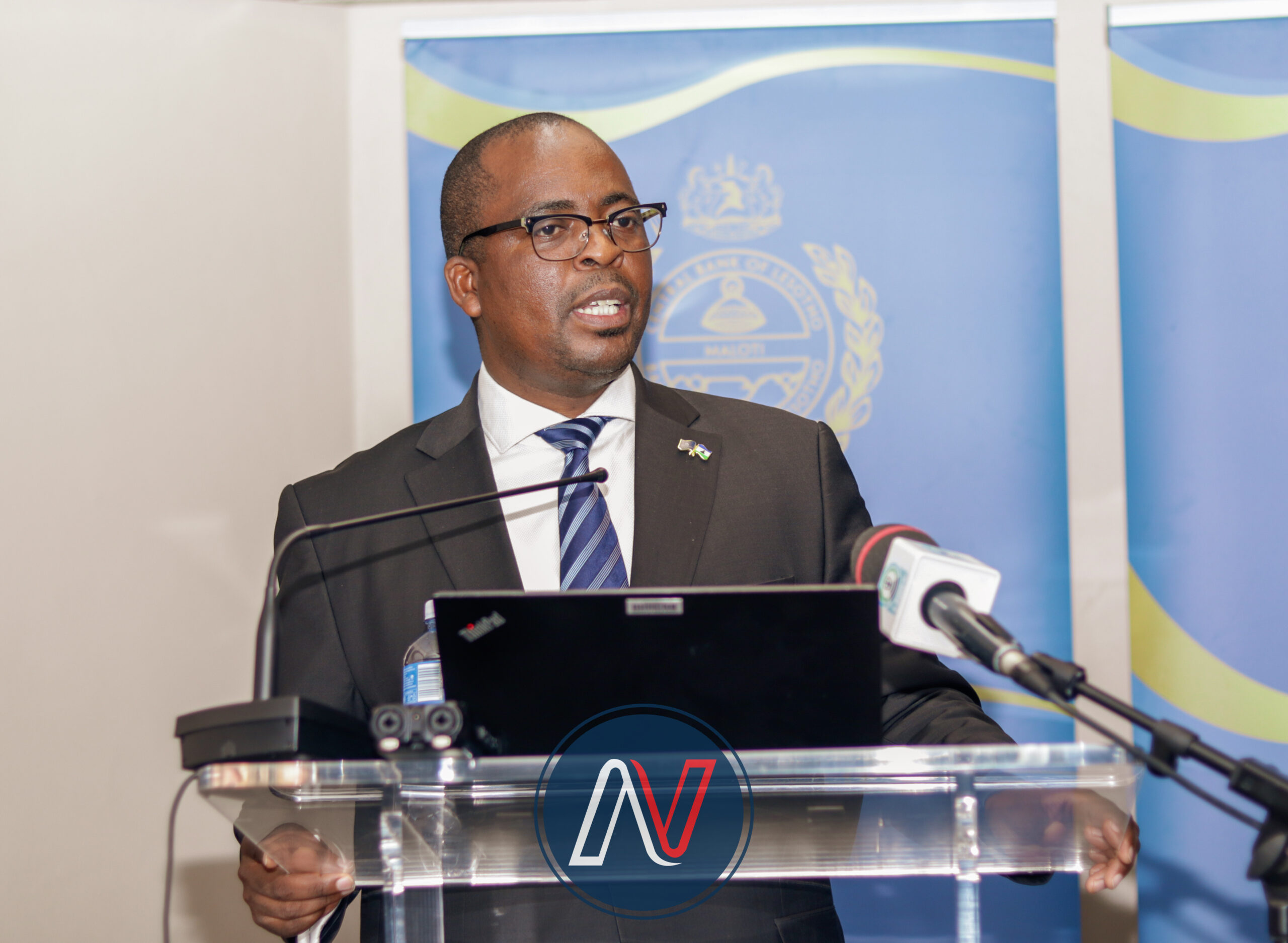
“On the domestic front, economic activity slowed down in the third quarter of 2025. This was mainly underpinned by weak manufacturing and domestic demand, particularly private spending,” said CBL governor Dr Maluke Letete.
Letete added that growth was expected to be modest over the medium term due to weaker exports and mining output, but partially offset by the expected stronger textile exports to South Africa.
The Q3 contraction in Lesotho contrasts sharply with improving performance in neighbouring South Africa, the country to which the Lesotho loti is pegged, and whose economic fortunes are closely tied to those of Lesotho.
Recent data show South Africa’s economy gained pace in Q3, 2025, supported mainly by household spending, even as investment remained weak. Lower oil prices, stabilising food costs and a stronger rand led the South African Reserve Bank to cut its policy rate by 25 basis points to 6.75 percent per annum.
“Recent data indicate that South Africa’s growth improved in the third quarter of 2025, mainly supported by household spending, although investment remained weak. While the inflation rate rose to 3.6 percent in October 2025, the outlook remains positive, mainly supported by stabilising food prices, declining oil prices and a stronger rand. As a result, the South African Reserve Bank reduced the policy rate by 25 basis points to 6.75 percent per annum.”
On the positive side, Letete indicated that the rate of inflation moderated to 4.5 percent in October 2025, dropping from 4.7 percent the preceding month.
“This was mainly due to lower food prices reflecting increased supply of vegetables, lower fuel prices and a stronger rand. In the medium term, inflation is expected to remain moderately higher if food prices remain persistently elevated.”
The public debt as a percent of GDP also continued to decline, “reflecting timely repayments and the favourable exchange rate, which together reinforce fiscal sustainability and support domestic liquidity under the peg.
“The current account deficit moderated in the third quarter, mainly due to stronger exports. The SACU receipts and investment income from abroad continued to be critical buffers despite the persistent trade account deficit.”
The overall fiscal balance remained relatively stable at a surplus of 10.0 percent of GDP. This was mainly supported by water royalties amid accelerated infrastructure development.
Meanwhile, the MPC, therefore, resolved to revise the Net International Reserves (NIR) target floor to US$830 million from US$840 million. This amount is deemed adequate to underwrite the peg.
The MPC further reduced the CBL rate by 25 basis points to 6.50 percent per annum.
“This adjustment maintains close alignment with monetary conditions in South Africa and reinforces market confidence in the exchange rate parity between the loti and the SA rand.
The CBL reaffirms its unwavering commitment to maintaining adequate NIR to defend the peg and ensure that domestic inflation remains broadly in line with that of South Africa.”
The committee said it will continue to monitor global and regional economic developments and stands ready to take necessary measures to safeguard the credibility of the loti-rand peg.
Summary
- Economic activity slowed down in the third quarter of 2025 and is expected to remain subdued over the medium term, according to a statement made by the Central Bank of Lesotho (CBL)’s Monetary Policy Committee (MPC) during a media briefing earlier this week.
- The Q3 contraction in Lesotho contrasts sharply with improving performance in neighbouring South Africa, the country to which the Lesotho loti is pegged, and whose economic fortunes are closely tied to those of Lesotho.
- The public debt as a percent of GDP also continued to decline, “reflecting timely repayments and the favourable exchange rate, which together reinforce fiscal sustainability and support domestic liquidity under the peg.

Authored by our expert team of writers and editors, with thorough research.