
… Secures over M6 billion health pact
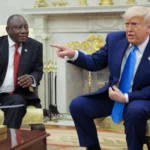
Just months after former U.S. President Donald Trump joked in Congress that Lesotho was a country “nobody has ever heard of” while defending his administration’s drastic cuts to global humanitarian aid, the United States made a dramatic pivot.
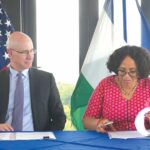
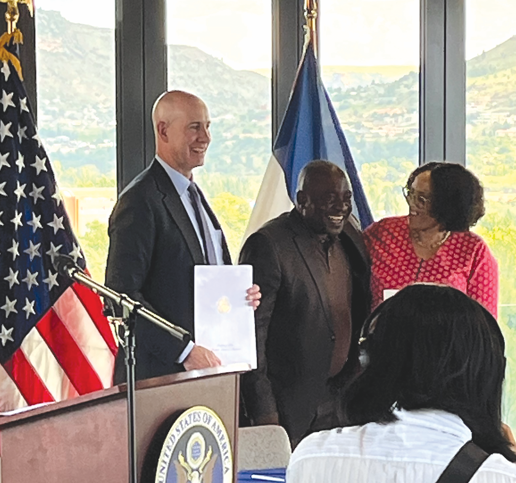
On Wednesday this week in Maseru, U.S. Embassy Chargé d’Affaires Tom Hines and Minister of Finance and Development Planning, Dr Retšelisitsoe Matlanyane, signed a five-year bilateral health cooperation Memorandum of Understanding (MOU), committing $364 million (about M6.143 billion) to bolster Lesotho’s health system.
The deal, spanning 2025 to 2030, includes $232 million from the United States and $132 million from the Government of Lesotho, aimed at saving lives, strengthening frontline healthcare, and finally giving Lesotho full ownership of its HIV/AIDS response.
For a nation Trump once brushed off in jest, the investment is monumental.
Lesotho has already outpaced global expectations by exceeding the 95-95-95 HIV/AIDS epidemic control goals, achieving 97-97-99, a feat reached by very few countries worldwide.
The MOU seeks to consolidate that progress through targeted investment in health infrastructure, workforce development, disease surveillance, and outbreak response.
The bilateral health agreement will put Lesotho on an accelerated path to a durable, responsive, and sustainable health system, resulting in Lesotho taking full control of its HIV/AIDS response,” the U.S. said in a statement.
The partnership, according to the U.S., also helps further American commercial interest in Lesotho and Africa more broadly, encouraging health-related commercial cooperation.
“From satellite internet that provides clinics connectivity to advanced robotics delivery of life-saving medical products, the agreement opens the door to innovations that mutually advance healthcare and the local economy.
“Today’s signing highlights the strong U.S.-Lesotho bilateral relationship, and both countries’ commitment to safeguarding health gains and supporting a health assistance architecture that eliminates dependency, ideology, and waste — delivering better and more durable health outcomes,” the U.S. said in a statement.
It added that it will continue to sign multi-year bilateral agreements on global health cooperation with dozens of countries receiving U.S. health assistance in the coming weeks to advance the America First Global Health Strategy.
“The MOU will be a blueprint for the next five years of our partnership. It is five years of joint commitment to building a resilient, self-reliant, and durable health system for the Basotho people,” Hines said at the signing ceremony.
“It builds on 18 years of U.S. support, which has saved hundreds of thousands of lives and strengthened Lesotho’s health system.”
Hines emphasised that these investments and these partnerships with the Ministry of Health and others have achieved a remarkable record – attaining 97-97-99, making Lesotho one of only a handful of countries around the world to achieve those marks.
“This MOU is more than a continuation, however; it is a transformation anchored in clear, measurable goals. Our signatures will commit us to reducing maternal and child mortality, strengthening the country’s ability to detect and respond to infectious diseases. And this will be achieved with and through Lesotho’s leadership,” he said.
The United States has been a key partner in Lesotho’s fight against HIV/AIDS for nearly two decades. Since the early 2000s, U.S. programs, primarily through the President’s Emergency Plan for AIDS Relief (PEPFAR), have provided financial, technical, and operational support to scale up HIV prevention, treatment, and care services across the country.
Through PEPFAR, the U.S. has contributed to expanding access to antiretroviral therapy (ART), strengthening laboratory and diagnostic capacity, and supporting HIV testing and counseling services.
U.S. assistance has also targeted prevention efforts, particularly among high-risk populations, including youth, women, and key populations vulnerable to HIV infection.
Capacity building has been another critical area of U.S. support, focusing on training healthcare workers, improving data systems for monitoring and evaluation, and enhancing disease surveillance to respond to outbreaks and ensure treatment continuity. This investment has helped Lesotho achieve remarkable outcomes, including surpassing the 95-95-95 targets for HIV epidemic control.
The U.S. has also encouraged Lesotho to assume greater ownership of its HIV/AIDS response, shifting from reliance on international NGOs to building sustainable, locally led health systems.
Investments have extended to strengthening health infrastructure, such as clinics and laboratories, and providing strategic guidance on health policy and program management.
Overall, the U.S. partnership has been instrumental in saving lives, reducing HIV transmission, and building a foundation for a resilient, self-reliant health system in Lesotho.
Summary
- The bilateral health agreement will put Lesotho on an accelerated path to a durable, responsive, and sustainable health system, resulting in Lesotho taking full control of its HIV/AIDS response,” the U.
- -Lesotho bilateral relationship, and both countries’ commitment to safeguarding health gains and supporting a health assistance architecture that eliminates dependency, ideology, and waste — delivering better and more durable health outcomes,” the U.
- Hines emphasised that these investments and these partnerships with the Ministry of Health and others have achieved a remarkable record – attaining 97-97-99, making Lesotho one of only a handful of countries around the world to achieve those marks.

Authored by our expert team of writers and editors, with thorough research.