


The Lesotho Highlands Development Authority (LHDA) and South Africa’s Trans-Caledon Tunnel Authority (TCTA) have been urged to place tourism and hospitality development at the top of their priorities under the Lesotho Highlands Water Project Phase II (LHWP II), a move that could unlock significant economic potential for both nations in the Southern African region.
This call was made during a high-level site visit by Lesotho’s Minister of Natural Resources, Mohlomi Moleko, and South Africa’s Minister of Water and Sanitation, Pamela Majodina, who toured Katse Lodge, the Botanical Garden, Campsite and Caravan Park, as well as Katse Dam. The visit formed part of the second leg of the ministers’ oversight tour of LHWP II sites.
Speaking during the visit, Minister Majodina emphasised the importance of fully utilising tourism and hospitality facilities developed under the project. She urged both LHDA and TCTA to actively promote these sites as part of sustainable economic development, noting that tourism could generate long-term benefits for local communities beyond water infrastructure.
The untapped tourism potential within LHWP represents a critical opportunity for regional economic development. According to research on tourism’s impact in the Lesotho Highlands, the project has created substantial infrastructure that could support sustainable tourism growth, including improved road networks and telecommunications facilities that enhance access to remote highland areas.
The spectacular Katse Dam, Africa’s second-largest double-curvature arch dam, has already attracted thousands of visitors since its construction, demonstrating market demand for highland tourism experiences.
International Water Power magazine notes that improved roads and telecommunications put in place for Phase II significantly enhance tourism potential in Lesotho’s Eastern Highlands. The region offers unique attractions including the highest botanical garden in the Southern Hemisphere at 2,230 meters altitude, home to over 500 indigenous plant species, alongside opportunities for fly fishing, hiking, pony trekking, and cultural experiences with Basotho communities.
The Minister also called for greater transparency in infrastructure development and expenditure, particularly regarding roads and public facilities constructed as part of the project’s broader social and economic obligations.
The tour, organised by LHDA, highlighted the continued cooperation and commitment between the Kingdom of Lesotho and the Republic of South Africa in strengthening regional water security and advancing large-scale infrastructure development.
LHWP is a multi-billion Maloti/Rand bi-national project between the two governments, focusing on water transfer to South Africa, hydropower generation for Lesotho, and various ancillary developments aimed at improving livelihoods in project-affected areas.
LHWP II’s strategic goals extend beyond water transfer and include Muela commercialisation, the proposed Oxbow Hydropower Station, tourism, fisheries, irrigation and other development initiatives.
Through partnerships with the Lesotho Tourism Development Corporation (LTDC), LHDA has supported community-based tourism training for 39 homestay operators and tour guides, as well as craft production training for 19 local participants.
Communities in the project areas have already begun to experience social benefits, including improved road networks, better access to health services and schools, and electricity supply. The project also aims to strengthen climate resilience, enhance food security, diversify the local economy, improve agricultural linkages and promote social cohesion.
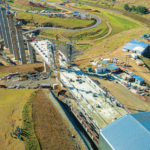
With construction of the Polihali Transfer Tunnel now 48 percent complete, the ministers stressed the urgency of ensuring that social facilities and community development projects are fully operational, in line with the project’s commitments to affected communities.
The visit reaffirmed the shared vision of Lesotho and South Africa to ensure that LHWP II delivers not only water and energy security, but also lasting social and economic development for the people of Lesotho.
Summary
- The Lesotho Highlands Development Authority (LHDA) and South Africa’s Trans-Caledon Tunnel Authority (TCTA) have been urged to place tourism and hospitality development at the top of their priorities under the Lesotho Highlands Water Project Phase II (LHWP II), a move that could unlock significant economic potential for both nations in the Southern African region.
- The tour, organised by LHDA, highlighted the continued cooperation and commitment between the Kingdom of Lesotho and the Republic of South Africa in strengthening regional water security and advancing large-scale infrastructure development.
- The visit reaffirmed the shared vision of Lesotho and South Africa to ensure that LHWP II delivers not only water and energy security, but also lasting social and economic development for the people of Lesotho.

Seabata Mahao is a general news reporter with special focus on Business and Sports. Started working at Newsday in 2021. Working in a team with a shared goal is what I enjoy most and that gives me the motivation to work under any environment leading to growth.