

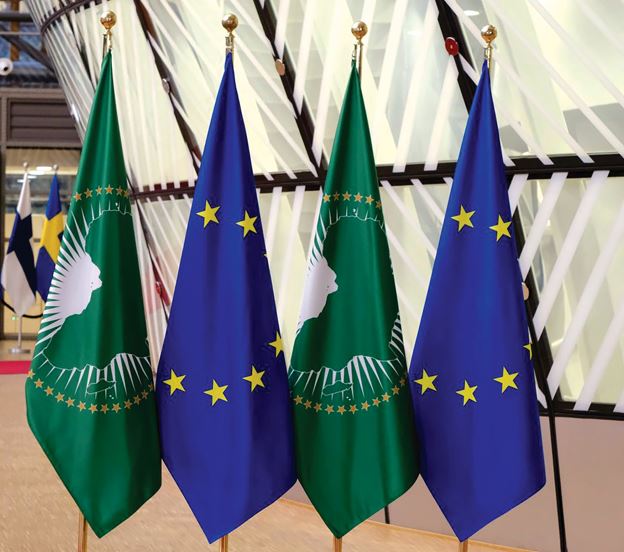
The African Union (AU) and the European Commission have launched three major health initiatives in Addis Ababa, aimed at strengthening Africa’s capacity to prevent, detect, and respond to future disease outbreaks while improving primary healthcare systems across the continent.
Valued at more than €100 million, the programmes were unveiled this week in the presence of senior officials, including the Director General of the Africa Centres for Disease Control and Prevention (Africa CDC), Dr Jean Kaseya, and the European Commissioner for International Partnerships, Jozef Síkela.
The funding package focuses on three strategic pillars intended to enhance health security and system resilience across participating countries.
First, the initiatives will support national public health institutes in ten countries to strengthen disease surveillance, laboratory capacity, and emergency response systems.
Second, they will advance health security through a coordinated approach to tackling antimicrobial resistance, with an emphasis on prevention, early detection, and containment.
Third, the partnership will accelerate the rollout of digital health technologies in six countries, aimed at modernising patient care systems and improving preparedness for future pandemics.
European Commissioner Jozef Síkela said strong health systems are as critical to global stability as energy security and resilient supply chains. He added that investing in Africa’s health infrastructure enhances the continent’s ability to manage its own priorities, contributing to broader global security.
He further noted that strengthening local capacity reduces dependency on external assistance and supports greater health sovereignty for African states.
Dr Jean Kaseya welcomed the initiative, describing it as a shift from commitments to concrete action. He stressed that the focus is on building systems capable of producing, financing, and managing health priorities locally.
The initiative also forms part of a broader agenda to expand local vaccine manufacturing and strengthen pharmaceutical supply chains across Africa.
According to the Africa CDC, the programmes reflect a deepening of the 25-year partnership between the African Union and the European Union.
Implementation will be led by the Africa CDC in collaboration with international partners and technical experts.
“As the world continues to face evolving health threats, this investment marks a major step toward ensuring African health systems are resilient, innovative, and capable of protecting their populations,” the Africa CDC said.
Summary
- The African Union (AU) and the European Commission have launched three major health initiatives in Addis Ababa, aimed at strengthening Africa’s capacity to prevent, detect, and respond to future disease outbreaks while improving primary healthcare systems across the continent.
- Valued at more than €100 million, the programmes were unveiled this week in the presence of senior officials, including the Director General of the Africa Centres for Disease Control and Prevention (Africa CDC), Dr Jean Kaseya, and the European Commissioner for International Partnerships, Jozef Síkela.
- According to the Africa CDC, the programmes reflect a deepening of the 25-year partnership between the African Union and the European Union.

Ntsoaki Motaung is an award-winning health journalist from Lesotho, specializing in community health stories with a focus on sexual and reproductive health and rights, as well as HIV. She has contributed to platforms like “Be in the KNOW,” highlighting issues such as the exclusion of people with disabilities from HIV prevention efforts in Lesotho.
In addition to her journalism, Ntsoaki serves as the Country Coordinator for the Regional Media Action Plan Support Network (REMAPSEN). She is also a 2023 CPHIA Journalism Fellow.