

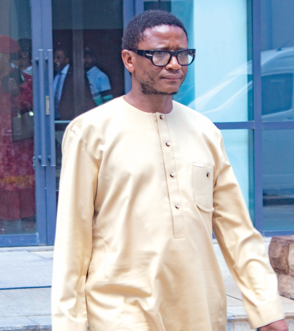
Dr Tšeliso Moroke
What do people do when they realise that what they believed to be their messianic leader and party is not what they thought and anticipated?
What happens when the promises and campaign manifesto are not fulfilled?
What happens when the government becomes disintegrated and misaligned with pressing national issues such as jobs, education, and healthcare?
A nation then enters a phase of political awakening. An uncomfortable, uncertain, yet necessary phase. Disillusionment is not the death of democracy; it is one of its most defining moments. It is the point at which citizens begin to separate rhetoric from reality, personality from performance, and power from responsibility.
In that moment, the illusion of political infallibility collapses. Leaders are no longer viewed as saviours, but as public servants subject to scrutiny. Political parties are no longer movements of hope, but institutions that must justify their existence through delivery. This transition is critical because without it, a country remains trapped in cycles of blind loyalty and repeated disappointment.
In Lesotho, these moments are not theoretical; they are lived.
We have witnessed political parties ascend to power on the strength of bold promises and emotional appeal, only to govern with fragmentation, inconsistency and detachment from the real economic struggles of the people. Campaign periods are marked by clarity and conviction, promises of job creation, economic transformation, and poverty eradication. However, governance often becomes something else entirely: slow, reactive, self-enriching agendas and administratively focused rather than trying to transform people’s lives.
The consequences of inaction become real. Youth unemployment remains persistently high, not because solutions do not exist, but because policy direction lacks coherence and implementation lacks urgency. Inequality continues to widen as economic opportunity becomes concentrated among a few politically connected. Poverty, instead of being treated as a national emergency, becomes normalised, a condition managed through rhetoric rather than resolved through deliberate intervention.
So again, what do people do?
Some disengage. They retreat from the political process, convinced that participation yields no meaningful change. Elections become rituals rather than instruments of accountability. Voter turnout declines, and with it, the legitimacy of democratic institutions weakens.
Others grow restless. Frustration builds and manifests in public dissatisfaction, sometimes through protest, sometimes through unstructured anger. Without clear alternatives or organised civic direction, this energy risks being misdirected or exploited, leading to instability rather than reform.
But there is a third path. One that is more demanding, yet far more powerful.
Citizens begin to reorganise their expectations and reclaim their agency.
They move away from personality-driven politics and begin to demand system-driven governance. They insist on institutions that function beyond individuals, policies that are evidence-based, and leadership that is accountable not just in words, but in measurable outcomes.
They begin to ask harder, more precise questions:
How exactly is this budget creating jobs?
Which sectors are being prioritised for economic growth?
What mechanisms are in place to ensure equitable distribution of resources?
What timelines have been set, and what happens when they are not met?
This shift, from passive acceptance to active interrogation, is how a country begins to move forward.
It forces a recalibration of power.
Leadership can no longer rely on historical loyalty or emotional appeal. It must produce results. It must demonstrate competence. It must align its actions with the lived realities of the people it serves. Where it fails to do so, it must either reform or be replaced.
This is the essence of democratic maturity.
For too long, governance has been treated as an administrative obligation. A process of maintaining systems rather than transforming them. But in a country grappling with unemployment, inequality, and poverty, complacency is not an option. Government must be intentional and self-assessing. It must be strategic. It must be relentlessly focused on economic outcomes and the people’s well-being.
The economy cannot remain peripheral to political decision-making; it must become its central pillar.
Jobs are not a slogan; they are the foundation of dignity and stability. Inequality is not theoretical; it is experienced daily in access to opportunity, services, and economic mobility. Poverty is not inevitable; it is the result of policy choices, and therefore, it can be reversed through better policy choices.
When the government becomes misaligned with these realities, it does more than underperform; it becomes irrelevant.
And when the government becomes irrelevant, people do not wait indefinitely, and they must not be expected to live in blind loyalty. They must adapt, reorganise, and ultimately move, with or without the structures that were meant to serve them but have failed.
The defining question is not whether people will move, but how.
Will that movement be constructive, grounded in accountability, institutional reform, and economic renewal?
Or will it be destructive? Driven by frustration, instability, and the collapse of trust?
That choice is not abstract. It is being made in real time, through the actions of both leaders and citizens.
Because in the end, how the country moves is not judged by promises made during campaigns.
It is determined by what is done consistently, deliberately, and accountably, after power has been attained.
Summary
- We have witnessed political parties ascend to power on the strength of bold promises and emotional appeal, only to govern with fragmentation, inconsistency and detachment from the real economic struggles of the people.
- They insist on institutions that function beyond individuals, policies that are evidence-based, and leadership that is accountable not just in words, but in measurable outcomes.
- But in a country grappling with unemployment, inequality, and poverty, complacency is not an option.

Welcome to Newsday Media – Your Trusted Source for News and Insights in Lesotho!
At Newsday Media, we are passionate about delivering accurate, timely, and engaging news and multimedia content to our diverse audience. Founded with the vision of revolutionizing the media landscape in Lesotho, we have grown into a leading hybrid media company that blends traditional journalism with innovative digital platforms.
Our mission is simple: to inform, inspire, and empower our readers by providing comprehensive coverage of local and global events, current affairs, and cultural happenings. Whether you’re looking for breaking news, in-depth analysis, or captivating storytelling, Newsday Media is your go-to destination for all things news-related.
With a dedicated team of journalists, editors, and multimedia experts, we are committed to upholding the highest standards of journalistic integrity and professionalism. We pride ourselves on delivering content that not only informs but also sparks conversation, fosters understanding, and drives positive change in our society.
From our flagship newspaper to our dynamic digital platforms, we offer a wide range of multimedia content to cater to the diverse interests and preferences of our audience. Whether you prefer to stay informed through print, online articles, videos, or podcasts, Newsday Media has something for everyone.
We believe in the power of storytelling to connect people, bridge divides, and inspire action. That’s why we’re dedicated to providing a platform for voices from all walks of life, championing diversity, inclusion, and authenticity in everything we do.
Thank you for visiting Newsday Media. We invite you to explore our website, engage with our content, and join us on our journey to inform, inspire, and empower our community. Together, let’s shape the future of media in Lesotho.