

Seabata Mahao and Refiloe Molise
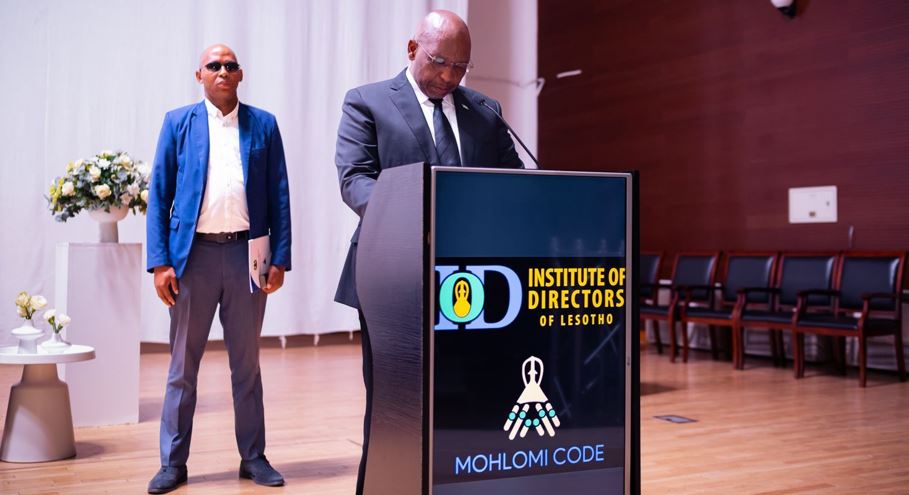
Prime Minister Samuel Ntsokoane Matekane has formally endorsed the Mohlomi Code of Corporate Governance, describing it as a critical framework that could strengthen accountability, ethical leadership and economic resilience across both the public and private sectors.
Speaking during the opening of the two-day second Annual Intergenerational Value Creation Conference 2026 – Khotla held at the ‘Manthabiseng Convention Centre yesterday, Matekane said good governance will determine whether Lesotho succeeds or struggles in the face of mounting global economic and political pressures.
The conference, organised by Institute of Directors (IoD) Lesotho under the theme “Corporate Governance, EESG and Policy Reforms: Building Intergenerational Value and Economic Resilience,” brought together government leaders, corporate executives, academics, development partners and governance experts.
Among discussions was the official adoption of the Mohlomi Code of Corporate Governance as the country’s reference standard for corporate governance conduct.
“The Government of Lesotho through Cabinet formally endorses the Mohlomi Code of Corporate Governance as the reference standard for governance conduct across public institutions, State-Owned Enterprises, Government-linked entities and the broader corporate sector,” Matekane said.
The Prime Minister said the code would play an important role in promoting accountability, transparency and responsible leadership in many sectors of society, particularly within public institutions and state-owned entities where governance concerns have often been raised.
He further committed government to integrating the principles of the Mohlomi Code into governance mandates and performance frameworks of public entities.
Matekane said the principles contained in the code would also shape the conduct frameworks of public servants.
“We live in a world of continuing disruptions, geopolitical realignments, climate shocks, technological transformation and demographic shifts that are rewriting the rules of economic engagement,” Matekane said.
He stressed that Lesotho needs strong governance systems capable of responding to these global pressures while also creating long-term economic stability.
The Prime Minister said governance should no longer be viewed merely as a compliance issue, but as a strategic tool for national development and institutional credibility.
He also highlighted the importance of involving young people in leadership and governance processes.
According to Matekane, more than 60 percent of Lesotho’s population is below the age of 35, making youth participation critical for the country’s future.
“I call upon the corporate sector to open its boardrooms and leadership pipelines to the next generation of Basotho leaders,” he said.
The Mohlomi Code, developed by the Institute of Directors Lesotho, is inspired by the leadership philosophy of Chief Chief Mohlomi and values later embraced by King Moshoeshoe I.
The framework seeks to move beyond basic legal compliance by encouraging ethical leadership, stakeholder inclusiveness and intergenerational value creation.
The code combines international corporate governance standards with African values and Basotho traditions.
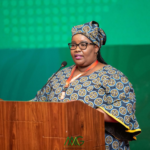
Speaking at the conference, IoD Lesotho Chief Executive Officer Malehlohonolo Mahase said Lesotho has an opportunity to position itself as a leader in corporate governance in the region.
Mahase said governance should not only focus on rules and procedures but also on moral responsibility and accountability.
“The time to put into practice the intergenerational value creation principle was yesterday and the next best time is now,” she said.
She added that the conference aimed to promote transformational leadership, sustainable development and economic resilience.Mahase further explained that the Mohlomi Code seeks to build institutions that are resilient, adaptive and forward-looking.
“We envision institutions that are resilient, adaptive and forward-thinking, leaders who embrace EESG principles as core to strategy and an economy that creates sustainable value across generations,” she said.
Chairperson of the Mohlomi Committee, Robert Likhang, said the world’s growing economic uncertainty has made resilience and sound governance more important than ever.
He noted that recent geopolitical conflicts and global economic shocks have exposed weaknesses in many economies across the world.
Likhang said the Mohlomi Code was designed with these realities in mind through its emphasis on long-term sustainability and institutional resilience.
“At its core, this outcome seeks to institutionalise economic resilience as a national imperative,” he said.
He called on government, investors, business leaders and development partners to work together in strengthening governance systems and building a more stable economy.
IoD Lesotho Chairperson Advocate Selebalo Ntepe also urged institutions in both the public and private sectors to fully embrace the implementation of the code.
Ntepe said Basotho traditional systems such as the khotla continue to offer important lessons on accountability, consultation and collective leadership.
The conference highlighted several key principles contained in the Mohlomi Code, including ethical leadership, transparency, accountability, stakeholder inclusiveness and integrated thinking.
The framework is organised into six major governance clusters covering board leadership, board conduct, board composition, audit systems, risk management, digital governance and sustainability reporting.
Delegates also discussed the concept of Economic, Environmental, Social and Governance (EESG), which expands on the widely recognised ESG governance model.
The discussions further focused on the role young people must play in shaping Lesotho’s governance and economic future.
Khotla 2026 is expected to provide momentum for future governance reforms and policy discussions aimed at strengthening institutional integrity, improving leadership standards and promoting sustainable development across generations in Lesotho.
Summary
- Speaking during the opening of the two-day second Annual Intergenerational Value Creation Conference 2026 – Khotla held at the ‘Manthabiseng Convention Centre yesterday, Matekane said good governance will determine whether Lesotho succeeds or struggles in the face of mounting global economic and political pressures.
- “The Government of Lesotho through Cabinet formally endorses the Mohlomi Code of Corporate Governance as the reference standard for governance conduct across public institutions, State-Owned Enterprises, Government-linked entities and the broader corporate sector,” Matekane said.
- Speaking at the conference, IoD Lesotho Chief Executive Officer Malehlohonolo Mahase said Lesotho has an opportunity to position itself as a leader in corporate governance in the region.

Your Trusted Source for News and Insights in Lesotho!
At Newsday Media, we are passionate about delivering accurate, timely, and engaging news and multimedia content to our diverse audience. Founded with the vision of revolutionizing the media landscape in Lesotho, we have grown into a leading hybrid media company that blends traditional journalism with innovative digital platforms.