

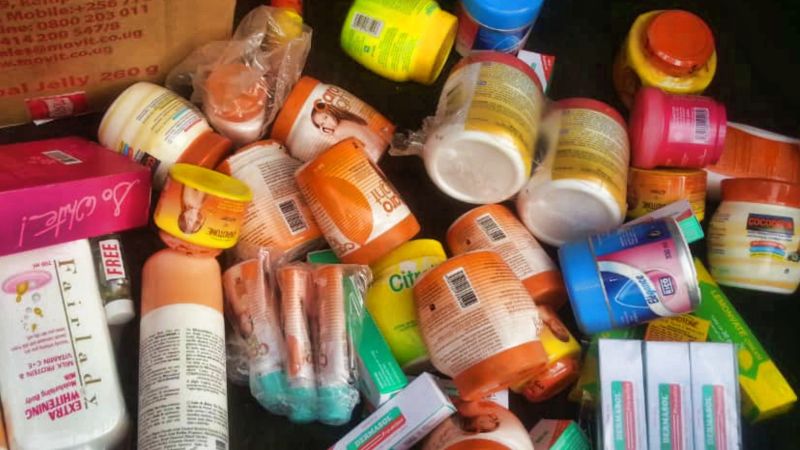
…Experts warn of health risks tied to misuse of steroid-based creams
A growing and largely unregulated trend in skin bleaching practices has raised serious concern among health authorities in Lesotho, with experts warning that the misuse of steroid-based creams is exposing users to severe health complications, including irreversible skin damage and potential organ failure.
The concern comes as the Ministry of Health and the World Health Organization intensify World Health Day 2026 activities, amid increasing reports of widespread abuse of topical steroids sold openly and unsupervised in shops, salons and informal markets across the country.
Health professionals say what was once strictly medical treatment for conditions such as eczema, dermatitis and psoriasis has increasingly been diverted into cosmetic use, driven by a desire for lighter skin, and this is reinforced by social media beauty standards.
At a recent World Health Day media workshop, officials warned that the normalisation of skin-lightening practices is fuelling dangerous self-medication, particularly among young people.
Julia Matsanya, a senior pharmacist from the Ministry of Health’s Pharmaceutical Department, said topical steroids remain potent medicines that must be handled under strict medical supervision.
“Topical steroids, available in various formulations such as creams, ointments, gels, and lotions, are designed to suppress the immune response, to reduce inflammation, redness, and intense itching and are supposed to be used under medical supervision,” she said; however, she cautioned that easy access has contributed to widespread misuse.
“Because these potent medical supplies are often easily accessible in local shops and over the counter without a doctor’s prescription, many individuals have begun using them for non-medical purposes. They have gained popularity and are now being used for cosmetic purposes,” she said.
Matsanya stressed that misinformation around these products is worsening the problem.
“People use them as skin-lighteners to change their complexion, and with the outcome being fairer and fairer, users do not realise they are damaging their spirit and their health in the process, causing irreparable damage,” Matsanya warned.
Matsanya said many of the creams circulating in informal markets contain high-potency steroids that are not intended for long-term facial use. While they may initially appear to improve skin texture and tone, the effects are often temporary and misleading.
A key concern, she said, is the misconception that these products treat skin conditions.
“When used without a diagnosis, they can mask serious infections or lead to a worsening of the original condition,” Matsanya said.
Medical practitioners at the workshop outlined a disturbing range of side effects linked to prolonged, unsupervised use of the products, particularly in sensitive areas such as the face and skin folds.
These include skin peeling, painful acne eruptions, abnormal hair growth, thinning of the skin, a condition called atrophy, visible broken blood vessels and deep stretch marks.
Matsanya also highlighted a dangerous dependency cycle in which users experience initial improvement followed by severe rebound symptoms upon stopping use.
“This forces the user into a state of dependency to avoid the intense burning, itching, and flare-ups that follow withdrawal,” Matsanya explained.
The medical practitioners disclosed that this cycle is increasingly common, driven by social pressure, peer influence and beauty ideals promoted by social media.
Beyond visible damage, Matsanya warned that prolonged absorption of these chemicals through the skin may also affect internal organs.
“High absorption through the skin into the bloodstream can lead to systemic organ failure, among other risks. This includes a heightened risk of kidney failure and adrenal suppression, posing a particular threat to vulnerable groups such as children, whose skin is thinner and pregnant women,” Matsanya said.
The Acting Director General of Health Services, Dr Llang Maama, stressed that public health decisions must be guided by science rather than social trends or unverified advice.
“This message aligns directly with the World Health Day 2026 global theme: Together for health. Stand with science.”
World Health Organization representative in Lesotho, Dr Innocent Nuwagira, echoed the concern, warning against the dangers of misinformation in health choices.
“Science transforms uncertainty into understanding. Without the clarity provided by rigorous scientific inquiry, we risk being led by bias and misconception and too often toward treatments that fail us or even place us in harm’s way,” he said.
Heath Ministry’s Principal Secretary Mantšoanelo Monyobi also called for stronger public awareness campaigns and stricter enforcement against the sale of unregulated steroid products in cosmetic markets.
She urged the media to play a stronger watchdog role in exposing health misinformation and protecting communities from harmful beauty practices.
Health authorities caution that unless regulation is tightened and public awareness significantly improved, the growing culture of skin bleaching could escalate into a broader public health crisis, particularly among young people increasingly exposed to unrealistic beauty standards.
Summary
- A growing and largely unregulated trend in skin bleaching practices has raised serious concern among health authorities in Lesotho, with experts warning that the misuse of steroid-based creams is exposing users to severe health complications, including irreversible skin damage and potential organ failure.
- The concern comes as the Ministry of Health and the World Health Organization intensify World Health Day 2026 activities, amid increasing reports of widespread abuse of topical steroids sold openly and unsupervised in shops, salons and informal markets across the country.
- Medical practitioners at the workshop outlined a disturbing range of side effects linked to prolonged, unsupervised use of the products, particularly in sensitive areas such as the face and skin folds.
Ntsoaki Motaung is an award-winning health journalist from Lesotho, specializing in community health stories with a focus on sexual and reproductive health and rights, as well as HIV. She has contributed to platforms like “Be in the KNOW,” highlighting issues such as the exclusion of people with disabilities from HIV prevention efforts in Lesotho.
In addition to her journalism, Ntsoaki serves as the Country Coordinator for the Regional Media Action Plan Support Network (REMAPSEN). She is also a 2023 CPHIA Journalism Fellow.