

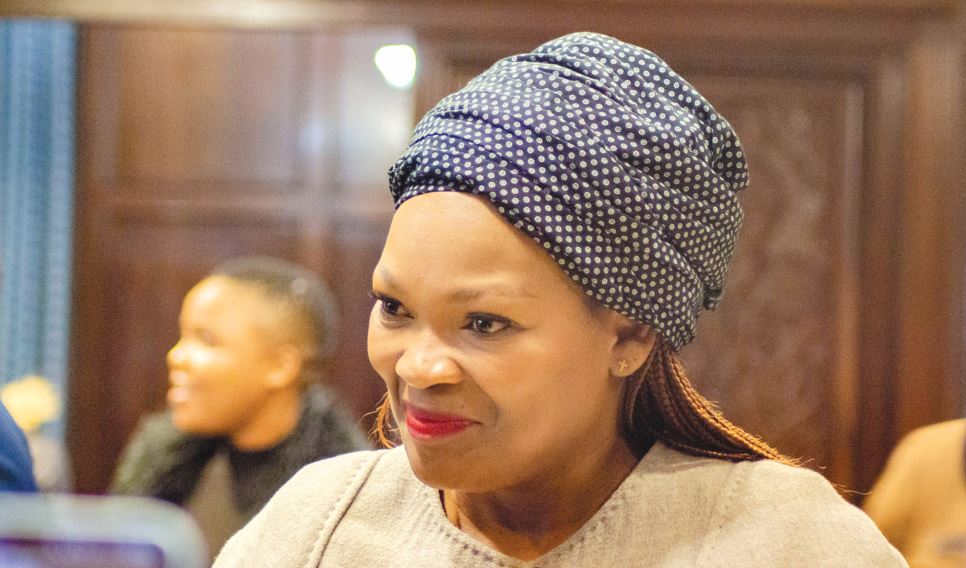
In a damning investigation that lays bare the inner decay of the Ministry of Home Affairs, the Ombudsman, advocate Tlotliso Polaki, has found that systemic maladministration, executive paralysis, and outright lawlessness have denied thousands of citizens their fundamental rights, while former office bearers unlawfully cling to diplomatic passports with impunity.
The 51-page report, Investigation into Systemic Failures and Administrative Injustices within the Ministry of Home Affairs, released this week, paints a picture of a department in freefall: passports taking up to two years to issue, naturalisation applications languishing without decision since 2022, and a recruitment system that hands jobs to political cronies while passport books run dry.
“The crisis is not one of complexity,” Ombudsman Polaki wrote in her final determination. “It is one of execution.”
‘Night wakes’ and lost livelihoods
Investigators fanned out across seven of the country’s ten districts, interviewing 320 members of the public. What they found was a service in profound distress.
At the Maseru Mall offices, the team observed citizens queuing from 2am, a practice dubbed “night wakes,” just to secure a place in the day’s limited quota for identity cards. One respondent with a physical disability described being met with “taunts and jibes” by officers when he sought information about his passport, applied for in early 2024.
A 35-year-old Mosotho woman who applied for a passport in November 2023 still had not received it more than a year later. She works in South Africa and requires the document to commute to her job. The delay, the report noted, has “directly undermined her ability to earn a livelihood.”
Of those interviewed, 65 percent said they were given no reasons for denials or delays. Forty-two percent were told documents were unavailable due to a lack of government materials. Corruption was reported in at least four offices, with bribes ranging from M300 to M600.
The Ministry’s own Service Charter promises passports within 21 working days. The investigation found that some applicants have waited up to two years.
Diplomatic passports: ‘Not souvenirs of past office’
Perhaps the most explosive findings relate to diplomatic passports.
The report confirms that numerous former office bearers, including Members of Parliament (MPs) and former mission staff, continue to hold diplomatic passports well beyond the legally prescribed three-month surrender period.
When the Director of Passports was asked why the law had not been enforced, he attributed the failure to an alleged lack of “political will” from senior authorities.
Polaki rejects this outright.
“The suggestion that enforcement depends on ‘political will’ is misconceived,” she wrote. “The statute imposes a duty of an administrative nature, not a discretionary indulgence contingent on political considerations. Failure to act… amounts to maladministration and perpetuates an unlawful state of affairs.”
The report also raises concerns about diplomatic passports issued under loosely defined roles such as “political” or “economic” advisors, and persistent allegations that renewals are facilitated through informal payments.
“Diplomatic passports are not souvenirs of past office,” Polaki stated. “They are instruments of the State, issued for narrowly defined official purposes and subject to explicit statutory control.”
Naturalisation paralysis drives away skilled professionals
The investigation also uncovered a naturalisation crisis that risks driving away the very professionals Lesotho cannot afford to lose.
Dr Shah Mohammad Abdul Hadi, a specialist orthopaedic doctor who has served Lesotho for eleven years, applied for naturalisation of his children in September 2022. His children, who completed secondary education in Lesotho, are now unable to apply for university places in South Africa because they lack Lesotho identity documents.
Their applications have been pending in the Minister’s office for over two and a half years, with no decision.
Dr Shaidi Shahzahan, a senior specialist radiographer with over nineteen years of service, faces a similar plight. Respondent after respondent told investigators that skilled expatriate doctors are considering leaving Lesotho for countries with more efficient and predictable administrative systems.
The Court of Appeal had already ruled in May 2025, in the case of Amberkar Abdul Aziz & 15 Others v Minister of Home Affairs, that a delay of approximately eight years in processing naturalisation applications was “manifestly excessive and unjustified.” The court issued a writ of mandamus compelling the Minister to decide within 60 days.
Yet, the Ombudsman found, applications continue to rot in the Minister’s in-tray.
Irregular hiring: patronage over performance
Behind the service delivery collapse lies a human resources scandal.
Whistleblowers inside the Ministry told investigators that temporary staff are appointed directly from the Minister’s office, bypassing the Public Service Commission entirely. Appointments are allegedly based on political affiliation, not merit.
The result? An inflated wage bill that devours funds meant for passport books and identity card consumables. Many of these temporary staff, the report notes, have “little meaningful work and are, in effect, redundant.”
The Principal Secretary denied any impropriety but was “evasive” when pressed, stating that the recruitment process was managed by the Minister’s office and that she was not involved. The Ombudsman described that admission as “a damning indictment of a breakdown in proper administrative procedures.”
Remedies and deadlines
The Ombudsman has issued a sweeping set of directives with firm deadlines. Within 30 days: a public apology from the Minister; a full audit of all diplomatic passports; surrender notices to unlawful holders.
Within 60 days: clearance of all passport and identity document backlogs; final decisions on all long-pending naturalisation applications.
Within 6 months: workforce rationalisation; revision of the Service Charter; installation of CCTV in all Passport and NICR offices.
Within 12 months: procurement diversification (at least two international suppliers); full digitalisation strategy; a compliance report to the Ombudsman.
On diplomatic passports, Polaki has directed that any passports issued outside the law must be revoked, and that an independent investigation be instituted into allegations of corruption and improper renewals.
Crucially, the report also demanded safeguards to protect officials from intimidation, coercion, or undue political pressure. Where a Minister is found to have engaged in bullying or undue interference, the matter must be referred to the Prime Minister for possible censure, suspension, or removal.
‘A theft of public resources’
Polaki does not mince words in her conclusion.
“The failure to issue a passport is not merely a delay; it is a denial of the right to seek a livelihood, to access healthcare, and to reunite with family,” he writes. “The failure to process a naturalisation application is not merely an administrative backlog; it is a declaration of legal limbo… The irregular recruitment of staff is not merely a procedural shortcut; it is a theft of public resources that directly undermines the State’s ability to function.”
If the Ministry fails to implement the recommendations, the Ombudsman has warned, she will submit a report to the National Assembly for Parliament to take “appropriate action.”
“This Office will remain seized with this matter until full compliance is achieved,” Polaki wrote.
For the thousands of Basotho waiting, some since 2023, for documents that would allow them to work, study, and move freely, that day cannot come soon enough.
Summary
- In a damning investigation that lays bare the inner decay of the Ministry of Home Affairs, the Ombudsman, advocate Tlotliso Polaki, has found that systemic maladministration, executive paralysis, and outright lawlessness have denied thousands of citizens their fundamental rights, while former office bearers unlawfully cling to diplomatic passports with impunity.
- The 51-page report, Investigation into Systemic Failures and Administrative Injustices within the Ministry of Home Affairs, released this week, paints a picture of a department in freefall.
- At the Maseru Mall offices, the team observed citizens queuing from 2am, a practice dubbed “night wakes,” just to secure a place in the day’s limited quota for identity cards.

Welcome to Newsday Media – Your Trusted Source for News and Insights in Lesotho!
At Newsday Media, we are passionate about delivering accurate, timely, and engaging news and multimedia content to our diverse audience. Founded with the vision of revolutionizing the media landscape in Lesotho, we have grown into a leading hybrid media company that blends traditional journalism with innovative digital platforms.
Our mission is simple: to inform, inspire, and empower our readers by providing comprehensive coverage of local and global events, current affairs, and cultural happenings. Whether you’re looking for breaking news, in-depth analysis, or captivating storytelling, Newsday Media is your go-to destination for all things news-related.
With a dedicated team of journalists, editors, and multimedia experts, we are committed to upholding the highest standards of journalistic integrity and professionalism. We pride ourselves on delivering content that not only informs but also sparks conversation, fosters understanding, and drives positive change in our society.
From our flagship newspaper to our dynamic digital platforms, we offer a wide range of multimedia content to cater to the diverse interests and preferences of our audience. Whether you prefer to stay informed through print, online articles, videos, or podcasts, Newsday Media has something for everyone.
We believe in the power of storytelling to connect people, bridge divides, and inspire action. That’s why we’re dedicated to providing a platform for voices from all walks of life, championing diversity, inclusion, and authenticity in everything we do.
Thank you for visiting Newsday Media. We invite you to explore our website, engage with our content, and join us on our journey to inform, inspire, and empower our community. Together, let’s shape the future of media in Lesotho.