
Pressure is mounting on the government to ratify the African Union’s Protocol on the Rights of Citizens to Social Protection and Social Security, with civil society organisations, legislators and the media this week demanding that Lesotho finally lock in legally enforceable protections for its most vulnerable people.
The protocol, a binding treaty under the African Charter on Human and Peoples’ Rights, would compel Lesotho to align national laws with continental standards, strengthen social safety nets and provide citizens with enforceable remedies when their rights to social protection are violated.
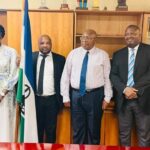
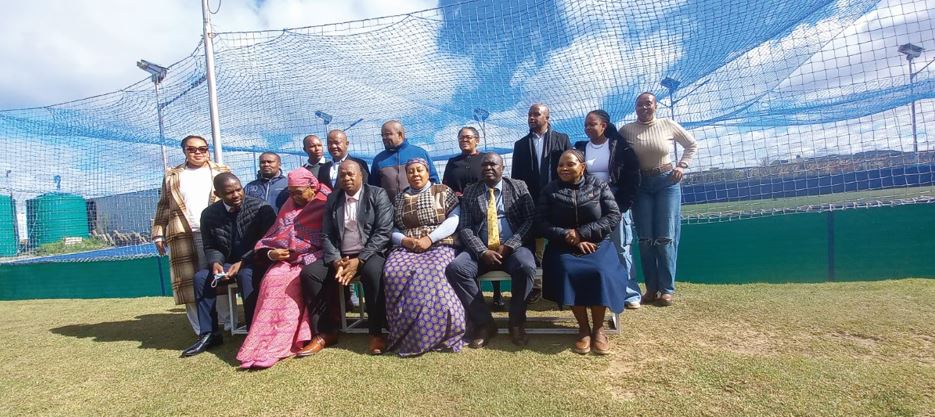
“Ratification is not a symbolic gesture, it is a legal lifeline,” said Nkoti Mabula, executive director of the Seinoli Legal Centre, which convened a multi-stakeholder meeting in Maseru this week to address the country’s deep social protection deficits. The gathering targeted legislators from the portfolio committees on social development, health, law and economic affairs, alongside civil society, community groups, the media and organisations representing vulnerable populations.
The advocacy drive is a joint project of the Africa Platform for Social Protection, Seinoli Legal Centre and the Migrant Workers Association of Lesotho (MWAL).
‘No one in their right mind wants to see suffering’
Speaking at the event, Lerato Nketše, MWAL’s executive director, said advocacy must be broad-based. “Everyone must be brought on board,” he said.
Mamello Phooko, a member of parliament who also leads Lesotho’s delegation to the Pan African Parliament, made the case for universal social protection with a gender-responsive lens. “Pensions, disability benefits, unemployment protection, maternity protection, injury protection, child support, food security support, and support during disasters and crises, if we realised all these, we would have achieved social protection,” she said.
Phooko pointed to specific gaps: health services that fail to reach remote communities, roads washed away by heavy rains during disasters, and the complete absence of unemployment protection despite the country’s high jobless rate. She also raised alarm about young people left out of social protection regimes.
Turning to marginalised groups, she did not mince words. “Herdmen, I have never seen what the government is doing beyond the work of NGOs. We have treated them as if they are not people.” Sex workers, she added, suffer similar neglect.
MP Malekala Lehohla Malakane called on the Ministry of Social Development to craft an exit strategy for grant recipients. “Beneficiaries ought to graduate from dependency to become self-reliant,” she said, recounting how she shares her salary with community members in need. “You see a child not going to school because they have no shoes, and I help them. I don’t wait for their parents to report it.”
But she also alleged that the beneficiary rolls are bloated with people who should not be there. “There are people who are born into Social Development and die still registered as beneficiaries. One beneficiary of the National Manpower Development Secretariat (NMDS) receives a stipend, attends the National University of Lesotho (NUL), yet still gets a M750 grant.”
Progress made, but deep fissures remain
Senator Seabata Motsamai, a veteran civil society actor, noted that the National Social Protection Strategy (NSPS) II (2021–2031) is building toward a comprehensive harmonisation of the social protection landscape. But he underscored the scale of need: a 49 percent poverty rate and high vulnerability to shocks such as droughts and pandemics.
Lesotho has come some way since the introduction of old-age pensions in 2004, which initially covered citizens aged 70 and above. The first National Social Protection Strategy (2014/15–2018/19) set strategic direction; in 2018, the National Information System for Social Assistance (NISSA) and a social registry housed in the Ministry of Social Development recorded more than 488,000 people, improving targeting and delivery. The longer-term NSPS II (2021–2031) laid out an extended roadmap.
Legal reforms have also been introduced, including the Customary Widows Act and the Counter Domestic Violence Act (both 2022), the Persons with Disabilities Equity Act (2021), and a National Mechanism on Reporting and Follow-up (2024) to improve compliance with international treaty bodies.
Yet substantial obstacles remain. Financial constraints loom large: expanding coverage and introducing new benefits would require sustainable revenue and fiscal planning. Political instability and a slow record of domesticating international instruments have hindered timely adoption of laws.
Motsamai also pointed to structural drivers of vulnerability: education-job mismatch, limited industrialisation, dependence on the informal economy, and the effects of migration.
‘Many plans that never see the light of day’
Among the identified barriers to ratification are financial implications, cross-ministerial coordination failures, gaps in health and social insurance, and low public awareness.
Civil society has now laid down a clear set of demands: the government must sign the protocol at the next AU summit, fast-track pending social assistance policy, establish a Lesotho Social Security Organisation, and initiate a cabinet-mandated gap analysis. For parliament, CSOs are calling for the enactment of a Social Protection Framework Act and enabling legislation for unemployment and maternity benefits.
The urgency has been sharpened by recent political polemics. The Ministry of Social Development recently told pensioners at Ha-Mohale to travel to Nazareth to collect their monthly grants. Minister Pitso Lesaoana defended the arrangement as a cost-saving measure, arguing that transporting small groups is expensive. Critics point out that old-age pensions can now be paid through mobile money services — a solution that would bypass the entire logistical fiasco.
MP ‘Mamello Holomo warned that without follow-up and a committed timeframe, it is impossible to know what is lacking. “The country has many plans that never see the light of day,” she said. “We need to know what has been a stumbling block so that we can address it. We are willing to do this.”
Summary
- Pressure is mounting on the government to ratify the African Union’s Protocol on the Rights of Citizens to Social Protection and Social Security, with civil society organisations, legislators and the media this week demanding that Lesotho finally lock in legally enforceable protections for its most vulnerable people.
- The protocol, a binding treaty under the African Charter on Human and Peoples’ Rights, would compel Lesotho to align national laws with continental standards, strengthen social safety nets and provide citizens with enforceable remedies when their rights to social protection are violated.
- “Ratification is not a symbolic gesture, it is a legal lifeline,” said Nkoti Mabula, executive director of the Seinoli Legal Centre, which convened a multi-stakeholder meeting in Maseru this week to address the country’s deep social protection deficits.
Thoboloko Ntšonyane is a dedicated journalist who has contributed to various publications. He reports on accountability, human rights, exposes corruption and wrong doing by those in power. He reports have exposed corruption, abuse of power, fraud, misconduct and negligence. He subscribes to evidence-based reporting. He reports on governance, parliament, courts, climate change, human rights, sexual and reproductive health rights (SRHR), health, business and agriculture. He gives a voice to the marginalised while also demanding accountability. His work inspires change, triggers dialogue and also promote transparency in a society.