
Famo did not die. It reinvented.
The day the wheeze became a weapon
On 21 May 2024, the government committed an act so audacious in its cultural illiteracy that it will be studied for decades. It did not simply restrict a genre. It attempted to euthanise a living, breathing vernacular.
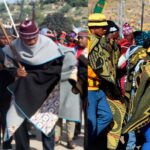
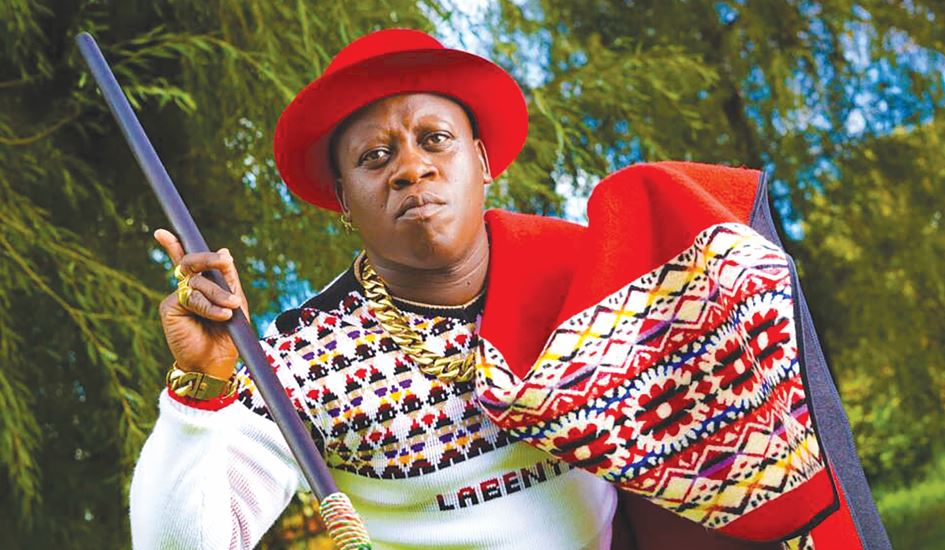
Citing a cascade of gangland killings linked to rival Famo factions, most notoriously Terene and Seakhi, the state declared twelve Famo music groups “terrorist organisations”. Radio and television stations were ordered to scrub every track. The distinctive patchwork attire of Famo devotees became grounds for detention.
And in a clause that sent a shiver through every journalist and academic in the mountain kingdom, even listening to, or reporting on, certain songs was implied to be complicity in criminality.
The accordion was recast overnight as an accessory to murder.
Two years later, the government will tell you there is peace. Fewer funerals. Safer radio. But those who actually listen, who press their ears to the ground of Lesotho’s culture, know better. The absence of accordion is not the absence of conflict. It is the absence of testimony. Silence is not peace. It is a pause. And pauses, in the history of suppressed art, are never empty. They are loading chambers.
What the ban refuses to name
The official narrative, repeated by Prime Minister Sam Matekane’s administration, is straightforward. Famo music became entangled with gangsterism. The state intervened to save lives. This is not false. It is merely incomplete – a half-truth that functions as a lie.
The full truth is that Famo’s fatal turn was not an organic decay. It was a political hijacking. And the current ban is not a neutral public-safety measure. It is the final act of a political class that first weaponised a folk genre, then abandoned it to the violence it helped unleash.
Let us go back.
Dust, diesel and diatonics: the birth of Famo
To understand the ban’s brutality, one must first understand what Famo was never meant to be. Famo was born not in a recording studio, but in the suffocating hostels of 1920s Witwatersrand, places of single-sex confinement, homesickness and diesel fumes.
Migrant workers from Lesotho brought their mohobelo dance steps and their mouth organs. By the 1930s, the diatonic accordion had become the genre’s spine. This was music for the man who had walked ten days to a gold mine, for the man who had not seen his daughter in a year. It was gossip set to rhythm. It was grievance harmonised. It was, in the truest sense, folk music: of the dispossessed, by the dispossessed, for the dispossessed.
The lyrics could be tender – praise songs for cattle, laments for eroded grazing lands. They could also be vicious – satirical takedowns of rival chiefs or unfaithful lovers. But for most of the 20th century, that viciousness remained verbal. Famo’s weapon was the diss track, not the knife.
The curdling: when diss tracks became death warrants
Something shifted in the 2000s. As Lesotho’s post-independence political instability deepened – coups, attempted coups, a revolving door of coalition governments – Famo’s factionalism began to mirror the nation’s pathology.
The rival groups Terene and Seakhi evolved from musical collectives into semi-organised militias, their loyalty signalled by specific accordion licks and fabric patterns. Control over disused gold mines in South Africa became entangled with which Famo group you flew. Killings escalated. By 2024, artists, broadcasters and innocent civilians had been caught in the crossfire.
The Matekane government, led by a businessman turned politician, chose the sledgehammer. In his defence, the violence was real. But the response was a textbook case of treating a fever by smashing the thermometer.
The chilling effect: two years of creative atrophy
The legacy of the ban, two years on, is not peace. It is a profound, creeping necrosis of Lesotho’s artistic ecosystem.
The silence of the studios: Dozens of career accordionists have not recorded a note in twenty-four months. Some have fled to South Africa. Others have simply stopped – not because they fear arrest, but because the soil of their art has been poisoned by suspicion. How do you write a love song when your neighbour eyes your accordion case as a potential gun holster?
The underground samizdat: As with Soviet-era dissidents or censored hip-hop in Iran, Famo has gone underground. New tracks circulate on WhatsApp groups and side-loaded memory sticks. The quality is raw, the distribution precarious. It is contraband. And like all contraband, it is now more mythologised – and more dangerous – than it ever was on the radio.
The economic devastation: Lesotho’s creative economy was fragile before the ban. Famo’s live events have evaporated. Piracy, already rampant, became the only distribution model. Some young musicians have traded accordions for shovels and returned to the very migrant labour their grandfathers sang about.
The mirror and the mallet
This is the perennial tragedy of art under siege. Music does not create violence in a vacuum. It reflects. It refracts. It amplifies the fractures that already exist, poverty, political patronage, competition over informal mining revenues, and the brittle machismo that haunts male-dominated genres from American gangsta rap to Brazilian funk proibido.
Famo did not invent Lesotho’s gangsterism. Famo documented it, narrated it, and, in its most degraded form, glamorised it. To ban the genre is to confess that you cannot bear to look at the face in the mirror.
Compare Lesotho’s response to other moral panics. When Mexico banned corridos tumbados for glamourising cartel violence, the music only grew more defiant, migrating to YouTube channels based in El Paso. When Jamaica’s government restricted dancehall lyrics glorifying “badman” culture, the genre birthed a self-censoring “conscious” wave that proved more commercially successful. Suppressed art rarely dies. It mutates, goes subterranean, and often returns sharper, angrier and more mythic.
Lesotho’s ban has not silenced the accordion. It has anointed it.
The unlikely amplification
Paradoxically, the state’s crackdown has done what decades of word-of-mouth could not: it has globalised Famo. From Al Jazeera’s documentary unit to NPR’s All Things Considered, from a Rolling Stone feature headlined “The Deadly Accordion Wars” to academic panels at SOAS, the world discovered that a tiny, landlocked kingdom was fighting a war over a folk instrument.
Art’s stubborn resilience
And yet. The real story after two years is not the government’s decree, nor the international media’s voyeurism. It is the quiet, unglamorous resilience of creators who refuse the binary of victim or villain.
Some Famo musicians have pivoted to peace anthems – subtle, syncopated tracks that mourn the lost without naming names. Famo is refusing to die. It has mutated, gone underground, and found new voices that sidestep or transcend the old gang rivalries. The accordion still breathes, sometimes in exile, often in hidden studios, and increasingly through fresh talents reimagining the genre for a new era.
Famo lives in the new generation
In the past two years, Lesotho has witnessed the rise of a new wave of artists breathing fresh life into the form. Figures such as Sannere, Phoka ea Boroa and Litshepe Lr, among others, have emerged as major forces, blending traditional Famo elements with contemporary production, Sesotho-hop sensibilities, and a cross-border appeal.
Collaborations like Sannere and Phoka ea Boroa’s tracks have racked up millions of streams and views, proof that the genre’s cultural DNA remains potent even under restriction. These artists, often drawing on older Famo influences while pushing stylistic boundaries, have kept the music culturally vibrant and commercially relevant, especially among younger listeners at home and in the diaspora.
This adaptive vitality reveals the ban’s limits. While certain factions linked to violence faced crackdowns, the broader cultural current of Famo has found ways to flow around the obstacles: digital platforms, private gatherings, cross-border releases, and a shift toward themes of pride, love, heritage and endurance rather than pure provocation.
The question we must answer
This episode forces uncomfortable questions. Should musicians self-censor provocative lyrics? Can the state ever legitimately draw lines around incitement without crossing into authoritarian overreach? In a region where creative economies are touted as pathways out of poverty, Lesotho’s move sent a chilling signal: Your culture is yours until it becomes inconvenient.
Yet the music’s refusal to die offers a more hopeful counter-narrative. Visual artists, poets and theatre-makers in Maseru and beyond have responded with works exploring censorship, memory and Basotho identity. International attention has only grown.
As we mark this uncomfortable anniversary, the accordions have not been fully silenced. They hum through new voices – Sannere, Phoka ea Boroa, Litshepe and others – who carry the tradition forward. Famo’s greatest composition may yet be unwritten: one that mourns the lost, indicts the powerful where needed, and imagines a future where the music heals rather than harms.
The ban did not end the violence. But it reminded us, painfully, that when you try to kill art, you often only succeed in revealing how deeply it is woven into the fabric of who we are.
In Lesotho, as across Africa, the accordion still plays. The question is whether we have the courage to listen, and to address the song behind the song.
Summary
- And in a clause that sent a shiver through every journalist and academic in the mountain kingdom, even listening to, or reporting on, certain songs was implied to be complicity in criminality.
- It is the final act of a political class that first weaponised a folk genre, then abandoned it to the violence it helped unleash.
- This was music for the man who had walked ten days to a gold mine, for the man who had not seen his daughter in a year.

Lesotho activist and journalist who is the Chairperson of the Media Institute of Southern Africa (MISA) Lesotho. He is an International Visitor Leadership Program (IVLP) alumnus.
Boloetse is driven by the need to protect and promote the rights of others, especially the marginalized segment of society. He rose to prominence as an activist in 2018 when he wrote to Lesotho communications Authority (LCA) asking it to order Econet Telecom Lesotho (ETL) and Vodacom Lesotho (VCL) to stop charging expensive out-of-bundle rates for data when customers’ data bundles get depleted.