

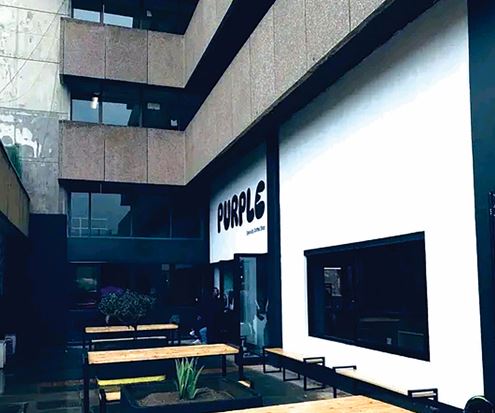
Not too long ago, it was known simply as Artisan, a specialty coffee and pizza spot tucked away in Maseru that quietly attracted coffee lovers, creatives and food enthusiasts.
Today, with a fresh identity and a growing social presence, Purple Coffee & Co has evolved into something bigger than a café. It has become a lifestyle.
On weekends especially, the space fills with young people dressed intentionally for the occasion. Girls sit around wooden tables with iced coffees and journals, couples share sourdough pizza, while others snap photos of cookies, muffins and melting ice cream under soft lighting.
For many in Maseru, Purple is no longer just somewhere to eat. It is somewhere to be seen, unwind and momentarily escape the pressure of everyday life.
The café’s rise reflects a bigger cultural shift happening among young Basotho. Across social media platforms like TikTok and Instagram, “soft life” culture, centered around aesthetics, self-care, calm spaces and curated experiences, has become increasingly popular. Purple Coffee & Co seems to sit right at the center of that movement.
Formerly operating under the name Artisan, the café originally built its identity around specialty coffee and Neapolitan-style pizza.
According to a 2022 feature by Coffee Magazine, the café was founded by Sehlabaka “SG” Rampeta and Lebohang “Pesh” Rampeta during the COVID-19 pandemic after they began exploring coffee culture, sourdough bread and pizza-making.
The original Artisan space quickly stood out because of its carefully designed atmosphere. Even then, the founders spoke openly about wanting to create not only good coffee, but an experience.
The café became known for its modern architecture, specialty coffee focus and visually appealing interior, elements that continue to define Purple Coffee & Co today.
But the rebrand into Purple Coffee & Co appears to signal something more intentional: a shift from simply being a café to becoming a recognizable lifestyle brand.
The name itself feels softer, trendier and more aligned with the aesthetics currently dominating youth culture online.
Purple, a colour often associated with creativity, luxury and calmness, mirrors the atmosphere customers now associate with the café. The rebrand also comes at a time when cafés are becoming increasingly important social spaces for young people in Maseru.
Unlike traditional restaurants or loud entertainment venues, cafés offer something different: intimacy, comfort and flexibility.
People go there to work remotely, catch up with friends, go on casual dates, create content or simply enjoy being alone in a beautiful environment.
And perhaps that is why Purple Coffee & Co resonates so strongly, especially with young women.
In a fast-moving digital culture where people are constantly online, overstimulated and overwhelmed, aesthetic spaces have become a form of comfort.
A good cup of coffee, warm pastries, soft music and visually pleasing interiors create an experience that feels almost therapeutic. For some, visiting Purple is less about hunger and more about the feeling attached to the place.
That atmosphere has naturally made the café social-media friendly. Photos taken there circulate frequently online, from close-up shots of coffee cups and cookies to mirror selfies and “day in my life” content.
In many ways, Purple has mastered what modern cafés around the world now understand: people are no longer just buying food; they are buying experiences.
Yet beyond the aesthetics and social media appeal, Purple Coffee & Co also represents the gradual growth of café culture in Lesotho.
For years coffee culture in Maseru remained relatively small, with only a handful of cafés creating spaces centered around specialty coffee and relaxed social experiences.
But newer establishments and rebranded spaces like Purple are contributing to a changing urban culture where cafés are becoming community spaces for creatives, professionals and young people looking for alternatives to traditional nightlife.
In many ways, Purple Coffee & Co reflects a generation that is redefining leisure. Young Basotho are increasingly drawn to experiences that feel intentional, aesthetically pleasing and emotionally comforting.
Whether it is through coffee dates, journaling sessions, solo lunches or simply taking photos with friends, spaces like Purple have become part of how people express identity and lifestyle in modern Maseru.
And perhaps that is the real reason behind the café’s growing popularity.
It is not just about the coffee, cookies, sourdough or ice cream. It is about the atmosphere, the feeling of softness, calm and connection that people keep coming back for.
Summary
- Not too long ago, it was known simply as Artisan, a specialty coffee and pizza spot tucked away in Maseru that quietly attracted coffee lovers, creatives and food enthusiasts.
- According to a 2022 feature by Coffee Magazine, the café was founded by Sehlabaka “SG” Rampeta and Lebohang “Pesh” Rampeta during the COVID-19 pandemic after they began exploring coffee culture, sourdough bread and pizza-making.
- But newer establishments and rebranded spaces like Purple are contributing to a changing urban culture where cafés are becoming community spaces for creatives, professionals and young people looking for alternatives to traditional nightlife.

She is a passionate journalist and content creator currently completing a Diploma in Journalism and Media. With a strong focus on agriculture, culture, and entertainment, she is dedicated to amplifying underrepresented voices and driving meaningful conversations. She thrives in professional settings where she can refine her writing and analytical skills while making a tangible impact through storytelling.
Beyond journalism, she creates self-care content that promotes mindfulness, wellness, and balance. By blending investigative depth with lifestyle inspiration, she makes complex topics accessible and highlights the importance of personal well-being in today’s fast