

As anti-immigration protests surge across South Africa, Lesotho has announced it will not facilitate the repatriation of its citizens living there without legal documentation, even as violence against foreign nationals escalates.
The Border Management Authority (BMA) has identified Lesotho nationals as one of the largest groups of people who have entered South Africa illegally. While some Basotho are crossing the border to escape the wrath of persecution in South Africa and to regularise their status, the government says it will not assist their return and has no plans to help them adjust financially or secure stable livelihoods.
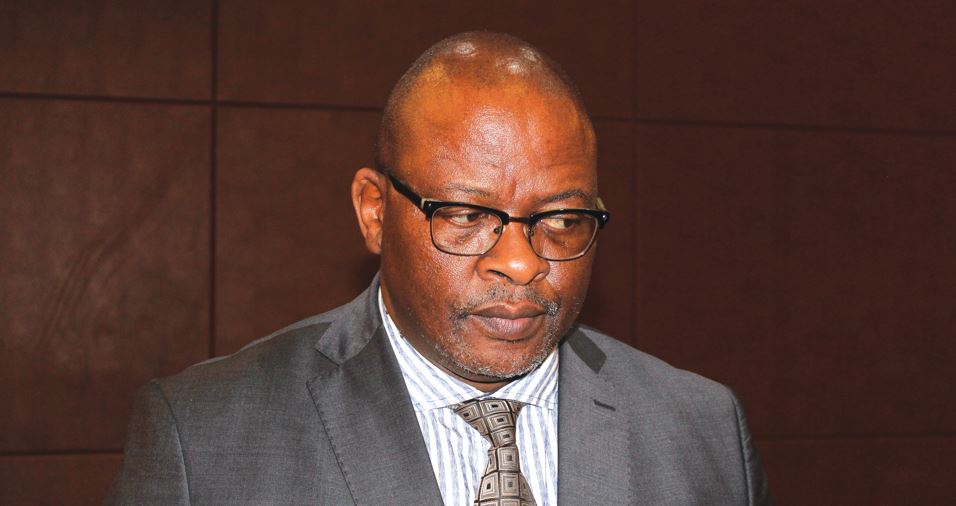
This week, Minister of Foreign Affairs and International Relations, Limpho Tau, told journalists in Maseru that Lesotho will not, at this stage, facilitate the repatriation of its citizens from South Africa, despite reports of pockets of harassment, humiliation, and violence directed at some foreigners in the country.
Anti-migrant sentiment intensifies
Over recent months, campaigns targeting irregular migrants have been led by groups including Operation Dudula and March and March, as well as political parties such as ActionSA and the MK Party. Anti-migrant civic groups have issued a “deadline” of 30 June 2026, calling for all irregular migrants to leave South Africa.
Some South Africans complain that foreigners “take” their jobs, undermine women, sell drugs to young people, and commit serious crimes in the country. The South African government has condemned physical attacks and vandalism. However, videos have emerged showing marchers whipping foreigners in full view of police, with officers failing to intervene or protect the victims. In some cases, marchers have conducted stop-and-search operations, demanding identification from people they suspect are foreigners.
Tensions continue to grow as anti-migrant movements gain momentum across major cities. There are also reports of sporadic incidents of intimidation, violence, and harassment.
‘Lesotho lost its chance to claim rights’
Tau expressed regret that Lesotho had not negotiated more strongly when South Africa’s democratically elected government came to power in 1994. Instead, he said, Basotho were busy “chasing each other on useless politics.”
“Lesotho lost the opportunity to claim its rights. We were micro-managed while under the Pretoria Administration. Who would have respected us? We put ourselves in those precarious situations for useless political battles,” Tau fumed.
He also blamed Lesotho’s poverty on South Africa having turned the country into a labour reserve during the mining era.
Tau further called for a special document, not the usual policy, to govern bilateral relations between the two neighbours.
“You took our land. You turned us into a labour reserve. You robbed us. We need to talk tough as equal partners. Truly speaking, you are owing us,” he said.
While he avoided questions about what the government is doing to ensure Basotho do not go to South Africa in search of greener pastures, he said “every country has unique circumstances” and that Lesotho has been oppressed for many years.
Tau said South Africa has an “obligation” to help Lesotho access international markets, noting that Lesotho is an enclave and cannot trade with any other country without going through South Africa.
He referenced the United States extending the African Growth and Opportunity Act (AGOA) to Lesotho, even though the US has not colonised any country. “Those are issues that we should push in our dialogue. It should help Basotho to access international markets,” he said.
Other African countries evacuate citizens
Some African countries have responded to the rising anti-migrant unrest by arranging flights and buses to evacuate their citizens out of fear of attacks. Ghana, Nigeria, Malawi, Zimbabwe, and Mozambique have reportedly taken such measures.
Tau said Lesotho’s diplomatic missions in South Africa are closely monitoring developments.
“Our missions will continue to monitor the situation closely and advise the government accordingly as developments unfold,” he said.
He called on Basotho to remain calm and avoid panic while the government continues to assess the situation through appropriate diplomatic channels.
Diplomatic missions issue warnings
In May, the Lesotho High Commission in Pretoria issued an advisory note to Lesotho nationals living in South Africa to remain vigilant. The High Commission warned them to avoid areas where protests are taking place and to limit travel during tensions to avoid being caught up in violence.
Lesotho’s High Commissioner to South Africa, Ntsime Jafeta, said they were concerned about marches targeting migrants but pointed out that Basotho remained “safe.”
“We have not received reports that Basotho have been beaten or suffered acts of violence at the hands of the marchers,” Jafeta said. He added that they will continue engaging with South African authorities and will oversee the safety of Basotho.
His sentiments were echoed by the Durban Consul and Johannesburg Consul, Rapelang Thuoela and ‘Mamolefi Ntaitsane, respectively.
Ntaitsane said some companies have started releasing Basotho because of the Lesotho Exemption Permit (LEP), which expires next year. She assured that assistance is being provided with documents that employers accept. She encouraged those facing challenges to come forward and report their problems so they can be supported.
She added that even before the March and March protests began, consulates were always called when Basotho who violated immigration laws were detained at the Lindela Repatriation Centre to assist with processing.
Thuoela said they received reports that some Basotho have been threatened with evacuations from their residential areas and from some factories.
Concerns over safety and violence
Anti-migration campaigns and rhetoric are feared to have caused unrest, displaced many foreign nationals, and, in some tragic cases, led to deaths. There has also been a report of a South African citizen who was allegedly killed after being mistaken for a foreigner.
Images circulating on social media reportedly show Zimbabweans who slept outside the Zimbabwean Consulate in Cape Town, allegedly fleeing mob violence.
South African government acknowledges concerns
Earlier this month, South African President Cyril Ramaphosa addressed the nation, acknowledging the frustrations of South Africans.
“Over recent months, South Africans from every walk of life have raised concerns about migration and illegal immigration. These concerns are being expressed in our communities, our workplaces, our schools, our clinics, and across social media platforms,” he said.
“Many South Africans are asking difficult but legitimate questions. They are asking whether our borders are secure. They are concerned about jobs. South Africans are raising these matters because they are concerned about pressure on public services. They are concerned about safety, security, and the rule of law. These concerns are real. They deserve to be heard. They deserve to be addressed,” Ramaphosa said.
The government and law enforcement agencies in South Africa have assured that those living in the country illegally will be safe, and that any illegal actions will not be tolerated. The law will take its course against those found wanting.
LEP expiry looms, no plan for returnees
In December 2023, then Minister of Home Affairs, Dr Aaron Motswaledi, granted exemptions to approximately 54,653 Lesotho nationals for a period of two years, which ended in December 2025. After this two-year extension, Lesotho Exemption Permits (LEPs) were extended until 28 May 2027. However, as the permits approached their end, new applications were not accepted, as many Basotho work in informal sectors, and some are domestic workers.
By 30 June, Lesotho is likely to see an influx of Basotho returning from South Africa. With no immediate plan in place, the government has not yet clarified what measures it will take and how it will help Basotho find their footing economically so that they can continue to support their families.
Bilateral talks on labour and migration planned
In September, a mid-term review of the Bi-National Commission (BNC) between Lesotho and South Africa is expected to take place in Pretoria. The talks are expected to prioritise labour and migration matters, including the rights, working conditions, and legal status of Basotho working in South Africa.
Movement between the two countries, border procedures, permits, cross-border transport, and measures to ease mobility for workers, students, and traders are also expected to feature in the meeting.
Summary
- While some Basotho are crossing the border to escape the wrath of persecution in South Africa and to regularise their status, the government says it will not assist their return and has no plans to help them adjust financially or secure stable livelihoods.
- This week, Minister of Foreign Affairs and International Relations, Limpho Tau, told journalists in Maseru that Lesotho will not, at this stage, facilitate the repatriation of its citizens from South Africa, despite reports of pockets of harassment, humiliation, and violence directed at some foreigners in the country.
- While he avoided questions about what the government is doing to ensure Basotho do not go to South Africa in search of greener pastures, he said “every country has unique circumstances” and that Lesotho has been oppressed for many years.

Thoboloko Ntšonyane is a dedicated journalist who has contributed to various publications. He reports on accountability, human rights, exposes corruption and wrong doing by those in power. He reports have exposed corruption, abuse of power, fraud, misconduct and negligence. He subscribes to evidence-based reporting. He reports on governance, parliament, courts, climate change, human rights, sexual and reproductive health rights (SRHR), health, business and agriculture. He gives a voice to the marginalised while also demanding accountability. His work inspires change, triggers dialogue and also promote transparency in a society.