
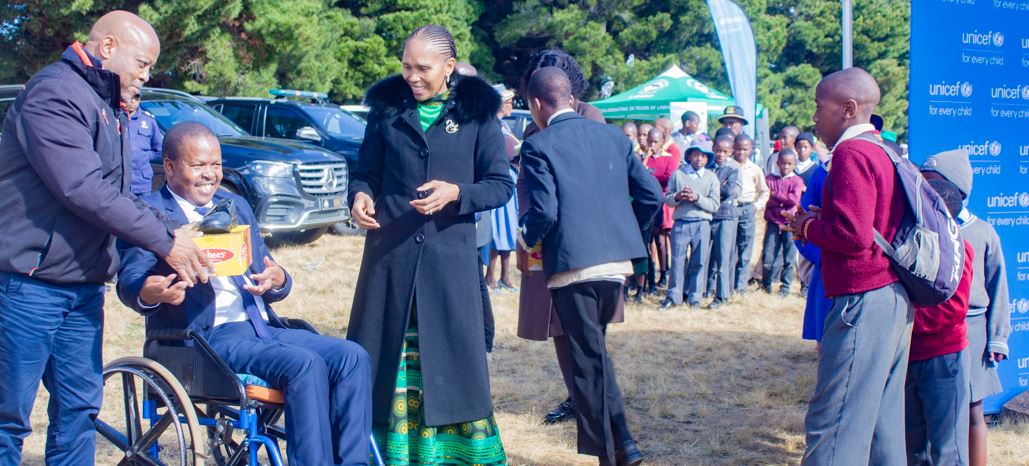

Lesotho joined the rest of Africa on Wednesday in commemorating the Day of the African Child, an annual event observed on June 16 to honour the courage, dreams, and rights of African children.
This year’s celebration brought together government leaders, international partners, and children to spotlight the critical importance of clean water, sanitation, and hygiene for all.
The Day of the African Child commemorates the brave students of Soweto, South Africa, who in 1976 stood up for their right to education and equality. Their sacrifice continues to inspire advocates across the continent to fight for the rights and well-being of every child.
Minister of Natural Resources, Mohlomi Moleko, reminded attendees that this is a day to celebrate the courage and aspirations of African children.
“Their sacrifice continues to inspire us to ensure that every African child has access to education, health care, protection, and opportunities to realise their full potential,” he said.
The Minister called on government, communities, parents, and development partners to work together so that no child is left behind.
“To the children of Lesotho, you are our greatest asset and our hope for the future. We encourage you to work hard, dream boldly, respect others, and embrace the values of integrity, innovation, and service,” he added.
This year’s theme was “Ensuring Universal Access to Water, Sanitation and Hygiene (WASH) for Every Child in Africa.” Speakers emphasised that clean water and proper toilets are not merely infrastructure issues but are fundamental to health, dignity, and education.
Taija Kontinen-Sharp, United Nations Resident Coordinator, spoke emotionally about children who wake up every morning without access to clean water.
“It means going to school thirsty, missing classes because the toilets are unsafe, or girls staying home during menstruation because there is no privacy or support,” she said. “Behind these numbers are children suffering from preventable illness. Children missing school. Children whose futures are being limited by conditions that should never exist in the first place.”
She praised the progress Lesotho has made, including the Lowlands Water Project and improved WASH facilities in health centres and schools. However, she cautioned that “progress must move faster, because the challenges remain significant.” Only 46 percent of Lesotho’s population has access to basic sanitation, and open defecation remains a persistent problem in rural areas.
Kontinen-Sharp called for increased investment, stronger partnerships, and sustainable solutions such as rainwater harvesting and wastewater treatment. “No child should have to choose between education and dignity,” she said.
Deepack Bhaskaran, UNICEF Country Representative, noted the government’s commitment to improving WASH services. He said investments in water infrastructure and rural service delivery are making a difference, with 91 water systems rehabilitated and 30,000 people benefiting from improved access to safe water.
“The programme has also improved WASH facilities in rural schools, benefiting more than 1,400 learners and helping create safer and more inclusive learning environments, particularly for girls,” he said.
He stressed that behind the statistics are real children who walk long distances for water and study in schools without proper toilets.
“UNICEF remains committed to supporting the government of Lesotho in expanding equitable access to water and hygiene,” he said, calling for urgent action so that no child’s future is limited by a lack of clean water.
Dr. Ayalew Getachew Assefa from the African Committee of Experts on the Rights and Welfare of the Child shared the message of children from across Africa who recently gathered in Libya. The children called upon African governments to ensure that every child, including those with disabilities and those living in remote areas, has access to water and sanitation. They also requested child-friendly toilets in schools and health centres, and urged governments to protect water sources and penalise polluters.
Assefa emphasised, “When children are heard, our programmes, strategies, and policies become stronger. Services become more responsive, and our societies become more just.”
Her Majesty Queen ‘Masenate Mohato Seeiso reminded everyone that access to clean water, hygiene, and sanitation is a right for every child. She urged the government to fast-track efforts to ensure all children have WASH essentials, particularly as climate change and drought threaten water supplies.
“We have to adapt and learn to collect water for times when drought hits,” she said.
Summary
- Lesotho joined the rest of Africa on Wednesday in commemorating the Day of the African Child, an annual event observed on June 16 to honour the courage, dreams, and rights of African children.
- “UNICEF remains committed to supporting the government of Lesotho in expanding equitable access to water and hygiene,” he said, calling for urgent action so that no child’s future is limited by a lack of clean water.
- Ayalew Getachew Assefa from the African Committee of Experts on the Rights and Welfare of the Child shared the message of children from across Africa who recently gathered in Libya.
Ntsoaki Motaung is an award-winning health journalist from Lesotho, specializing in community health stories with a focus on sexual and reproductive health and rights, as well as HIV. She has contributed to platforms like “Be in the KNOW,” highlighting issues such as the exclusion of people with disabilities from HIV prevention efforts in Lesotho.
In addition to her journalism, Ntsoaki serves as the Country Coordinator for the Regional Media Action Plan Support Network (REMAPSEN). She is also a 2023 CPHIA Journalism Fellow.